
Vineyard
1.
Outside my window there is a shaft of sunlight streaking across the fence. The fence is dark brown, a color that hasn’t been popular since the 1970s, and the local paint store keeps a formula in the notebook just for our condo association to paint the fences and trim. They call the color “Westwood Brown,” and if we ever decide to change the color scheme here they will probably hesitate to pull the color out of the book because it is like a collector’s item now. It is a story they can tell to new employees. Even so, if you catch it when the light is just right, like right now, Westwood Brown can transport you to a different time–the Halston era, the epoch of the land yacht Coupe de Ville. It is the golden hour and the light points, like a celestial digit, straight at the spreading petals of brilliant flame-colored Bromeliad my wife planted along the fence. I think, I should take a picture of that.
I am unsure if it is me thinking about the picture, or if it is Instagram thinking it for me.
This week I quit Twitter. It’s not like I had much of a presence there, so we will be fine without each other. I had something like 150 followers, followed around 1,200 accounts, and scrolled over there occasionally when the rest of my addictive scroll-holes were drying up for the day. Lately I had been playing a simple game every time I opened the app. If the first post was someone: 1.) wailing about the hypocrisy of the other side in the culture war, 2.) flexing their success, or 3.) piling onto the controversy du jour, I would close the app and move on. I have had very little reason to scroll beyond the first screen in the past few weeks.
I’ve quit Twitter and deleted Facebook before, but I was encouraged to close my Twitter account this time by the spate of articles that popped up this week frankly raising the question: what are we doing here? Quinta Brunson’s thoughts on minding your own damn business afford the best example, but the algorithms must have registered some little chemical twist in my pituitary because I kept running across pieces, like this profile of Twitter-person Yashar Ali, or this interview with someone who quit social media, that chip away at the foundation of social media’s necessity by questioning whether we need it or whether the people we see there are as significant as they appear.
The cynical among you are likely to say that these are dumb questions; that of course social media people are unworthy of our attention, and of course we don’t need it. I think making this claim is a bit like playing a character, though: that of the discerning sage, you probably think, or the intelligent free-thinker standing on a stage opposite the vapid follower and the bankrupt influencer. Which of you is Malvolio and which is Toby Belch will depend upon the attitude of the viewer, however. The postures and costumes are different, but from far enough away the result is the same. They strike us now as just a couple of old assholes, rendered immortally luminous by a poetic genius of world-historical importance. On the internet, there is no poetry to illuminate them. Both characters are constricted by straitjackets of bullshit, and both of them seem terribly unhappy.
That brings me in a roundabout way to the question I sat down to ask in the first place. What am I doing here? I’m pretty sure I’ve asked this question before, but I don’t want to go back and check. That would be depressing, like reading an old poetry notebook or flipping through an old diary from high school. I’ll reframe the question this time instead and try to write my way to an answer. Is what I’m doing here, whatever it is, balancing out some of that unhappiness? Is that even possible?
2.
Lately people have been writing about how much they miss the old internet. The new internet is too vanilla, they argue, too boring and perversely commercial, like a shopping mall. I am normally inclined to agree, but the other afternoon I woke up from a nap and read about alternate reality games and obscure social media characters on Garbage Day. Perhaps it was the residual Triazolam and Nitrous Oxide leftover in my system from oral surgery that morning, but I had trouble making sense of it in the same way that I once stumbled gape-mouthed across arcane forums and exotic communities like a rube from the meandering suburbs of America Online. The old internet, with all of its nonsense, all of its randomness and quirky passion, is still with us. I’m looking at you, Malvolio, for the next line. Of course it is, you might say. It’s all just people.
But did the old internet make people happy? The internet seems always to have been a contested space, a rambling assemblage of insider communities whose best days are very recently gone. I remember my first connection, a dial-up hotline to AOL across endless air-conditioned days and nights in the summer of 2001. I was late to the party, five years behind my more affluent peers, and anxious to make up for it in sheer eagerness. I joined email lists, clicked through webrings, posted to forums. I had been led to believe, probably by bewildered news anchors or breathless magazine articles, that the web was a brand new thing. What I found instead was a bunch of conversations with no beginning and no end. It seemed like the authors of my favorite web pages had all recently stepped away from their keyboards. Communities were cantankerous places, hostile to newcomers, where old fires never seemed to burn themselves out. There was the Eternal September of 1993, for example, named for the time when all the noobs from AOL flooded Usenet and never left. At least that’s how the old Usenet admins have it. For my part, I started moderating a mailing list and stepped right into the middle of flame wars dating back years. Old-timers had to bring me up to speed on the old arguments so I would know how to intervene. New trolls arrived weekly. Maybe it was a bad list, but anyone who’s spent time moderating an online community knows the struggle.
I think of this when I wonder why we all flocked to MySpace, and then Facebook, so rapturously. The old internet was a place made of text, and consequently a place where strangers spread their shit all over you. You couldn’t avoid it. If you wanted to communicate, you had to work at it. You had to learn the jargon, nod along with inside jokes you didn’t always find funny, assimilate opinions you couldn’t publicly examine. MySpace and Facebook were made of pictures, blissfully free of ideas that couldn’t be communicated at a glance. Facebook remains so. Your mere existence, your possession of a face, is the only cost of admission.
3.
Neither the old internet nor the new, then, have made us any happier than we were in the time before. Rather than happiness, what we’ve gained is access to a sort of dark power bubbling in the river of instant and endless information flowing through the pipes. We use this information to construct stories, and it is through these stories that we harness the power to do work in the world. I can’t help but feel as though we’ve designed the internet to give us information which reinforces the worst stories we tell about ourselves. These are stories of growth and progress in which we appear better and smarter than anyone who lived before us. These are also stories that make us feel empowered as individuals, unique among lesser peers. Meanwhile the algorithms conditioning the flow of information enable us, in a vicious feedback loop, to look away from the stories we’d rather not tell–stories of stasis or declension, of similarity and solidarity.
There is another force flowing in those dark waters as well: the emotive power of suggestive blank spaces. Memes are like atoms, rich in potential and eager to freely associate, but information devoid of context is like a shadow divorced from its object. We can only guess at its sources and meanings. This is precisely the type of information the internet is engineered to deliver, however. You ask Google a question and it gives you an answer.
Google’s brand is based on authority and correctness, at least. The rest of the internet is built to keep you engaged. If content exists in a sort of Darwinian state of nature, the most successful information is that which makes you feel. Reddit and the chans are factories producing and serving up the most emotive content. You scroll TikTok or YouTube and the algorithm serves you videos according to their likelihood of keeping you engaged. Twitter and Facebook serve up bite-size nuggets of emotion on the feed. News editors engineer headlines to galvanize you to action. It is not that microblogs, articles, memes, pictures, blurbs, and short videos are incapable of rich contextualization; it is that the creators focused on context are not as successful as those focused on engagement.
Part of what I am trying to do here is counter these tendencies. I am drawn to the stories we prefer not to tell. As a historian, for example, I am fascinated as much by continuity as by change over time. No matter the era in which they lived, informants in the archives shared their similarities with us as readily as they disclosed their differences. Our motivations echo theirs. Many of our creations fall short of theirs. Like strangers on the internet, they rub their shit all over us too. We would do well to wallow in it, though, because we cannot engineer a new world as easily as we can engineer a new user experience. Our culture is built from theirs. We live in the cities and towns they built. We speak their language, worship their gods, read their books. Rather than seeing ourselves as disruptors or innovators, we might benefit from seeing ourselves as cautious trustees of that world, therefore; as careful fiduciaries focused on moving slowly and maintaining things rather than moving fast and breaking them.
This perspective need not be conservative. The narrative of constant growth and improvement is the guiding myth of capitalism, after all. I think building an alternative grounded in context, focused on capturing the prosaic or humanizing the proletarian (to the best of my meager ability, at least), can make us feel a little more anchored in the swift currents of a society built to pick our pockets and power over us by maintaining a constant state of instability. If this approach can make the internet a little bit of a happier place, then maybe I’m doing some good here.
4.
I failed to mention at the beginning of this essay that I am not necessarily a reliable narrator.
I actually don’t know whether I’m achieving any of the lofty goals I just described. Perhaps, like an artist’s statement, everything I said up there illuminates the principles organizing my work. I like the sound of that but I’m not sure it’s true. The truth is that I really just work on ideas that I like without worrying about how they fit into some schema. If I admit this, however, then my work in this essay isn’t done and it remains for me to answer: does doing this make me happy? Now I can’t hide behind a shield of analysis. This just got scary.
Writing for me is a form of exorcism. If I go more than a few days without writing something, anything, I can feel a sort of dark pit forming somewhere inside me. I’ve come to realize that this darkness is death stalking me, as it stalks all of us, from somewhere just outside of my peripheral vision. The longer I go without writing–or, to a lesser extent, creating other things like images or music–the closer it gets, until the feeling of hopelessness is almost unbearable. This sounds like an acute illness, I understand, but each of us is striving to overcome this darkness in our own way every moment we are alive. Some of us achieve it through devotion to family. Others achieve it through friends or work, some achieve it with drugs. Writing is what works best for me.
Every word written is written for an audience. This is obviously true for articles and essays like this one, for books, and so on, but even a journal is just a book we write for our future selves. With this in mind, a few years ago I thought: if I’m writing simply to stay alive, why not publish it? It takes so many rejection letters to get an acceptance, and I don’t have time (this line of thinking goes) to develop a whole submission and tracking process in addition to working, studying, trying to shift gears and be creative, and then somehow writing and finishing some hairbrained idea in the first place.
The narrative of progress through technology is here to make me feel good about this. With the rise of Substack and the constant firehose of essays like “No One Will Read Your Book” or “10 Awful Truths About Publishing” or this NY Times article which found that 98% of books released last year sold fewer than 5,000 copies, there is no better time than now to rethink publishing altogether. There are currently 7,614 markets and agents listed on duotrope. Many of the “lit mags” on the web and indexed by duotrope are labors of love undertaken by one or two individuals. They went out and bought a domain and built a WordPress site, just like I’ve done here. What’s the difference?
Ask anyone who writes and they will point out the problem right away. There are few things more pathetic than a self-publisher. Publishing my own work here helps to exorcise that darkness, but it will never feel good enough. The point of publication, especially now that we all have the resources to publish whatever we want–is that someone else thinks what you have to say is worth amplifying. Publishing your own work is like an admission of inadequacy. It feels like saying, I don’t think this is good enough to publish or, even worse, nobody else thinks this is good enough to publish.
This is an indoctrinated opinion. Just like those stories of endless progress that troubled me a few hundred words ago, this opinion serves a social purpose. It is likely that how you see that purpose depends on your bedrock identity. Perhaps you see publication as a form of competition that elevates the best writing over the mediocre, driving everyone to greater heights of achievement along the way. Or maybe you see it as a limiting mechanism that functions–either intentionally or not–to push out voices that challenge dominant opinion.
Since I am now in the personal and supposedly truthful part of this essay, I should say that my own view changes based on how strongly I feel about my own abilities. When I am down, probably after a rejection or two, my opinion of publishing is decidedly Jacobin: down with the editors! At other times, probably when I’ve had something published or just written something that I feel good about, I’m as sanguine about the market as Adam Smith.
Perhaps all of my opinions are like this and the problem I am struggling to write around is that we are supposed to be consistent. Do the algorithms know I am as changeable as the wind? Do they take advantage of the distance between my variable opinions and desires and how consistent I think they are? We value being but we are all, always, merely becoming.
This is the real strength of a blog. A book is firm, stolid like our opinions are supposed to be. A book, we might say, is being. The internet is fluid, as variable as the flood of emotions and opinions shaping our daily experience. It is a space characterized by constant becoming, by revising, rethinking. Conversations here neither begin nor end. We’re all just passing by one another, sharing ideas inscribed with light and stored as magnetic charges on a magnetic array somewhere far away.
This website is my bridge between becoming and being.
This website is a bridge between the old web and the new.
This website won’t make anyone happier, but it’s not for lack of trying.
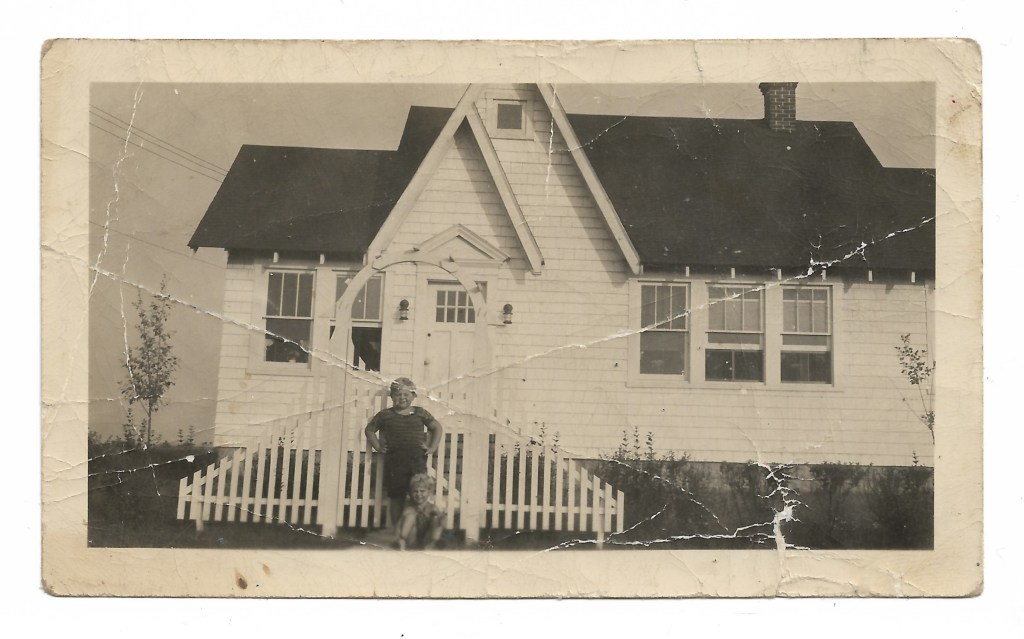
Across the driveway opposite my bedroom window there is a little field. The little field is more of a yard than a field. It is less than a hundred feet wide, maybe two hundred feet long. It drops a few feet down from the entrance driveway and parking lot, like a little emerald bowl carved out of the earth to compensate for the concrete piled up next to it. Still, the field rises above the busy road on the other side. It is an engineered space.
It is also, I have found, a magical space.
The little field is shaded almost completely by stately pine trees emerging from the bowl. I like to take my dog, Penny, over there for walks. She finds little things in the grass to chase and smell. Sometimes she is overwhelmed by some aroma there, driven to flop over and roll around, covering herself in its wonder. There are patches of grass she enjoys eating. I call this “salad time” and we do it almost every day.
At the back side of the field, right up against the fence separating us from the high school next door, there is a tree unlike the others. Where the pines tower, telegraphing their power to absorb the sun’s energy by shading the ground far below, this tree huddles. Its branches swirl and cascade, creating a sort of greencast temple underneath the spreading boughs. I like to pause there on our walks and bask in this little space. This tree, a mulberry in a pine field, is the wellspring of the field’s magic.


There is magic everywhere you go. I don’t mean abracadabra magic, rabbits from hats, wand-waving, magical beasts. I mean magic as an expression of the mysterious power that certain spaces can exercise over us. You know it when you see it. We are drawn to these spaces. Perhaps it is an echo of the space’s past. Our neighborhood used to be a dairy, for example, and the little field calls out to this past in stark contrast with the lumber, concrete, and steel of the parking lots and buildings surrounding it. Or perhaps the magical space is a zone of quiet in an otherwise hectic environment. It could be a nook, a void, a hiding place, a lively spot in a drab surround. It could be anything, but it must be powerful to pull us so.
As often as not, the magic that a space works on us has as much to do with what’s happening in our own minds while we’re there as it does with the power the space possesses of itself. Behind my workplace, for example, there was once a little picnic area cleared out of the squat hardwood margin between the interstate and the parking lot. They ruined it some time ago by dropping a big wooden gazebo back there, but it was a nice place for awhile to read a book and eat a sandwich while the cars and trucks roared by on the other side of trees. This was a magical space for me, but now that it is gone the magic persists in my memory as an enchantment of time and place rather than harmonic space. It was magical because I lived with significant feelings there.
I started my job at the end of my graduate coursework. It was a time when most of my colleagues began turning their attention from seminars to teaching and conferences in preparation for the workforce. I will spare you the “quit lit” picaresque–which is an insufferably self-absorbed genre that exists out there on the wild internet–but in order to explain the magic of the lunch clearing I need to explain that I felt like there wasn’t much future in academia. Living here was as good as living anywhere else, I thought, and if I got a job instead of starting to teach I would still be free to write and do all of the big thinking that I went to grad school to do in the first place. But it still felt like giving up on the dream. I remember making my way to the clearing some time in my second week on the job and thinking, this isn’t so bad. I remember the autumn afternoon, watching the long shadows playing across the building through the trees while completely re-imagining who I was and who I could be. Sitting at one of the picnic tables there I got a text message from my friend which read, “Is it soul-crushing?”
“No, actually,” I replied, “it’s not bad at all.”
I would return to the clearing again and again, day after day. I read books there: Pilgrim at Tinker Creek was one. I wrote there: poetry, essays, emails. I wrote about a Water Oak tree living next to the bench where I sat to read and think. I wrote an ode to my wife sitting beneath the tree’s branches. Occupying this magical space helped me escape the workday. It charged my creativity and gave me peace. It helped me adapt to a period of profound change.
Think of a magical space like a power-up in a video game. Being there may recharge your batteries or allow you to focus. It may give you a moment of peace or an hour. What it is and what it means will vary as widely as the people who occupy the space and the feelings shaping their experience from moment to moment. On this blog I intend to share examples. Perhaps, by doing so, I can better explain myself.

There was a prolonged moment after World War II when the road symbolized for Americans ultimate freedom. These were the years of interstate highways, land yachts, Jack Kerouac and William Burroughs, teenage hot rodders, drive-in movies and drive-up restaurants. Empowered by all things automotive, the story goes, Americans were footloose and wild. As a result they lived through hard drinking years, fast living, devil may care years. So it goes. From Happy Days to the good-old days long gone in the animated film Cars, we’ve idealized the period to the point of caricature.
Underneath all of this there lurked a menacing darkness. Killers roamed the highways. Cons, pimps, and addicts thrived in the automotive underground. Post-traumatic former GIs, reliving the horrors of Guadalcanal or the Bulge, struggled to hold it together. Women and minorities took the brunt of it. Woe betided those who happened to be both. Automotive freedom ran like a wine dark current beneath this moment, empowering some as thoroughly as it shackled and destroyed others.
A modest but brilliant noir picture emerged from this ambivalent milieu: Ida Lupino’s chilling feature, The Hitch-Hiker. Released in 1953, it is important that this is the only classic noir directed by a woman. It is not the only entrée in the genre to call the free-wheeling postwar world to account, but Lupino’s gaze, executed by cinematographer Nicholas Musuraca and carried out by deft performances on the part of the film’s three stars, is attuned to cruelty and power in a way that her male counterparts did not grasp in their cynicism or machismo.
The premise of the film is straightforward. It was based on the killing spree of Billy Cook, a drifter and small-time hood with a deformed eye who gained notoriety for a 22-day rampage that left six people dead on the road from Missouri to California. In the film, Cook is represented by the character Emmett Myers, ably performed by a dead-eyed William Talman in his best role before moving to the small screen on Perry Mason. We meet Myers mid-spree. His M.O. is to hitch a ride, kill the driver, and steal the car, along with the driver’s wallet, before moving onto the next victim. After another grisly killing, Myers sticks out his thumb and hitches a ride with fishermen Roy Collins, played by Edmond O’Brien, and Gilbert Bowen, played by Frank Lovejoy. These two are old friends enjoying a taste of freedom from their domestic lives on a weekend outing to the Gulf of California when they pick up Myers, who proceeds to lead them at gunpoint on a wild odyssey into Mexico, where he plans to kill them and board a ferry to freedom across the Gulf of California. A taut thriller ensues, driven by stark contrasts, interesting inversions, and powerful frustrations, until Myers runs hard into the arms of justice and the fishermen are delivered from their terrible captivity.

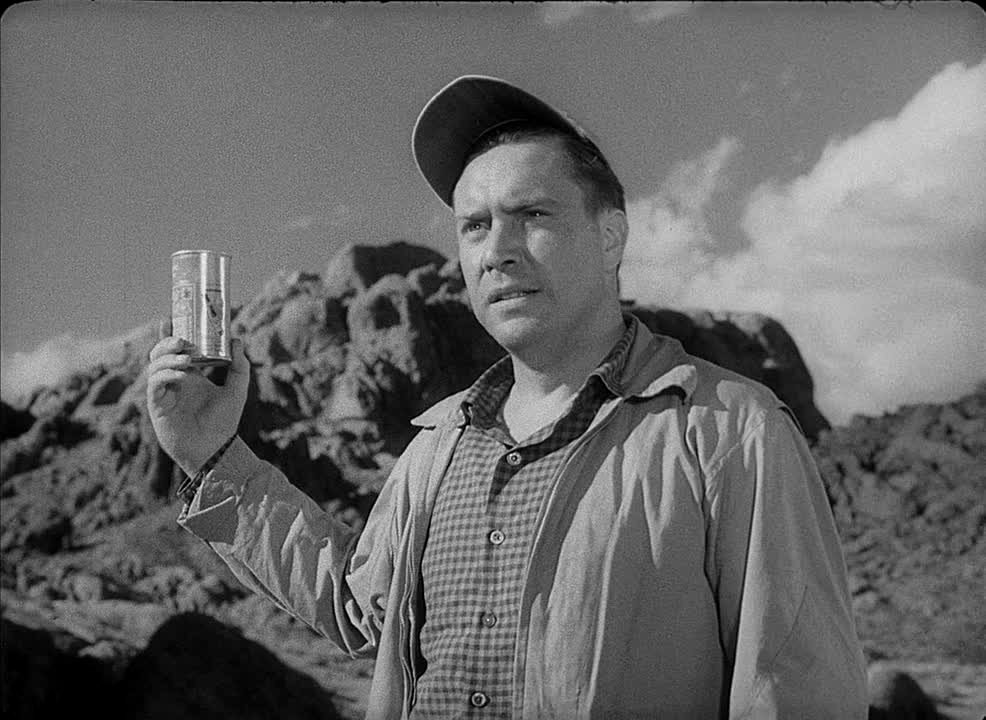
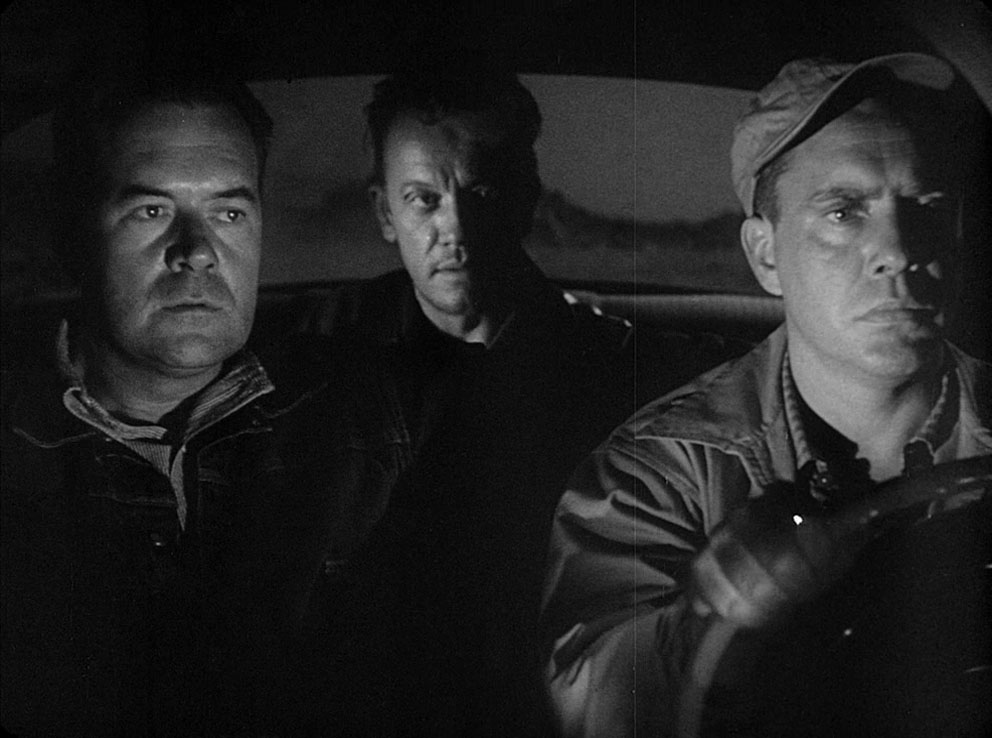

Lupino manages to achieve much in the film’s meagre 71 minute runtime. Most striking to me are the contrasts, both visual and atmospheric, that serve the story. The setting alternates from the hotbox enclosure of Collins’ and Bowen’s car to the wide-open desert spaces through which it is passing. Collins and Bowen are seated in the light up front; Myers is shrouded in darkness in the backseat. Myers is blind in one eye and sharp as a hawk in the other. These contrasts are amplified by inversions, however. Collins is a mechanic and driver. He possesses the most power, therefore, in the most enclosed space. Bowen is the only character who can speak Spanish. Myers holds a gun, then, but Bowen has the power of knowledge when they need to resupply in one of the sleepy Mexican hamlets along the way. Ultimately, the dynamic that emerges between the three characters is a sort of inverted buddy feature. I often found myself wondering whether Bowen and Collins would remain friends when the ordeal was over, or if they would go their separate ways.
The Hitch-Hiker was a B picture for a reason, however. Its weaknesses are plain. There are holes in the plot big enough to drive the fishermen’s Plymouth through. The opportunities for the captives to overpower Myers and run away are seemingly endless, for example. The plot does nothing with the interesting inversions of power represented by the captives’ advantages in mechanical and linguistic knowledge, either. When Bowen speaks with Mexican characters in the film—all of whom are represented in the round, an unexpected breath of fresh air for the time—the opportunities are as tantalizing as his failure to capitalize on them is frustrating. The outcome is predictable, and the film’s short runtime does not allow Lupino to introduce many curves in the road on the way there.
Despite these flaws, The Hitch-Hiker is a must-see noir thriller. Uncluttered and raw, beautifully shot and intelligently optimistic in the shadow of the dark real-world events that shaped its story, the film captures the ambivalence of a moment in American history rich with opportunity but scarred by violence and despair. Imagine watching it in the bench seat up front of an old Chrysler parked in a darkened lot, soundtrack blaring through a speaker hung on the window. After the movie you drop off the speaker on the way out and drive home laughing about your date’s white knuckles when they clutched your knee at the suspenseful parts. You round a bend in the road, straining to see in the weak headlight beams what might be in the dark pavement ahead, and there is a lonesome man in a dark jacket on the side of the road, thumb stuck out, pointing your way. You keep driving.
Here’s a thing I didn’t expect to see today. A Bing search just outperformed a Google search in relevance. I was looking for a relatively obscure book to reference for an essay I’m writing, and behold!


I’ve been reading anecdotes about deteriorating Google search quality, and I now I have one of my very own to share.
Update: I wondered what would happen if I tried the same search using DuckDuckGo and the results are actually better than Google, too.

None of this proves that these engines are better than Google as a daily driver, of course, but they certainly beat the behemoth in this edge case. With Apple rumored to be working on an alternative search service, too, competition may finally be coming to Mountain View.
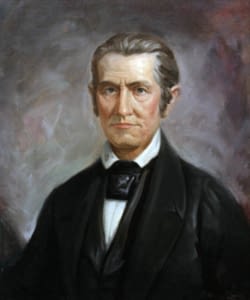
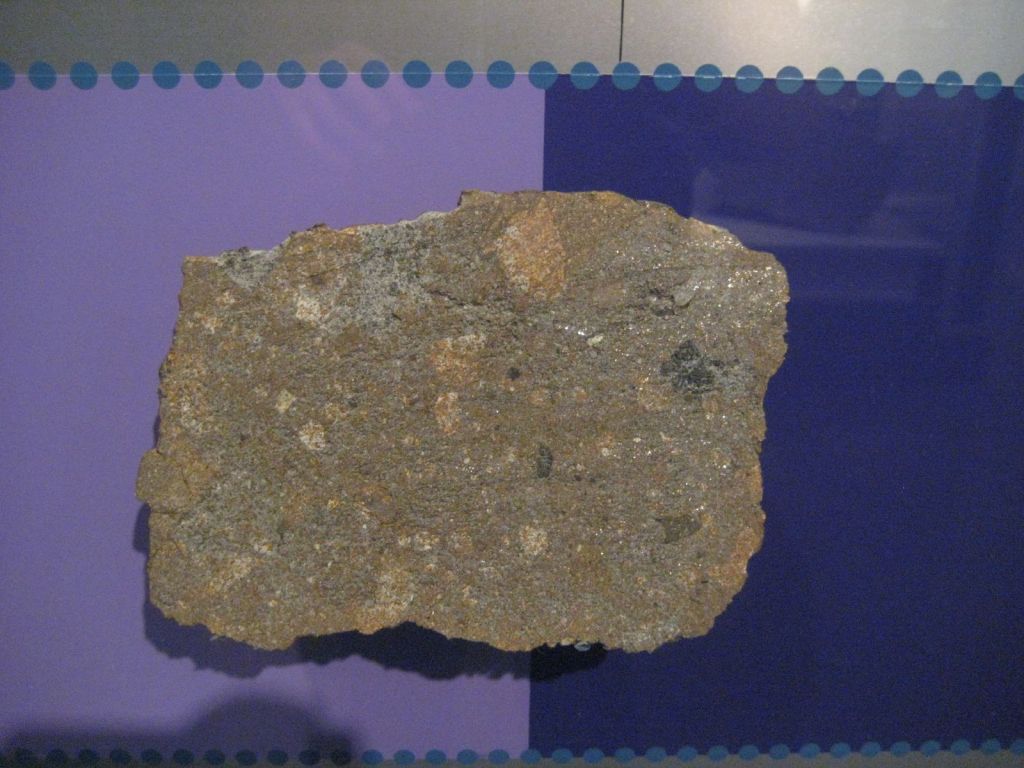
I just came across this interesting account of the Weston Meteorite, a rather famous extraterrestrial visitor to the early republic, in The Autobiography of Thomas Douglas, late Judge of the Supreme Court of Florida, published in 1856. Douglas grew up in Connecticut, relocated to Indiana, where he served as a judge at the age of twenty-five before he was even licensed to practice law, and then made his way to East Florida in 1826. Douglas was a young man of seventeen “lying wakeful and musing upon [his] situation” when the meteorite lit up the sky overhead. His memory of the event is a little suspect–the meteorite is supposed to have fallen early in the morning, rather than late at night, for example–but this sort of thing is usual in historical testimony and gives us a picture of the older man remembering his youth as much as it illustrates the event itself. Here’s the account:
“In the winter… one clear, beautiful, star-light night, I was lying wakeful and musing upon my situation, when I heard a tremendous roaring like distant, but heavy thunder, on the approach of a severe storm of wind and rain, and my room suddenly became so light that I could have seen a pin upon the floor. I called to my father, who was sleeping in an adjoining room, he rose and on looking out of the window told me it was a large meteor. This erratic visitor was traveling from northeast to southwest, and its immense size may be judged of from the fact that a gentleman, who standing in his yard at Westerly, in the State of New York, saw a piece fly off, which appeared but a spark, while the main body looked as large as a hogshead. This spark fell near where this gentleman was standing. He had it taken up, and found that its weight was about seventy pounds. It was afterwards sent to Yale College and analyzed by Professor Silliman, who found it composed principally of iron. Where this came from is a question which the wisest philosophers have not yet been able to determine.”
The Autobiography of Thomas Douglas, late Judge of the Supreme Court of Florida. New York: Calkins & Stiles, 1856: 24.

There is a tree in the small stand of forest where I take my lunch at work. It has grown from two woody solitudes, twisted in convergent forms like twins battling for supremacy of the same body. One of the twins has emerged triumphant since the plant took root, standing tall–as tall as a Water Oak can stand–above the other, which is bent toward its mightier sibling, rotting at the top, acceding the victory of its twin. It is a tree like other trees. It does not tower. It has no lore. It lives upon its own insistence, feeding on what sunlight it can gather from its prosaic patch of earth sandwiched between the silent waste of the government parking lot and the incessant, hissing excess of Interstate 10. Today I and the twins will commune, like yesterday, reflecting upon our own insistent will to live. Feeding in silence.
I only notice the tree because it is nearest to my picnic table. There are no charismatic grandfathers or grandmothers in my lunch-wood, no booming fauna, no roaring water. Places like this are where most Americans experience nature. In my part of the country, these places are often gray and brown, bark and mud. Dominion of the water oaks.
A water oak is like a chameleon: adaptable, unpredictable. A prolific nineteenth-century observer of trees wrote of the water oak: “There is no oak in the United States of which the foliage is so variable and so different from that of the tree, on the young stocks and on the sprouts from an old trunk or from the base of a limb that has been lopped.” It favors wetlands but can grow indifferently on compact or sandy uplands. It is semi-Evergreen in the South, taking on a showy yellow for a week or so before dropping its leaves according to its own schedule and sometimes not at all. It grows in polluted cities with poor soil and drainage as readily as it will grow in old fields or in the rich muck along the edge of wetlands. Water Oaks don’t much mind drought–contrary to their name–but don’t particularly like strong storms, which can blow away their fragile trunks. One of these likely put an end to the weaker twin of my lunch-wood’s tree. Water Oak flowers, last but not at all least, are brown like their fruit, which stains sidewalks and parking lots a deep tannic hue. In this way, then, Water Oaks connect my asphalt milieu to the impossibly murky rivers which cut their quiet way through the red clay far away from my little Southern city. Town and country, strong and weak, wet and dry: they cannot be reduced.
As they connect town and country for me, so, too, do they connect present with past. Like so many of the people I have known, Water Oaks are short and tough but prone to tragic deterioration. They die young, hollowed out by the age of 40, subject to every one of the world’s whims. Bits and pieces of the trees lie aground, bearing mute gray-and-brown testimony to past trauma. Lightning-scarred, savaged by birds and rodents, worsened and weakened by neighbors, seasons, companions, they fall and die by the age of fifty. I can’t help but think of my cousin when I imagine the tragedy of the Water Oak. The Water Oak is yours, Billy Yetman.
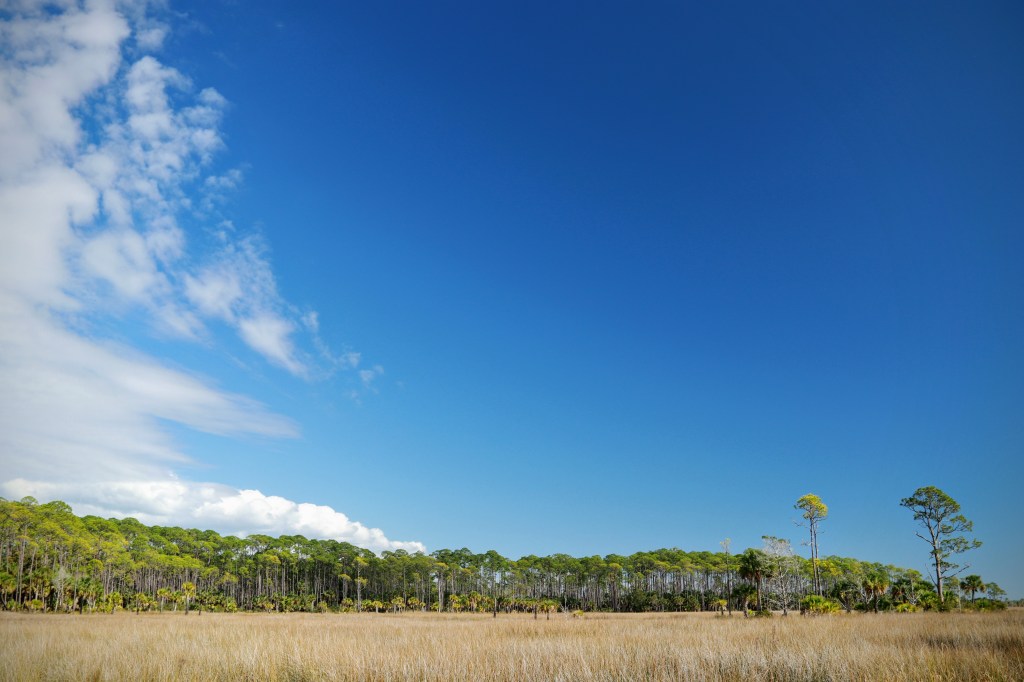
I’m always inspired when I visit the St. Marks National Wildlife Refuge. I’ve posted photos before, and I made a Minute Wild video just upriver last spring, but somehow I forgot to post these photos when I hiked the trail out to the old ghost town of Port Leon in February. Maybe it’s because I recorded something like twenty-five voice notes about the hike for a collection of travel essays I’m working on, and I didn’t even know where to begin. For this post I’ll just let the photos speak for themselves.




I. Summer
Somewhere summer is gold, I’ve heard
but here it is gray as tired earth.
Like light mysterious to the prism,
so all it is nothing.
I pity those near the mouth of the den
embroidered with ceaseless energy.
By day by light accosted,
at night by heat exhausted.
To witness is to fall
short of empathy.
Where, then, are the fairy tales of haze gray summer,
Of dog days beneath crackling pines?

 C.B. Crenshaw