Here’s a thing I didn’t expect to see today. A Bing search just outperformed a Google search in relevance. I was looking for a relatively obscure book to reference for an essay I’m writing, and behold!
The Bing results. Note the Archive.org link. The book is available to checkout in PDF or ePub format at this link. The informational window at right is useful, as well. I was logged into my Microsoft account when I performed this search.
The Google results. With the exception of a blatant scam link in second place, all of these links point to places where I can buy the book. The first link leads to a review of the book in a scholarly journal. The Archive.org link is nowhere to be found. Notably, none of these links lead to a PDF version of the book, which was one of the search terms. I was logged into my Google account when I performed this search.
I’ve been reading anecdotes about deteriorating Google search quality, and I now I have one of my very own to share.
Update: I wondered what would happen if I tried the same search using DuckDuckGo and the results are actually better than Google, too.
The DuckDuckGo results. Note the Archive.org link in first place. A link to a dissertation hosted by my university’s scholarly commons is ranked second place. This made me suspicious, since DuckDuckGo prioritizes privacy and none of the other browsers included geographically relevant results, but the engine retrieved the same results when I ran the search through a VPN on a clean cache. Unfortunately the dissertation, though a PDF, was only tangentially relevant to the search. Still, the results are demonstrably better than Google’s.
None of this proves that these engines are better than Google as a daily driver, of course, but they certainly beat the behemoth in this edge case. With Apple rumored to be working on an alternative search service, too, competition may finally be coming to Mountain View.
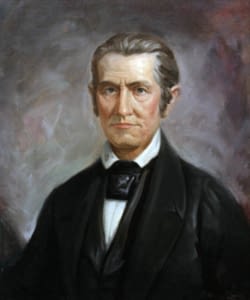
Judge Thomas Douglas, image from Florida Supreme Court
I just came across this interesting account of the Weston Meteorite, a rather famous extraterrestrial visitor to the early republic, in The Autobiography of Thomas Douglas, late Judge of the Supreme Court of Florida, published in 1856. Douglas grew up in Connecticut, relocated to Indiana, where he served as a judge at the age of twenty-five before he was even licensed to practice law, and then made his way to East Florida in 1826. Douglas was a young man of seventeen “lying wakeful and musing upon [his] situation” when the meteorite lit up the sky overhead. His memory of the event is a little suspect–the meteorite is supposed to have fallen early in the morning, rather than late at night, for example–but this sort of thing is usual in historical testimony and gives us a picture of the older man remembering his youth as much as it illustrates the event itself. Here’s the account:
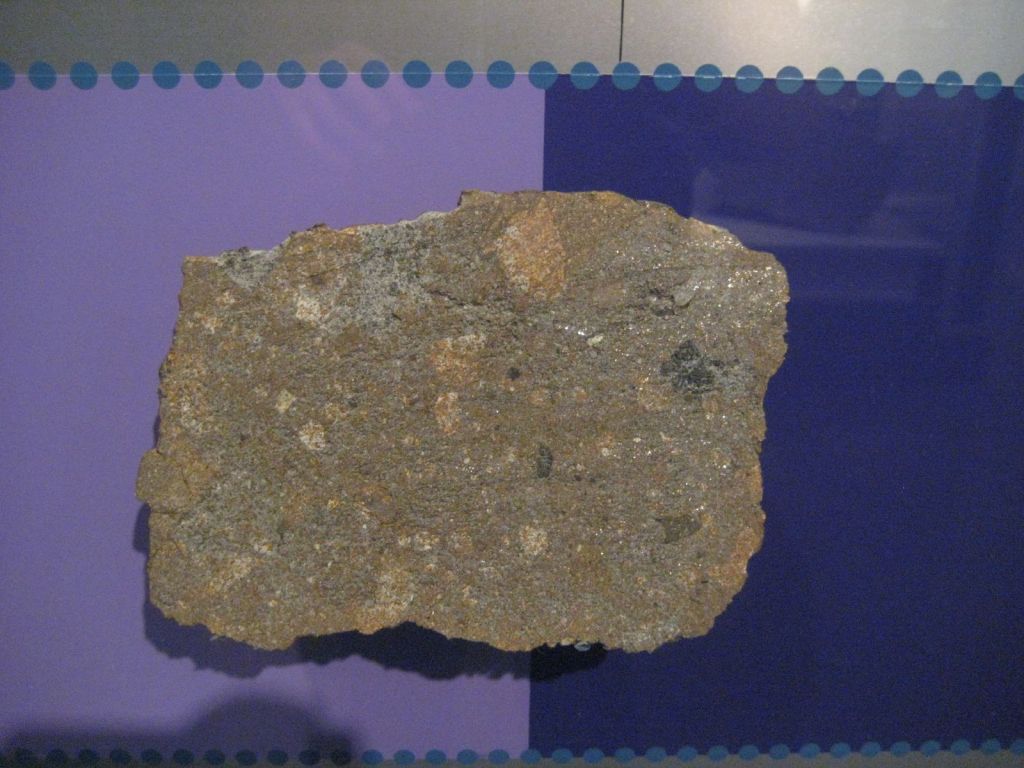
“In the winter… one clear, beautiful, star-light night, I was lying wakeful and musing upon my situation, when I heard a tremendous roaring like distant, but heavy thunder, on the approach of a severe storm of wind and rain, and my room suddenly became so light that I could have seen a pin upon the floor. I called to my father, who was sleeping in an adjoining room, he rose and on looking out of the window told me it was a large meteor. This erratic visitor was traveling from northeast to southwest, and its immense size may be judged of from the fact that a gentleman, who standing in his yard at Westerly, in the State of New York, saw a piece fly off, which appeared but a spark, while the main body looked as large as a hogshead. This spark fell near where this gentleman was standing. He had it taken up, and found that its weight was about seventy pounds. It was afterwards sent to Yale College and analyzed by Professor Silliman, who found it composed principally of iron. Where this came from is a question which the wisest philosophers have not yet been able to determine.”
The Autobiography of Thomas Douglas, late Judge of the Supreme Court of Florida. New York: Calkins & Stiles, 1856: 24.
This fragment of the meteorite, housed in the Yale meteorite collection, “appeared but a spark, while the main body looked as large as a hogshead.” Image from Wikipedia.
There is a tree in the small stand of forest where I take my lunch at work. It has grown from two woody solitudes, twisted in convergent forms like twins battling for supremacy of the same body. One of the twins has emerged triumphant since the plant took root, standing tall–as tall as a Water Oak can stand–above the other, which is bent toward its mightier sibling, rotting at the top, acceding the victory of its twin. It is a tree like other trees. It does not tower. It has no lore. It lives upon its own insistence, feeding on what sunlight it can gather from its prosaic patch of earth sandwiched between the silent waste of the government parking lot and the incessant, hissing excess of Interstate 10. Today I and the twins will commune, like yesterday, reflecting upon our own insistent will to live. Feeding in silence.
I only notice the tree because it is nearest to my picnic table. There are no charismatic grandfathers or grandmothers in my lunch-wood, no booming fauna, no roaring water. Places like this are where most Americans experience nature. In my part of the country, these places are often gray and brown, bark and mud. Dominion of the water oaks.
A water oak is like a chameleon: adaptable, unpredictable. A prolific nineteenth-century observer of trees wrote of the water oak: “There is no oak in the United States of which the foliage is so variable and so different from that of the tree, on the young stocks and on the sprouts from an old trunk or from the base of a limb that has been lopped.” It favors wetlands but can grow indifferently on compact or sandy uplands. It is semi-Evergreen in the South, taking on a showy yellow for a week or so before dropping its leaves according to its own schedule and sometimes not at all. It grows in polluted cities with poor soil and drainage as readily as it will grow in old fields or in the rich muck along the edge of wetlands. Water Oaks don’t much mind drought–contrary to their name–but don’t particularly like strong storms, which can blow away their fragile trunks. One of these likely put an end to the weaker twin of my lunch-wood’s tree. Water Oak flowers, last but not at all least, are brown like their fruit, which stains sidewalks and parking lots a deep tannic hue. In this way, then, Water Oaks connect my asphalt milieu to the impossibly murky rivers which cut their quiet way through the red clay far away from my little Southern city. Town and country, strong and weak, wet and dry: they cannot be reduced.
As they connect town and country for me, so, too, do they connect present with past. Like so many of the people I have known, Water Oaks are short and tough but prone to tragic deterioration. They die young, hollowed out by the age of 40, subject to every one of the world’s whims. Bits and pieces of the trees lie aground, bearing mute gray-and-brown testimony to past trauma. Lightning-scarred, savaged by birds and rodents, worsened and weakened by neighbors, seasons, companions, they fall and die by the age of fifty. I can’t help but think of my cousin when I imagine the tragedy of the Water Oak. The Water Oak is yours, Billy Yetman.
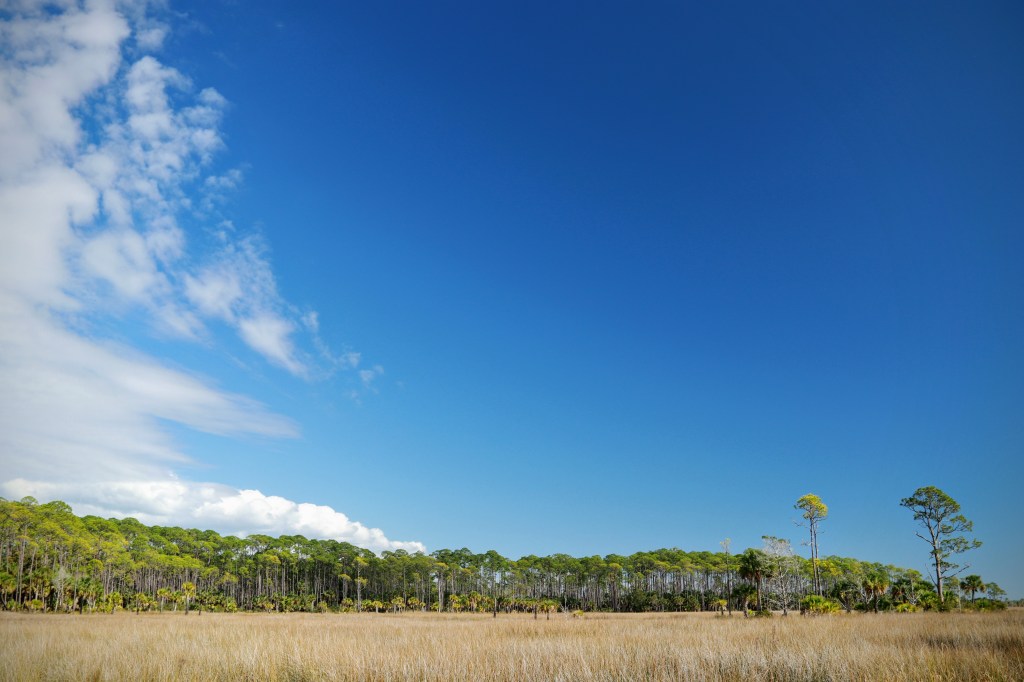
I’m always inspired when I visit the St. Marks National Wildlife Refuge. I’ve posted photos before, and I made a Minute Wild video just upriver last spring, but somehow I forgot to post these photos when I hiked the trail out to the old ghost town of Port Leon in February. Maybe it’s because I recorded something like twenty-five voice notes about the hike for a collection of travel essays I’m working on, and I didn’t even know where to begin. For this post I’ll just let the photos speak for themselves.
It seems still Somewhat a wonder That we should Own a windowsill Our talents providing A final resting place for Ladybugs and dust motes Cast verdant by Midday sun wasted On office-dwellers unrepentant









 C.B. Crenshaw