Blog

Dots on the Map

Last week I saw a frightening thing.

Last week I saw a tech demo for an open source mapping library. Imagine a dark wireframe map, black and purple and yellow, different shades of gray, the kind of visualization that looks slick like science fiction, even now, in 2026. At the center of the map: a pizza restaurant in a Florida college town. Gray roads spread out from the franchise like a spider’s web, connecting it with the towns and cities of the southeast. Click a button and little 3D boxes appear on the screen, each little polygon representing one of the burger joints, tire repair shops, big box retailers, houses, or apartment buildings surrounding the pizza restaurant. Click another button and outlines appear on the ground—geofences. The one surrounding the pizza franchise glows dark orange. Click the next button and little yellow dots appear on the screen, dozens of dots, all within the dark orange glow of the boundary surrounding the pizza restaurant. Each one of these dots is a cell phone that pinged a tower from inside the geofence. Each one of these dots is a person.

Click another button and purple dots appear on the screen. Some of them are close to the pizza restaurant. Some of them are far away.Each one of these dots is where the phone represented by one of the yellow dots “spends the night.” Each one of these dots is a person’s home.

Click another button and the number of yellow dots increases again. Each dot shows a point in time as one of the cell phones in the first shot made its way to the pizza restaurant. String these dots together and you can trace the route each customer took to reach the restaurant.

Move a slider representing time at the bottom of the screen and the number of yellow and purple dots increases. With enough time, the tracery of yellow dots marks out the road map of Florida. Add more time and it traces a road map of the eastern seaboard. Can you guess what lies at the end of those yellow brick roads? Little purple houses.

Right now, then, any random business owner can buy a map that leads from a customer at the register back to that person’s bedroom. It doesn’t take much to connect a point on the map to a street address; an address to a name. I’m sure this trivial step wouldn’t be necessary, though, because the data broker who provided the underlying phone data will gladly sell the phone number, too. Phone numbers leads to names and addresses; names lead to background checks, consumer profiles, credit reports, recent purchases, web history, likely political affiliations, social credit scores; one name to another name, a graph of connections leading from a dot on the map to the very essence of who you are – at least as far as data brokers can gather.

I think we all understand, in a cynical way, that this is happening. But seeing it, watching the private lives of people who simply wanted to eat pizza for lunch unfold on the screen before my eyes, cut through the veil of cynicism.

We are living in the worst case scenario. It is a frightening place to be.

(Note: The WordPress AI Assistant thought this post would be improved by the addition of tags like “short story,” “fiction,” or “science fiction.” I assure you, reader, AI and human alike, that this shit is non-fiction. – CBC)

The Reader’s Dilemma

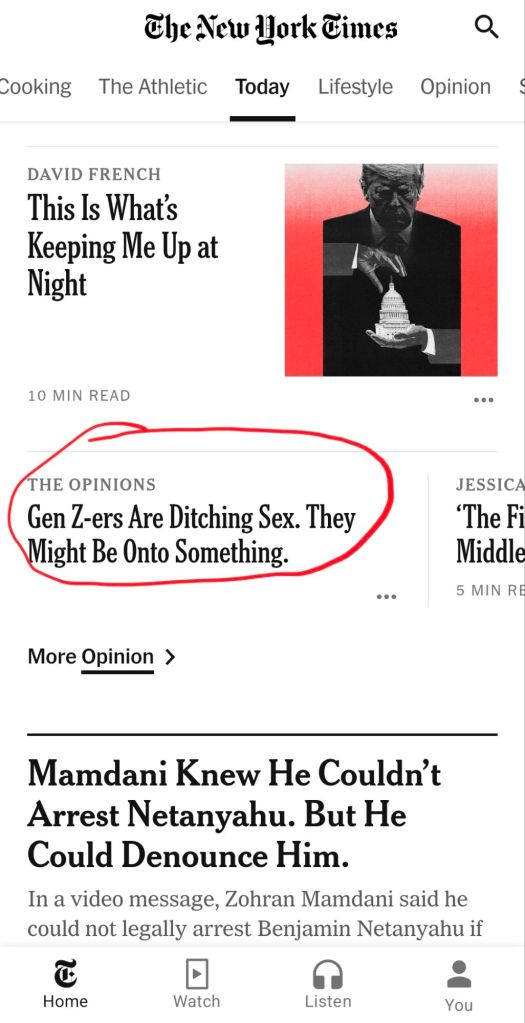
There is an article over on The New Republic this week trying to figure out what it all means that nonfiction publishing—and, by extension, book reading in general—seems to be in such trouble. There are a few things happening in the article that sent me here to the word processor, but before I get into that I should unpack the type of book they’re fretting about.

Consider the History, Current Affairs, or (way in the back) Science & Nature section at your neighborhood Barnes & Noble or Books-A-Million. There are a few tables scattered around the area with Buy-2-Get-1 deals, markdowns, and features. On these tables you’ll find either hardcover editions of nonfiction bestsellers from the past two or three years that the bookseller needs to move because the titles have now been released in paperback; or paperback bestsellers linked with an upcoming movie, TV, or podcast release. On these tables you’ll find a whole lot of awful memoirs that no one will remember even a month after reading them, but also things like Killers of the Flower Moon, Michael Pollan’s latest book about flowers or drugs or whatever, and then books that folks in the journalism business like to call reportage. Paul Elie, author of the piece at The New Republic, calls this “long fact” in the article, and it’s worth quoting the definition at some length.

The journalism we read, the newscasts we watch, the panels of expert commentary, the hard-hitting 60 Minutes reports: All are informed, and shaped, and buttressed from the ground up by long fact—nonfiction developed at length and with a narrative arc that sets it at an angle to the self and the present.

It’s “long fact” that seems to be dying, Elie reports, and then he tries to unpack what a grave threat that is to democracy, how reading is an act of resistance, blah blah blah. Let’s come back to that. As an historian, my mind works by finding signals in the archives and trying to determine the source. This means reading both backward and outward from what to why, and only then flexing the theory to explain what that all might mean. So let’s start with the what.

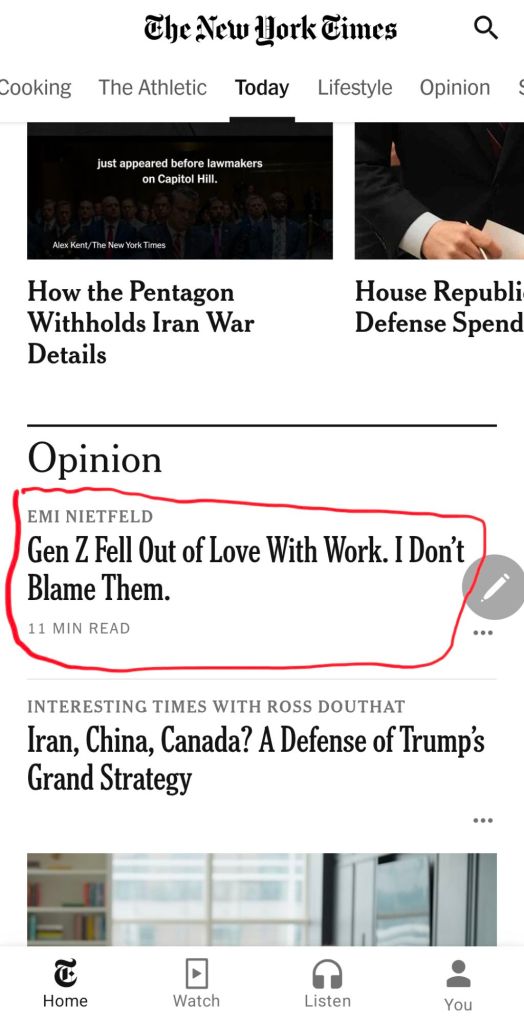
Elie argues that “long fact” is under threat because readers simply aren’t buying books. I don’t think he’s wrong. 40% of Americans claim not to have read a book at all in 2025, he reports, citing a YouGov poll, and other polling from my own Google searches now and six years ago when I wrote about this before confirms that reading for pleasure among American adults has fallen precipitously over the past twenty years.

So why is this happening? I agree with Elie that answers to this question tend to revolve around technology, and I am just as unconvinced as he is. Elie quotes Updike lamenting electronic media while accepting the American Book Award way back in 1982. And then more than forty years later we have a New York Times publishing editor arguing, “The decline in sales of new nonfiction might reflect a changing information ecosystem…. People looking for information can now easily turn to chatbots, YouTube, podcasts and other free online sources.”

Has anyone even stopped to consider that the trouble might be that the people who care about this stuff insist on calling it “long fact?” That they think people are reading to take on information rather than enrich their spirits?

I have a house full of books. This is not a boast, but a sort of warrant. I’m not at Umberto Eco or Italo Calvino levels yet, but I am well on my way to a library that both delights friends and strangers and makes romantic partners uncomfortable. I am unlikely to ever stop buying, trading, donating, and scavenging a vast personal library. The warrant is therefore this: I love reading. I love books. I’ve dedicated enough thought to reading and books that I have a dim understanding of what the literary life is supposed to be.

From that warrant, here is an argument. First, the publishing business is just as bad now as it has always been. Books are hard to sell now and they were hard to sell in the past because the majority of people in the world simply can’t read them, most of those who can read would rather spend their time doing other things (God bless them), and the very small minority who actually enjoy reading and spend meaningful sums of money on books have many, many books on their mind and the same demands on their time as everyone else. For the rest of this essay, let’s call these people readers and everyone else book-buyers.

Book-buyers may not be readers, but they do buy most of the books. Based on what I see at the bookstore, there must be at least twenty book-buyers for every reader. Go back and look at those tables at Barnes & Noble, or go look on the New Arrivals shelves at your local public library, and you’ll see that the overwhelming majority of books there are not really meant to be read. These memoirs, self-help titles, romance novels, thrillers, fantasy series, and children’s picture books are meant to be given as gifts, read briefly on a beach or airplane, discussed (though not necessarily perused) for a book club, or simply placed on tables and shelves for display until the next batch arrives. Imagine packing twelve of them in your suitcase and lugging them to the airport for a week-long trip, like a reader would, because you can’t imagine being without books and these are the ones you think will get you through the next few days. Does anything on the table pass the test?

So what does pass the test? What do readers want from a book? Quality writing is important, sure, but I think the two vital characteristics of a reader’s book are that it engages books and other texts in conversation and that it demonstrates a new way of thinking about or being in the world.

These books stay on shelves while the vast majority of others are ground to pulp in landfills. When readers mentor the next generation of readers, these are the books they will point out. And because, as Elie points out, so much of culture is derived directly or indirectly from books, the influence of these readers’ books on culture is profound. Nobody gives a shit about the South Beach Diet, even though it sold millions upon millions of copies. People do care a great deal about To The Lighthouse, which will never sell a fraction of the volume.

Publishing is no longer serving readers with books like this. Until recently, editors were playing the same game they’ve always played—that is, attempting to finance the meaningful reader’s books by churning out an ocean of bullshit for book-buyers that can cover losses. Now that the publishing industry is just as thoroughly financialized as everything else, however, the passion that creates this strange business model has no place. The investors running the business optimize away losses. Laying off editors who champion books that don’t sell, for example, is a simple and effective way to do this.

As a result of this ongoing financial optimization, the remaining books which try to appeal to readers seem to be optimized for market segments and customer personas rather than actual humans. This means they fail a crucial part of the test for readers’ books: they can’t demonstrate new ways of thinking or being because new aspects of human experience aren’t covered in the personas used to generate the sales strategy. New personas—i.e., new ways of being in the world—can’t be included in sales meant to contribute to this quarter’s metrics. With lead times and marketing budgets, that would have to wait for next year, in fact. This means that books produced by major publishers can do nothing but confirm, over and over again, all the existing passions, beliefs, and prejudices of their target demographic.

I think this is part of a bigger problem. Lately it feels as though there are only five or six predefined identities to choose from in a society that tells us identity is the most essential fact of human experience. We seem to be at once both deeply predictable and terribly blindsided by difference. We read things on Reddit or Facebook or in group chats that feel like truth because our entire identity, carefully chosen from the limited selections on the marketplace, is predicated on a particular theory. But reality continues to evade the theory, beguile our understanding, and challenge the identity. We react with dismay and then do it all over again, more upset every time reality fails to meet our expectations. This is happening to everyone all the time, regardless of their political persuasion, gender expression, preference for Halloween over Christmas, or membership in the Church of Jesus Christ of Latter Day Saints.

Because they don’t work, because they cause us pain, we should push back against these simplistic models and the ghastly platitudes they use to explain the world. Here is one of them. “In societies where freedom is under threat,” Elie argues, “an informed citizen is countercultural and deep reading is an act of resistance.” Not so fast. Reading cuts in many directions. Sometimes deep reading can lead to tyranny. Often a reader may choose to read deeply and then deeply conform. Elie knows this. “In a would-be autocracy,” he writes, “even a small bookstore… is a space of contrary narratives, where truth is recognized as both essential and complicated.”

Truth is complicated, indeed. Now if only the uninformed assholes turning America into a “would-be autocracy” could read a fucking book, Elie suggests, we would all enjoy the beauty and bounty of complex truth forevermore. But what would it mean if someone read all the books in the little bookstore and then decided that they think The New Republic is the master narrative and they need to resist it with fascism? What if they read all the books there and then went and read more, maybe an entire PoliSci PhD comps reading list, just to confirm that they really believe monarchy is what we need in America and that they ought to get a gun and make it happen?

That happens all the time, in just the same way that a young person reads the classics from the bookstore and decides it’s OK to be gay or it’s a great idea to start a community garden. It happens in the same way that I read deeply when I was a kid and formed opinions about the world that some people find repugnant. Reading can’t stop us from being bad people or building terrible ways to live, but good books for readers can help us understand why this is so, and they can help us transcend the panic and pain of living in a world that seeks to reduce humans to citizens who read for information or pleasure.

Major publishers don’t care about these books anymore, but that doesn’t mean they aren’t out there. Who cares if a major publisher lays off some editors? Does it really matter if the bestsellers list is full of dumb memoirs? That means about as much to me as the list of the most popular shows on Netflix. Good work will happen, and it will find its way into the world, and I will keep trying to find it. That’s a long fact if ever there was one.
Melania (2026) and The People Who Love It

I watched Melania last weekend in a multiplex theater located in the heart of a huge shopping center in Birmingham, Alabama. When I bought my ticket, I was surprised to see that some of the seats had already been chosen. This is not a normal experience lately. In theaters like this one recently I’ve watched Oscar-buzz films, kids movies, beloved classics, horror, action thrillers, comedies, and dramas, and in the past 18 months I haven’t once shared the theater with more than ten people. You can imagine my surprise, then, as the commercials for Coca-Cola and Cadillac and Amazon streamed before the show, when every seat in the theater filled up—I’m not exaggerating—and the room rang with the bygone buzz of crunching popcorn, slurping soda, crinkling candy wrappers, and soft conversation.

My surprise deepened as I surveyed the room. This audience, I am confident, was unlike any audience at a recent screening in America, because it was all women. Let me not mislead you. There were two men there: myself and one other guy, a single father who brought his daughters to the show. But, with these two exceptions, the audience was otherwise made up of dozens of women. They arrived in groups of two to five, and they skewed mostly, but not exclusively, to the upper boundaries of middle age. I’ve never seen anything like it, and I will probably never see it again.

I don’t give a damn about the hyperpolitics of Melania. If you want to take this strange fact about a theater full of women as evidence about which “side” might be “winning” the culture war, you are welcome to draw your conclusions. I’m not here to do that. I’m here to consider the film and try to understand what could bring so many people out to see it.

Melania is bizarre and stupid, a deeply cynical exposition of navel-gazing banality masquerading as a biopic which manages, somehow, to be both flashy and incredibly dull at the same time. You could cut the film into 104 slices, one for each soul-crunching minute of its self-indulgent runtime, and not a single one of them will excite or motivate or inspire you in any way. I started the film with a sense of purpose, attempting to read the minute tells of the subject’s real feelings, or to divine some meaning from the visual style, the non sequiturs, the nods and winks, and all of Brett Ratner’s odd choices, but this exercise left me feeling, about halfway through, strangely numb and vaguely ill, like facing a blank wall while traveling backwards on a train moving slowly through a never-ending tunnel. It sucks.

And there are indeed some odd choices here. There is, for example, the Rolling Stones song “Gimme Shelter” rolling over the opening scene, the backup singer screaming “RAPE! MURDER! IT’S JUST A SHOT AWAY!” while the First Lady (Elect) boards an airplane. There is the rest of the soundtrack, which alternates between classical music and rock like a project executed by an undergraduate film student who cannot decide if they wish to channel Stanley Kubrick or Martin Scorsese for their BFA thesis. There are the indulgently long cuts; the scenes that do nothing to help the story. We spend a moment, for instance, watching the Secret Service wave a metal detector over an Israeli woman visiting Trump Tower to speak to Melania about the hostage crisis in Gaza. Why? Then there are also apparent mistakes masquerading as choices. Why do “old-fashioned” Super 8 or 16mm frames begin to appear for select shots about two-thirds of the way through the movie? Was this was an idea that someone came up with two weeks into the production, or did something go wrong with a whole bunch of shots and they had to salvage what they could?1 Who cares?! It’s a jumble of a film which requires every bit of Hollywood flash its experienced producers can deploy to simply cohere. It only manages to achieve this because it progresses through time in a linear way, and time, as a byproduct of our existence as organisms rooted in time and space, has a tendency to feel coherent if you go from start to fucking finish.

Now, again, listen: I may just be a jaded fool. My experience was not universal. The women in Birmingham seemed to thoroughly enjoy the picture. They laughed at the very rare moments when the film did something funny. They stuck around after the credits to talk it over. They whispered asides to each other while the film played.

Perhaps one of these asides offers a clue to what they saw in it. Around the time when Melania is meeting with event planner David Monn, talking about drinkware and paper choices, one of the women in my row turned to her friend and whispered, “I know why she made this movie. I bet she wants the world to see just how much she works her butt off behind the scenes.” I think she’s right. That makes a lot of sense. Further, I think it offers a great insight into who this film is for, and why that theater was so uncharacteristically full last weekend.

It is an accident of chance that I happened to watch the episode of Celebrity Wife Swap featuring Dara Gottfried and Tanya Thicke the night before I watched Melania, because an offhand statement Thicke made in the show stuck with me, for some reason, and then resonated deeply with the aside I heard in the theater. Like all episodes of Wife Swap, this one tries to create dramatic tension by swapping characters representing easy-to-understand opposites and then allowing viewers to judge each other by viewing the swapped wives through the eyes of the opposite family. Some episodes might contrast, for example, extreme permissiveness with extreme discipline by placing a mom who lets her children eat anything they want into the household of another woman who forces her children to eat a vegan diet. Even better if one wife is from New Jersey and the other Midwestern, maybe; one black and the other white; one plump and the other thin. The producers place these characters in three or four awkward situations per family, and then bring the couples together to confront each other in a debrief when it’s all done.

The Gottfried-Thicke episode explores a few of these dichotomies. Thicke lives on an estate in California; Gottfried lives in an apartment in New York. Gottfried is casual, while Thicke seems more reserved. Thicke enjoys spending money on fine furnishings, clothing, jewelry, hosting dinner parties; Gottfried is practical and thrifty. The producers place these women and their celebrity husbands in situations designed to maximize these differences, and then we go to the debrief.

It is here that I wish to pause. After a tense exchange between Thicke and her husband about whether he has tried to buy her love with gifts, she announces, “People think, ‘oh, well maybe Tanya has a staff, and she doesn’t work, and she doesn’t do anything,’ well that’s not true. I work very, very hard in my house. Everything that I have there, I did. Every fabric has been picked out by me. Every color on the wall, I found in a magazine that I liked and wanted it like that.” And then, while comical music plays to emphasize the point, she returns some sapphire or diamond earrings that she had earlier removed in protest back to her ears and says, “I’m taking this back, because I work that hard.”

There are no right and wrong characters on Wife Swap. There are only archetypes. Viewers who find Thicke’s ideas about work in the home ridiculous are not, I believe, the target audience of Melania. Viewers who might be philosophically or spiritually unsettled by drawers full of jewelry and overstuffed closets in their home are unlikely to identify with Melania. Viewers who believe that deploying their taste to furnish a home or make an event qualifies as hard work might like the film. Those who believe that taking care of their bodies and dressing up to put on a respectable face for their partners, and especially those who believe that they ought to receive some nice gifts and a comfortable life in exchange for this labor, are very likely to identify with Melania.

I don’t think this, in itself, tells us much about how this audience will vote in the midterms, or what sorts of beliefs about other people they might share. Both liberals and conservatives fit these archetypes. The unprecedented way this audience turned out to see this bizarre and polarizing film does suggest, however, that they feel somehow seen by it, that it says something to them and says something about them. That, I believe, is exactly what supporters say about the bizarre and polarizing political tendency represented by the subjects in the film. Someone sees me. I am not here to argue for or against this point of view, but I think it offers a strong clue about why they chose to make their way to the theater in such an intentional way last weekend, and if I was a political scientist, betting man, or nervous type I might think carefully about what that augurs for the future.

In parting, one more anecdote. After the credits had all wound their way over the top of the darkened screen, and the aggressively nonchalant teens working at the theater descended on the auditorium with brooms and dustpans, a woman leaving the theater stopped my partner to ask her whether she liked the film. After they talked it over for a few moments the woman said, “It sure did make me think. I’m going to have to change what I eat if I ever want to wear clothes like that.”


  1. The film suggests that this is how Melania’s father used to capture family memories back in the Slovenian SSR—let’s not stop to think about that too carefully—but then he is clearly nowhere to be found in all but one of these grainy shots. Are we to believe that he was there, clutching a little antique Canon camera when the President-Elect and First Lady disembarked from their limousine at the Blair House in Washington the day before the inauguration? Are we to believe that the producers then took this amateur film to be processed, created a digital copy, and cut it into the print? ↩︎

Dracula (2025) and the Tyranny of Evil Men

If your mind works anything like mine, at some point during Luc Besson’s Dracula—which is, let’s just get it out of the way, a sumptuous visual feast inspired in equal parts by John Boorman’s Excalibur, Tom Tykwer’s Perfume, and Disney fairy tales—you may find yourself asking: why are we asked to identify with this bloodthirsty creature? Is it actually good and noble to be an undead hematophagous thing, spreading a curse across Eurasia like a dark blot of ink? Should we aspire to be evil legends like this beautiful medieval knight-turned-cryptid fiend?

I think Besson is saying: yes, go for it. Which—without recounting the history of the man here—is not altogether surprising.

And, you know, come to think of it, Dracula and Iron Man and Film Directors have much in common. Iron Man and Dracula are solitary geniuses. Both toil in dark, secret lairs, where they manufacture mysterious and invincible technologies. Iron Man makes a suit of miraculous alloys, rocket-powered shoes, a futuristic computer familiar. Dracula produces mad familiars, enchanted gargoyles, armies of animal allies. Film Directors also like to imagine themselves as genius auteurs. Both Iron Man and Dracula have an inexhaustible supply of money. We see Dracula’s gargoyle minions stacking his dining hall with riches here, and the hellish fiend simply does not care. Film Directors, I like to think, are much the same.

It’s no wonder, then, that we are asked to see Dracula as some sort of hero. In the same way we are asked to see the rogue billionaire Tony Stark as a hero, and we are encouraged to look upon the definitely-not-a-sex-criminal Film Director (all of them, that is) as a singular genius, too.

Another thing you might think about, if you’re like me, is how each generation of films seems to ask us to identify ever more closely with Dracula and other horrifying things. The Count was always steeped in gothic romance, it is true, but it is only since the End of History in the 1990s that we have been asked to properly empathize with the beast as a modern man—to consider his point-of-view and find in it something worthwhile. This is a creature who sinks his teeth into the flesh of the living and either drains their life or damns them to an eternity of dark and vile urges. That the creature also happens to be in love with the memory of a woman who died in the 15th century seems beside the point. Doesn’t it?

Is it because the industry is peopled with monstrous men like Harvey Weinstein, Steve Bannon, and Jeffrey Epstein that we are encouraged to look upon seducing and drinking the blood of nubile young women, plunging cold steel into the hard bodies of young men, or murdering a convent full of nuns as kinda fun things you might want to do on a Friday night? Is it because we are ruled by an unstoppable gang of cheapjack thugs and bone-crunching weirdos that our movie villains refuse to stay dead? Again and again they die. Again and again they come back. Nothing changes. They want more.

Besson, at least, brings Dracula to an end in this film. When Christoph Waltz’s steel spike breaks the fiend’s cold, dead heart, his cursed ashes rise toward the brilliant light of salvation like a murmuration of swallows. Here’s one very bad man, at least, who goes straight to heaven. So that’s something.

(Edit: I’m not the only one thinking about the literal monsters running things. Here’s a blog post about the vampires of Silicon Valley I found linked on Hacker News the morning after I published this review. -CBC)