Blog
Jacksonville: Morning, Noon, and Night


Longleaf in Winter
Longleaf flatwoods in winter are not unlike a vast, quiet room. Forever walled by thicker growth—twisted oaks arising from dense leaf shag near the water and the shifting multitudes crouched in the dark corners or prowling the secret paths of the mixed hardwoods and sandy flat woods that took so much of their place after the turpentine men and loggers had their way with Florida—longleaf stands are open and still. They have little to hide. I stood in the forest hugging the banks of the Dead and Ochlockonee Rivers one afternoon in late November as a cold front settled over the fire-hewn landscape. It wrapped around the gummy trunks of the trees, shook the palmetto fans. It quieted the snakes and tapped on the sleeping shells of Gopher Tortoises just settling down for the winter.

The deep still of the Longleaf forest in winter draws one’s eye outward, to the byzantine fringes, where the wind observes a lesser decorum, the cats and dogs and bears and birds and amphibians and insects and spiders and infinitely on cavorting long into the night and deep into the earth. The stately longleaf chamber abides the more studious: the meticulous surgery of the Red-Cockaded Woodpecker, the cautious footwork of deer, the carefully considered scurry of gray and white squirrels a long way up the papery bark of the trees.
In Stirring the Mud, Barbara Hurd reminds us:
“We love high drama in this country, mountain peaks and soap operas. They offer us something to tilt our lives toward—that triumph of ascent, that heart-pounding eye-to-eye intensity, that feeling of being wildly alive. Our nature aesthetics sound like movie reviews: We thrill to the surprising twist in the road that reveals the cast panorama, the unexpected waterfall. We canonize beauty that can be framed on the walls, in the camera, or on the postcard.”
Hurd urges us to look to the swamp, to “love what is muted and marginal, what exists in the shadows, what shoulders its way out of mud and scurries along the damp edges of what is most commonly praised.” But Longleaf in winter is neither exuberant nor muted. It discloses delightful things deliberately and sparingly. It is neither exalted nor condemned. It is a quiet room; the profound and stately fulfillment of space.

Being There: Intimacy and Distance in History
Let’s start a blog post about history with a bunch of questions about the present.
I’ve had a couple of conversations with a respected local historian recently–we’ll leave names out of it–about a recent book addressing a historical site in Florida. The local historian is unimpressed. The author’s “never been there!” he told me this summer back in June. And again, August, he said the other historian’s “never even visited the site,” as though this indicates a self-evident and basic flaw in the work which bears repeating. I have no idea whether the author has ever visited the site, but the sharpness of this dismissal–and its seeming self-evidence–raises the question: does it matter?
In Swampwalker’s Journal, his meditation on wetlands, David M. Carroll writes, “The foundation of my writing and drawing is personal experience, my ‘being there,’ and what I have learned from having been there through so many epochs of my life.” Though indebted to scholars and other observers, he maintains: “Moments outside of the human world in the shallows of a marsh. with red-winged blackbirds calling and the wind rustling in cattails or reedgrass, or a solitary spell at the edge of a swamp on the edge of winter—these will bring intimations of the spirit that moves with the water, the light, and the life of the marsh.”
The aggrieved local historian seems to think that “being there” is an essential part of doing history—that significant sites somehow convey “intimations of the spirit[s]” of the long dead who once walked the soil long trod beneath that on which we walk today. He may be right. I have seldom met a historian who was not pushed toward the craft by a moving childhood experience at some historical site. Right or wrong, he forces us consider: do the dead inhabit the land, even today, or do their “spirits” live in the archives? Are we enriched more by the dust of the earth or the dust of documents?
He raises a couple of interlocking questions, really, that I can’t hope to answer in a single blog post:
- Francis Parkman walked the battlefield trod by Montcalme and Wolfe, interpreting their steps, their sights and sounds, with his own senses. Writing in the nineteenth century, though, he looked out over a less complicated palimpsest. (Parkman died in 1893, in fact, just as Turner was proclaiming the death of the frontier he had so lovingly rendered.) For historians of the near past, Parkman’s sensory investigation may still be an option. But what about those who write of the far-gone early American past? What about the literally buried or submerged world of the ancients?
- In “Historians who Love Too Much,” Jill Lepore describes stroking a lock of Noah Webster’s hair in the archives. That lock of hair, she writes, “made me feel as though I knew him—and, even lee logically liked him—just a bit better.” It is necessary to balance “intimacy” with “distance.” But what is the correct balance? Can I know someone without meeting them?
I am working on an environmental history of the Seminoles, the Seminole Wars, and the Florida we think we know. Like my friend the aggrieved local historian I do not believe that I can tell the history of this munificent Eden without “being there.” But like Jill Lepore I am a little troubled by a sentimental attachment to the things of the past. I must balance “moments outside of the human world,” like David Carroll, against moments outside of the present. This blog is not the place to find the answer to these deep methodological questions, but to lay down the blue lines of my thought. I will begin by challenging myself to breathe deeply: once to taste the dust of the earth, twice to choke on the dust of the archives
Walls of Privilege: Inclusion at the AHA and Other History Conferences
Late last week and over the weekend, my Twitter and Facebook were buzzing with posts from historians at the American Historical Association’s Annual Meeting in Denver. I was glad to see their posts, and especially glad to read of my friends’ and colleagues’ successes. The AHA’s digital success is a wonderful development, for all the reasons Stephanie Kingsley mentions in her Perspectives on History article published after last year’s meeting, but, for most historians, they might as well be tweeting from the fiery surface of Venus. Most of us–many thousands of grad students, historians working in government, adjuncts, secondary educators, and independent scholars, to name but a few–don’t have the freedom or resources to attend a conference in the Mile High City. We’re left on the margins of the conversation, attempting to piece arguments together from 140-character summaries made in the heat of the moment and conversations with colleagues after the fact. As the well-intentioned Tweets below suggest, it’s not always easy to follow along from the outside.
The AHA, OAH, and other professional bodies continue to advocate for the importance of historical training for students across all academic disciplines and the specific relevance of graduate training in history for students entering other professional fields. The OAH suggests that grad students should “develop [their] Plan A to include jobs that are not in academia and ones that [they] might enjoy equally as well as…teaching,” while the AHA’s Career Diversity for Historians Initiative is working with pilot departments “to explore the culture and practice of graduate education and how it can better support the changing needs of graduate students.” These initiatives and suggestions are timely and smart. As Anthony T. Grafton and James Grossman argue in a recent article in Perspectives, “holders of doctorates in history occupy, or have recently occupied, a dizzying array of positions outside the academy” including positions at every level of government, the armed forces, and cultural institutions around the world. Historians are everywhere.
Thoughtful essays and career diversity initiatives are too easily forgotten when annual meetings roll around. These distant and costly affairs make it startlingly clear who the AHA, OAH, and other major associations see as real historians: scholars with deep pockets. (1) Most scholars are cut out of the conversation, unable to scale the walls of privilege surrounding the field’s most important gatherings. We can read programs, thumb through exhibitor’s guides, and try to live vicariously through social media, but the most important aspects of the meeting—the exchange of ideas and professional networking—remain depressingly out-of-reach. (2)
It should not be this way. Streaming live video, moderated chats and debates, and digital publishing are ubiquitous, accessible, and inexpensive. Sessions, round-tables, and addresses should be broadcast over the web, open to moderated discussion by all. H-Net and Reddit AMAs should play a significantly larger role in the digital infrastructure of the conference.
While historians can’t help but walk into the future staring backward, avoiding these technologies is not prudently conservative; it is counterproductive. Technology is not a panacea. One look at the last Presidential election lays bare the internet’s deep flaws. But as a professional organization dedicated to career diversity, the AHA should lead the way in 2018 to open the doors of its annual meeting to the thousands of scholars who cannot afford a plane ticket, hotel stay, or cocktails at the bar. The OAH and others should follow. Until then, I’ll be at work in my government office, squinting at #aha17 tweets on my lunch break and plunging into archival sources by night.
Art and Culture and Hegemony and Stuff
Hegemony is a fifty-cent word, borrowed in its current context from Gramsci, that sits right up there at the top of the academic vocabulary vending machine alongside translated French philosophical words and phrases like “the ways in which,” or “discourse” and “practice.” But sometimes it’s useful. Here’s a tiny example of how the dismal hegemonic logic of buying and selling commodities warps our understanding of culture. Pardon the sarcastic quotations.
In “A blunt conversation about life online,” Huck writer Steven T. Hanley asks Bret Easton Ellis whether it is “overly cynical” to be concerned about “a generation with surface interests and surface knowledge” of “culture” because they don’t have to “take two buses to the only video store that [stocks] art-house titles” anymore. Ellis says, no, “it’s not cynicism.” Failure to “invest,” he continues, “equates to a lack of passion when everything comes so easily.” “If everything is at your fingertips in a matter of pushing a button,” Ellis asks, “then what does it really mean to you? What are you investing in it?”
Let’s ignore the vapid generational stereotype, because what’s one more soundless drop in the deep blue nothing of “millennial” stereotypes, and ask the real question here: what the hell is “culture?” And how in the world can one “invest” in it? Hanley and Ellis assume here (in this teeny, tiny part of an otherwise illuminating interview that you should definitely read) that culture is a sum of materialized aesthetics: that people think artistic things and transcribe their thoughts into some physical form, which, when placed alongside all of the other materialized thoughts, amounts to culture (1). In this view, culture is art. But if this is true, they miss the point. We can debate whether it is better to hold some material artifact of the idea we’re reading, watching, listening to, or whatever, but this is a fundamentally commercial question—which product is better?—that tells us very little about art. Far from “surface knowledge,” push-button aesthetics complete the sum for every viewer, reader, and listener.
Discussions of art frequently turn into conversations about things. Language reflects this tendency. Works of art have been called pieces since at least the sixteenth century, for instance. Artists have worked in a medium—materials facilitating the transformation of ideas into things—since the nineteenth century. Music, video, and digital visual art still rely on things in order to be reproduced. It is not surprising, then, that Hanley and Ellis should find themselves talking about stuff when they mean to discuss art. A little more surprising, perhaps, is that they combine the two and call it culture. This is the commodities warp: reduce and represent certain forms of cultural expression as material objects, first, and then substitute the objects in place of the vast and dynamic culture they dimly reflect.
A final thought that might be better developed elsewhere: the internet does not break the art commodities cycle, as Hanley suggests, by eliminating scarcity. It just modifies the variables. Where before both time and media were scarce, now it is only time. Hanley is doubtlessly correct in arguing that our relationship to media is changed, but as anyone who played Second Life years ago or spends real money to buy downloadable content in video games now can tell you, commodities need not be material to possess meaning. This is the real meaning of culture: the sets of rules, definitions, and sleights that allow us to ascribe meaning to everything there is, from art-house films on VHS and the buses we used to ride to find them, to interviews in digital magazines and novels from the 1980s.
(1) Well, Hanley more than Ellis. Later in the interview Ellis claims, “I think people respond to the content itself and not necessarily the medium, whether it’s films, vinyl or a hardcover book.”
Why This?
Writers who can introduce themselves and explain what they’re doing without sounding pretentious are more skilled than I am. I mean “writers” here in the sense that textbook writers mean writers, as in anyone who writes, not writers. This is probably not writing. I do not agonize and toil over prose, writing and rewriting, working and reworking. I do not have an MFA. I am no writer.
Which is why I’m here. I’m trained as a historian but feel increasingly as though I am no scholar. I’ve spent seventeen years playing music but can affirm that I am no musician. I enjoy nature and spend a lot of my time these days learning to see it and trying to understand it, but I am no naturalist. I fish, but it is painfully evident that I am no fisherman. I am interested in everything, master of nothing.
I’ve written blogs before. They are all gone. Some day this will be gone, too. For a while I thought it was because I didn’t follow the advice of blogging professionals. Blogs should be focused, they all agree: limited, targeted, and well-promoted. But this exists right now because I am master of nothing.
Think about metadata. Things are messy. We can try to sort them into neat little piles ahead of time—focused, limited, targeted piles of like things—but this is harder than it seems. What if we get halfway through sorting things only to realize that we were asking the wrong questions of them from the beginning? What if our categories are wrong? This is what writing should reveal: the things we thought we knew about ourselves, about the world, were wrong. Or incomplete. Metadata is like a wand we can wave over the messiness of things. I could limit myself to writing about history, or music, or nature, or fishing, but that would mean that I’ve settled on a pile. I am not settled. Metadata, then, is like a magic wand I can wave over messiness. Give me all of the things about history. Call all of the things about fishing things about nature, too. Metadata is baked into blogging, because blogs are meant to be as messy as I am.
Da Beatminerz-Rhythm Roulette
Speaking of pop music’s archives fever, here’s an inside look at the recycling aesthetic at the heart of hip-hop production.
Watch these producers take the raw cultural materials of the past and rework them for the present.
All music is based on appropriation. Jazz musicians build motifs and solos from standards; rock bands turn out the same chords show after show. Millions of Americans danced (or winced) their way through cover band sets and DJs last weekend. Rather than dismissing sampling, then, it is better to ask: to what end is music appropriated?
This video doesn’t answer the question, but it offers a fascinating look at the process.
Thrice-“Black Honey”
YES
A haunting song from a band who continues to grow and stay relevant. New album To Be Everywhere is To Be Nowhere out next Friday.
Review: Arbor Labor Union – I Hear You
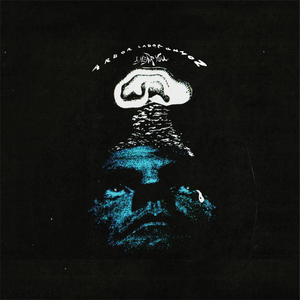
Thomas Hobbes was responsible for much of the better-or-worse modernity we have inherited, so it is not too much of a stretch to link an offhand observation in Leviathan to a self-consciously backward-looking rock band from twenty-first century Atlanta. “No man can have in his mind a conception of the future,” he wrote, “for the future is not yet. But of our conceptions of the past, we make a future.” Perhaps this is why the band–whose new Sub Pop release I Hear You sounds like a nineties college band’s interpretation of the psychedelic era, in a good way: like Hum, without the Gen-x introspection, jamming along with dad’s old records–channeled one of Hobbes’s chief interpreters in a recent comment for SPIN. “We hold these truths to be self evident,” the quartet maintains, echoing Jefferson: “This is now music of the modern era. No genre revival. If a voice within whispers ‘Listen’ you must respond I Hear You. As did we and will continue to do.”
But that’s enough pretentiousness.** I Hear You is a solid album, rich with promise for listeners hungry for a return to the stripped-down grit of rock instrumentation without submitting themselves to the staid genre conventions of punk or (too much of) the self-absorption of post-rock or heavier stoner bands. Arbor Labor Union intentionally refuses to break new ground with I Hear You, but that is the point. As much a response to the glimmering sheen of production that characterizes music today as an homage to psychedelia, I Hear You catalogues a yearning for the material over the digital–as in the band’s write-up about conifer trees and the singing ground, see the * below–and promises to reclaim it by eschewing the last twenty to forty years of music history.
Putting aside the question of whether the band’s effort to reclaim the past is relevant to the present, I Hear You comes as close as any record can to delivering on that promise without succumbing to retro kitsch. “Mr. Birdsong” recalls early grunge, but carefully; subsequent tracks “Hello Transmission” and “Radiant Mountain Road” build backward, linking the opener’s grunge sensibility to the less-restrained garage aesthetic of the seventies and late sixties. “I Am You” carries the union of these styles to a logical, if premature, conclusion in the middle of the album. Reminiscent simultaneously of everything since 1967 and nothing at all, “I Am You” underlines the record’s archival warrant in red ink. It works.
After cresting this psychedelic peak, the album drives gently downhill, back toward the present. Four-minute instrumental “Babel” suggests a more focused method beneath the surface and points—I hope—toward the band’s future. “Belief’d,” “Silent Oath,” and other tracks are better than filler, but the idea is already clear after cresting the peak. These tracks shine light on its musical nuances but illuminate its tidy corners, as well. “IHU,” finally, recalls the droning psychedelia of “I Am You.”
And what of the premise? Countless bands have turned to nostalgia—succumbed to what Derrida describes in a radically different context as “archive fever,” a madness for origins—in an attempt to reclaim that which was bold and bright in rock’s past, and, thus, in their own youth. Arbor Labor Union transcends crass nostalgia on I Hear You by reinterpreting the past for the present. The result is not perfect—repetition and experimentation sometimes derail the individual tracks—but it is remarkably fresh.
** Want more? From the band’s bio page at Sub Pop: “4 Years ago, in the Peach state of Georgia, there was a mighty green Conifer tree whose limbs were wider than the smile on the sun. From this tree hung many a seed. The tree was home to so many creatures big and small. The most fun of them all was perhaps MR. BIRDSONG. Mr. Birdsong was a single white dove…” and so on, including the line: “if you press your ear to the ground you will find that it too has a sound… and it sings.”
 C.B. Crenshaw