Simple Design

I’m really inspired tonight by this page, “Design Like It’s 1999,” published by the Dutch designer Vasilis van Gemert. Van Gemert uses the Dutch documentary website 2Doc–which looks pretty cool, incidentally–to demonstrate what it’s like for a blind person to use a modern, javascript-driven website. It’s objectively awful: 

“”One hundred and fourty nine links. And one of them is the one Simon is looking for. I’ve watched him trying to find a link to the archives. The screenreader started reading elements, one by one. Navigation! List! Six items! Home, link! Documentaries, link! To him, every link, and every item on the page seems to be screaming: I am the most important thing on this page! With every single link he has to wonder if this is the one he’s looking for, or if it is one of the other 148 links.””

Van Gemert solves the problem by developing an extremely simple version of the website. His version is too extreme (which is why he develops it into a fully-baked idea on the rest of the site) but it was good to find a post this morning that made me think about accessibility and design instead of social distancing. 

Maybe it’s time to ditch the default theme here and strike out on my own.

It’s Alive! and Upcycling

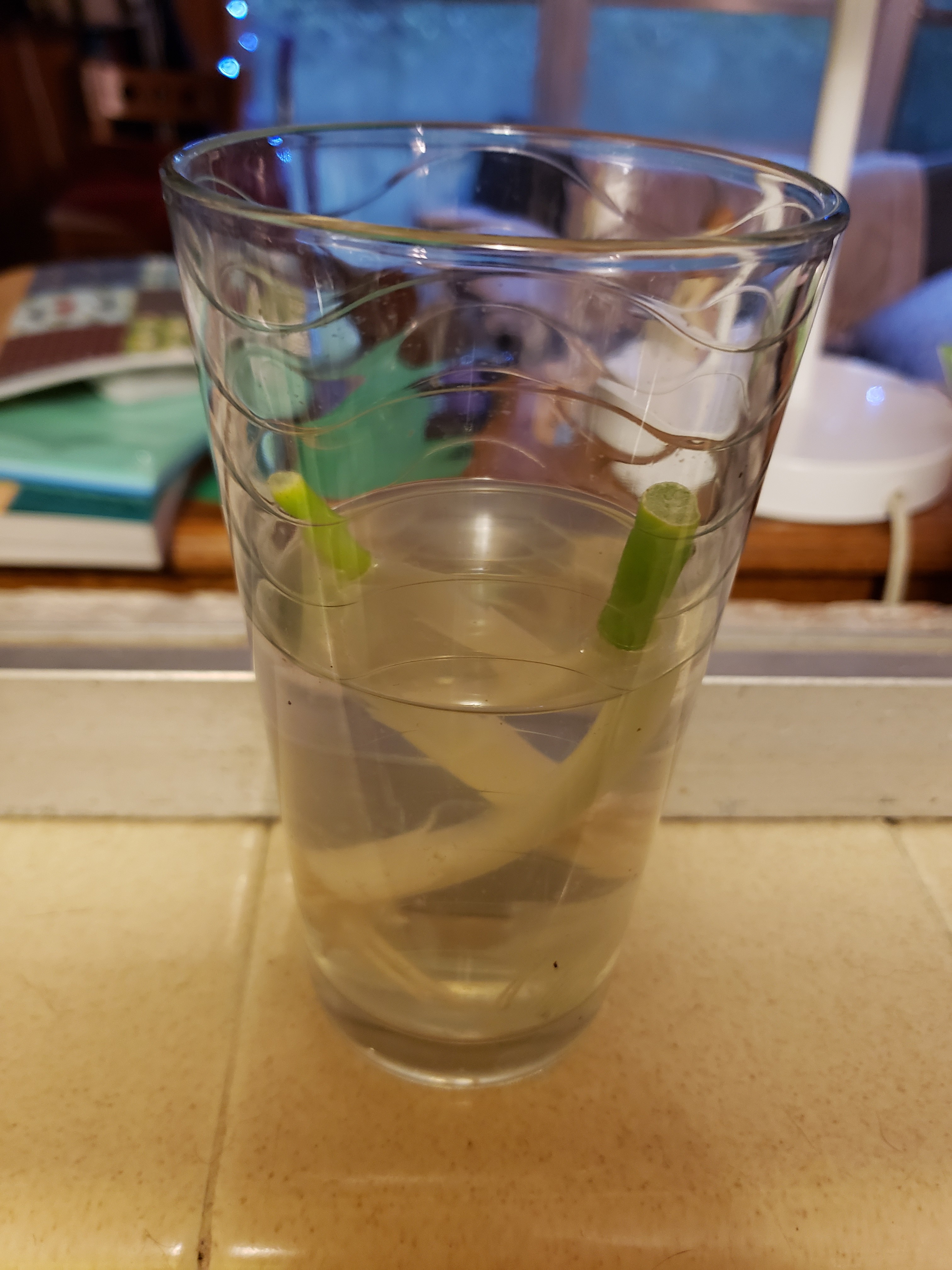
Last night I noticed that the scallions I put in a glass on the windowsill have put out new growth and it felt like some kind of miracle. I frantically looked in the fridge for other produce I could save–we waste so much!–and saw that we have at least two more green onions I can use and re-use, along with some carrots and potatoes to plant in the new planter box (more on that project later). I’ve always been one of those people who claims to kill plants. Learning that it just takes a little patience and thought has been a real head-smacker. How could I have been so stupid?!

It’s Alive! Scallions reborn on the kitchen windowsill. Change the water every two or three days if you try this at home.

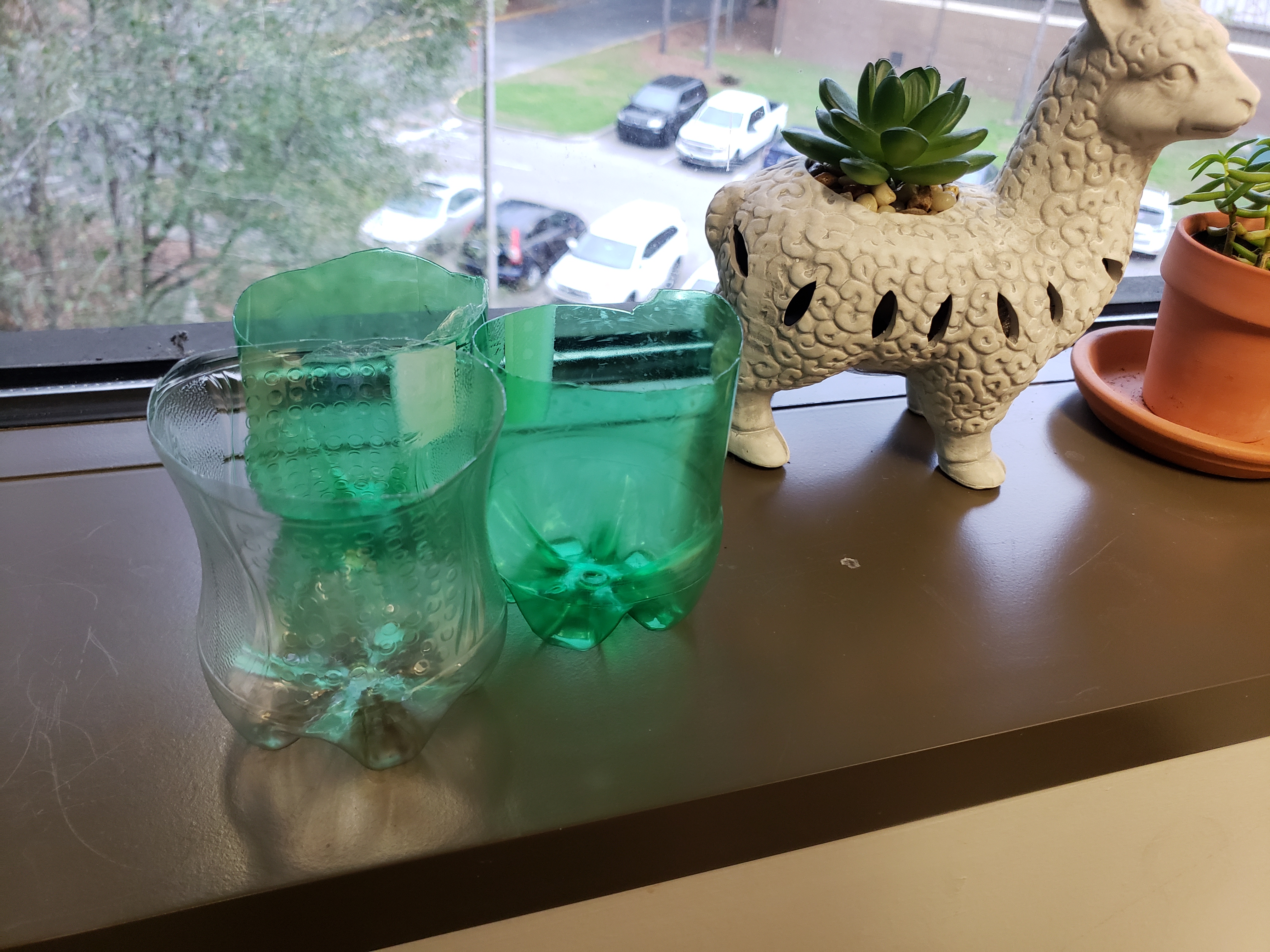
I’ve been reading a lot lately about upcycling and product hacking. I’ve started about as simply as one can, by cutting the bottoms of my plastic drink bottles before recycling the rest and using them as little planters to propagate cuttings and seeds. It’s the tiniest of starts but one that I hope to expand upon this year.

Time to get the potting soil and cloche.

The Cabin and Other Projects

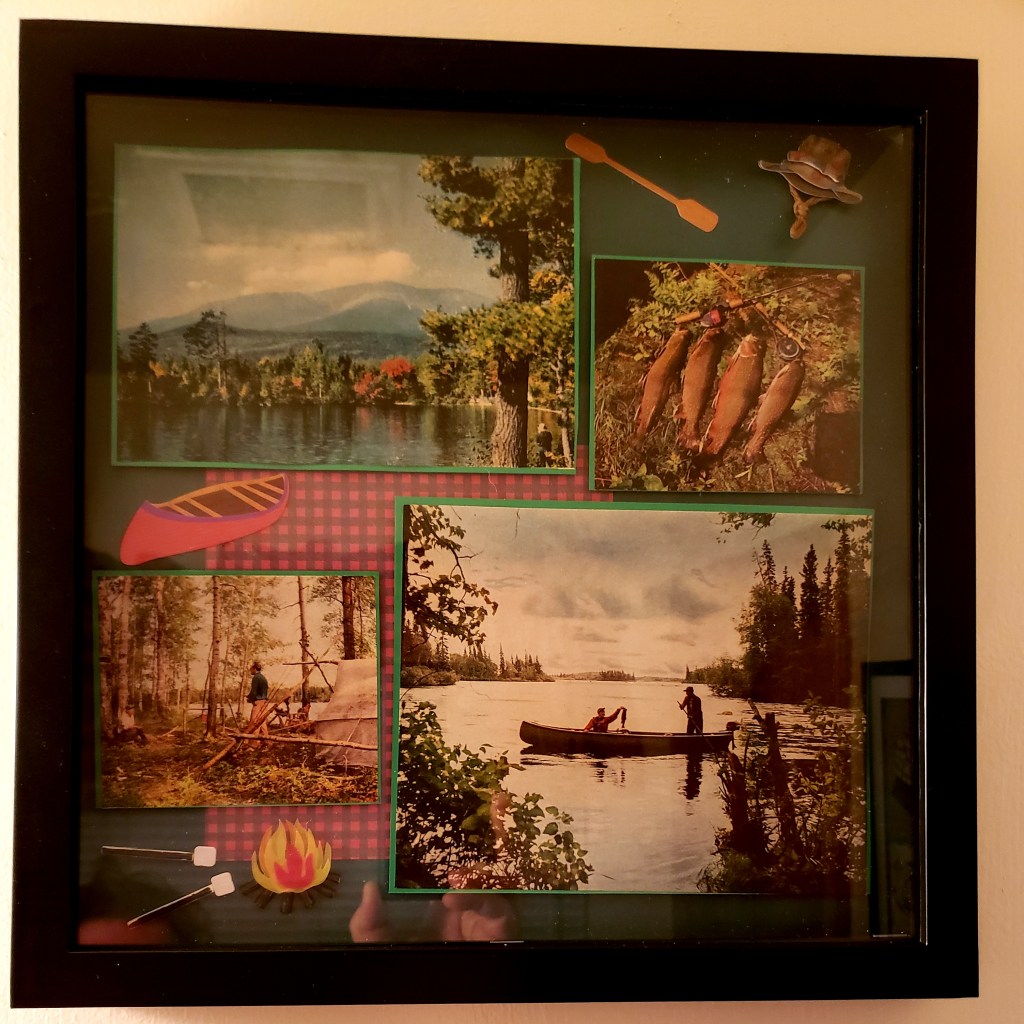
Our house was built in 1960. We have a room that we call “the cabin” and I decided to decorate it partly with pictures from a 1960 issue of Field and Stream. Here are the results. I’m super happy with these little collages!

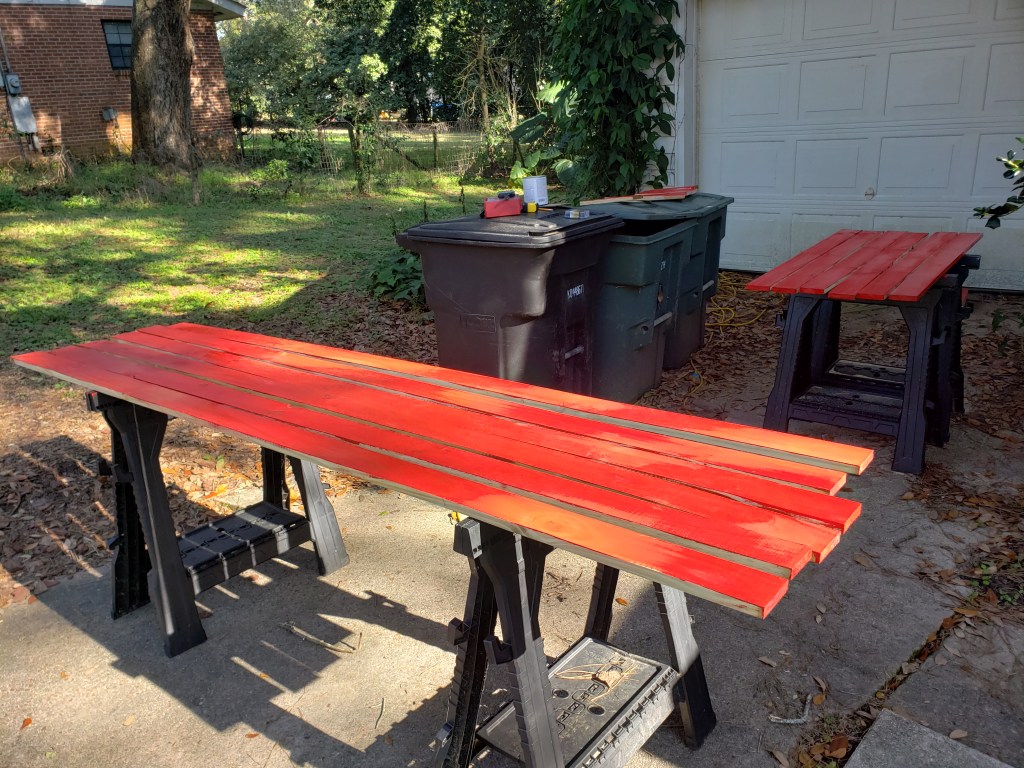
This weekend I also started building a planter box from my own plans. More on that later–including the plans–but here is a progress pic just to mark the occasion.

And finally, I started learning how to knit with a loom. I’m surfing a wave of creativity!

Knowledge Work, Emotional Labor

As a graduate student and “knowledge worker,” most of my life revolves around processing information. One of my academic fields–information science–deals with how people gather and disseminate information, and how people turn it into knowledge, while the other–history–involves gathering and interpreting a vast amount of data to craft an argument about the past. I use these skills Monday through Friday in a fairly specialized way solving (more or less) complex real estate questions for the State of Florida, while the rest of my time is devoted to academic work. So, on the whole, I spend a lot of time working, and a lot of time simply thinking about thinking. A couple years ago, I was vaguely unsettled by a tension between thinking materially and thinking digitally. Simply put, is it better to work with a pen and paper, or with computers? This tension has only grown as I’ve thought more about the problem, and now in my mind it has come to resemble a sort of civil war with the comfort and rigor of paper on one side and the flash and pomp of circuits on the other.

Maybe “civil war” is a little dramatic, but let me explain at least how these seemingly simple thoughts really do conjure up feelings. Electronics seem to wrap me in this warm sense of capability and convenience. I call it a siren song. Simply entrust your information and time to their care, they promise in honeyed tones, and your life will be both enriched and simplified. It feels good, like I’m firmly planted in The Now and remarkably productive. Pens and paper feel more active, more rigorous — like they allow me to channel some kind of Indiana Jones-style, rugged individualism in my work. It’s up to me to recall what I wrote yesterday, or last year, but I’m more likely to process the information because I had to embody the process by writing it down. 

But are either of these things true? I’ve spent the last several years wrestling with this question, straddling a line that is just as much emotion as it is intellectual, and I do not know. It is not a question I will answer today. But in the spirit of blogging through my confusion, as Gregory Gunderson proposes here, what I’m curious about today is the emotional dimension of this question. Ideas engender feelings, of course, and this one is no exception; but why should it be that I have feelings about paper and computers? And why do these feelings compete with one another?

I think these feelings have a lot to do with marketing. Marx rather famously argued that capitalism reduces human relations to commodity fetishism. In this view, producers and consumers do not see each other as humans in the round, but rather as inputs and outputs in the market. To the President of Samsung, in this view, I am not Chris, the graduate student and government employee struggling to understand why he has feelings about a cell phone, but Chris, a once and future customer with needs, fears, and desires that can be used to encourage me to buy another phone or tablet. It’s not the person who matters in this view, but the exchange.

Emotions smooth this exchange. For the last century, the market has carried out this act of reduction through significant psychological warfare. It is not a coincidence that the inventor of propaganda was also the inventor of modern public relations–a man who convinced women to smoke in the 1920s by suggesting that cigarettes were symbols of liberation before aiding the CIA in the overthrow of the Guatemalan government in the 1950s. Making people associate products with their identity brings them to the exchange. 

These emotions work toward marketing’s ultimate goal: segmentation. Tech not only benefits from segmentation–it is a several trillion-dollar market built on the inchoate promise of eternal “improvement”–it is now the primary platform by which segmenters work on our emotions. Like pretty much everyone born in the last forty years, I’ve been remarkably susceptible to this segmentation. I like tech, I think it is good; but as events over the last few years called this enthusiasm into question, there was another consumer identity ready-to-wear: the bohemian scholar, the rugged individual, whatever.. I won’t even get into how the culture of tech contributed to this workaholism in the first place, because the responsibility is all on me. But, really? I’m basing my identity on how I like to read and take notes? Something is wrong there.

Maybe that’s the breakthrough. I suspect it is just a detente, though, because tech and paper are just a synecdoche for the deeper problems that trouble us all. Is this smartphone spying on me? Am I free to read and think without being surveiled and manipulated at all hours of the day? Is the digital future really better than the analog past? I don’t know. Let me check my notes. 
Food and Place: Lucilla and The Grey

The difference between good food and great food has a lot to do with its relationship with place

Tonight we ate at Lucilla here in Tallahassee, and it was really good. I had the vegetable pot pie–a flavorful concoction of corn, squash, asparagus, tomatoes, field peas, shiitake, and scallions in a roasted shallot tomato velouté ,suspended between a couple pieces of flaky pie crust and served alongside a decent-enough salad of mixed greens with cucumbers and radishes drizzled with a vinaigrette. It was all really well done–for real, you should eat there if you’re in Tallahassee–but I don’t know that I’ll remember anything about the meal beyond its quality a few weeks from now. I think this is because we remember stories and, unfortunately, the menu at Lucilla doesn’t have a story to tell. 

While it’s clear that the menu is mostly “Southern,” it’s a little bit all over the place. You can get “Snapper St. Charles” or Blistered Shishito Peppers, if you’d like; or perhaps you’d prefer to choose between Pasta Bolognese or Shrimp & Grits. Each of these would be undoubtedly delicious, but the menu doesn’t have a story to tell about the people who made it or the things that inspire them. Contrast this with The Grey in Savannah, Georgia. On Chef’s Table, Executive Chef Mashama Bailey recounts how she originally developed a really eclectic menu. After she was encouraged to focus the menu by mentor Anne Willan, she chose to focus on place. This is a big part of what makes the restaurant so successful. It’s not a Savannah institution, like Mrs. Wilkes Dining Room, but it might as well be; because everything about it, from the location and decor to the menu and attitude, is so richly evocative of the city that it seems almost impossible to skip the restaurant when you visit. 

Telling a story about place the way that The Grey does elevates the occasion from a merely sensuous thrill to an aesthetic experience. This, I think, is what we remember most about restaurants. It’s what drives Vice to make a film about Pok Pok in Portland. It’s why the Travel Channel is mostly food shows. It’s also what keeps us going back to some really mediocre places, like Olive Garden or Outback Steakhouse. 

So here’s maybe a lesson for budding restaurateurs: evoke an interesting place well, and you’ll be successful. Add wonderful food to the mix? You’ll be legendary.

Seriously, though: go eat at Lucilla! You won’t be disappointed. 

Seminole Wars Heritage Trail

I’m working on a project based on the Florida Seminole Wars Heritage Trail. Because the Trail is primarily spatial, I started by creating a Google Earth layer listing all of the points by region. I just learned that WordPress.com disallows kmz uploads, so I imported the map into Google Maps instead. Here’s a link to the map on Google My Maps. Happy (but reflective) travels!