Another solid Eulogy release. For the OGs.
Blog
Insidious: Chapter 3 and the Wage of Postmodern Capital

Open with a reluctant medium, an unsuccessful reading.
These first five minutes or so of Insidious: Chapter 3 sum up the remaining ninety-two minutes with depressing clarity. Sure, Leigh Whannell and Blumhouse have manufactured a suitably dark aesthetic, an occasionally unsettling package of jump scares and visceral death fetishes, a nightmarish and demonic villain, and an angelic white protagonist, but the parts are greater than the whole.
Neither individual parts nor whole package, to be clear, are very substantial.
The story takes place a few years before the initial installment in the Insidious series, some time in the late-mid 2000s, when teenager Quinn Brenner opens a door to the dark reaches of “The Further”–readers familiar with the rest of the Insidious series will recognize this dreary world of underpowered handheld lamps and hideously re-embodied voices–by visiting spirit medium Elise Rainier in order to make contact with her departed mother, Lilith. After the reading goes wrong, Quinn ignores Rainier’s frank advice to avoid talking to dead people and makes a connection with a respirator-wearing demonic presence–an angry old miner with black lung, perhaps?–through the air vents of her family’s hipster-proletariat apartment building while trying to reach her mother. This initiates a classic haunting sequence–what screenwriters call “fun and games”: bumps in the night escalate rapidly to full-on bodily violation and spirit possession. Skeptics must turn believers and seek the assistance of psychic intermediaries. Elise Rainier returns, thus, and overcomes her own demons to lead the final confrontation with evil. But–surprise!–the battle is far from over at the end. The Lambert haunting from the first movies hangs over the ending and clears the air once again for a fourth instalment in the series.
Storylines float to the surface and sink away again, barely acknowledged. Main character Quinn’s teenage friendships, fledgling romantic interest, and acting ambitions form an important leg of the story in the beginning of the film, for example: they are almost completely forgotten by its conclusion. The “Man Who Can’t Breathe” haunts a seemingly empty building. His backstory–a former resident of the building turned soul-devouring denizen of “the further”–is left undeveloped. The fact that he is old and was obviously disabled at death is enough, apparently, to explain his paranormal anxiety. Quinn’s troubled relationship with her father is unconvincingly resolved; her brother is a foil, at best; her friends are forced caricatures.
There is little here for viewers interested in questions of race, gender, class, and age–Insidious is a rather retrograde product on the whole in these areas, in fact–but the cinematography is effective in a workmanlike way, and the movie will keep your attention for the entire 97 minute runtime. Which is nice, I guess.
This, then, is the wage of postmodern capital: a wholly predictable haunted house, a ham-fisted and cynical rumination on mortality mediated by basic cable spiritualism, and an open door for the next commodity in the series to enter the pop culture milieu. Insidious: Chapter 3 is effectively ineffective. It is maximally profitable with a minimal investment on the part of its producers. They’ve risked no cultural capital, placed nothing more than money on the line. Viewers–myself included–have so far responded by paying them back the money and then investing our own cultural capital in the film. This insidious arbitrage is the truly horrifying part of the entire experience.
The producers of the Insidious series are not alone. Neither are they cynical magnates laughing and rubbing their hands together as they steal from bovine audiences. They are logical actors at work in a global system that glorifies the most gruesome forms of self-interest. Hollywood is driven by profit, after all, and motivated by an army of willing promoters among the public to profit from the easy sell of franchises today more than ever before. They can’t help themselves.
We can’t help ourselves. Brand relationships broadcast through social media are an easy and powerful forge of identity claims. If I’m the kind of person who likes Insidious in a public way, whether you agree with my preference or not I hope that you’ll form an opinion of me that is favorable to my social strategy. Bundles of preferences are movable pieces in a game of identity claims that, powered by the internet, forms the very fabric of postmodern existence. Preferences can be easily and quickly located on the left-right spectrum of the culture wars; rapidly deployed to build or dismantle relationships with other people; worn; shouted aloud; photographed. We are what we like.
Hollywood franchises like Insidious are vitally important pieces in this game. Simple preferences–for the color green, say, or for long walks on the beach–are easily overshadowed by the cultural complexity of brand relationships. More than merely personal decisions, preferences for brands involve negotiating bundles of meaning. Apple computers, for instance, are symbols that stand in for images, videos, songs, other people you’ve known who have owned them, and conversations you’ve had or overheard–in addition to objects that do things and with which you may spend a great deal of time in interaction. These symbols do thirty years’ worth of cultural work daily. So, too, The Avengers, Jurassic Park, and so on. So, too, Insidious.
Viewed alone, Insidious: Chapter 3 is mostly hollow. It is merely visceral. As part of a franchise, it is completely empty. It is little more than a single level in a vertical marketing video game. The “Man Who Can’t Breathe” is just a minor boss in a dungeon, a bump on the road to progressively “harder” bosses in even more deeper dungeons. Where does the game end? Who will be the final villain? Will the whole finale be one long jump scare planned and carried out by the Dark Angel Beelzebub to put this “insidious” horror film brand in a shallow grave once and for all? One can hope.
Leon Bridges, “Coming Home”
This spellbinding track from Leon Bridges’ forthcoming album of the same name evokes an earlier era without feeling merely retro or wholly derivative.
It’s a shame this cut didn’t make it onto Oxford American’s Annual Music Issue sampler, which highlighted music from Texas. The Forth Worth native’s masterful reimagination of the early years of R&B showcases the renewed sophistication of southern music without succumbing to the temptation of kitsch.
Looking forward to the LP later this month.
Common War, “Like a Violin”
This is the first single from Common War’s brilliant debut LP, The Search. Eulogy has not done nearly enough to promote this release, so Common War is flying pretty low under the radar. If I had more to say about melodic hardcore right now I would give the album a full review, but the CD is well worth 9 bucks at the band’s merch store or a full stream on Spotify.
Melodic hardcore is a bit like a warm, nostalgic blanket right now: I can put it on and go back to the early 2000s any time I want. Common War is doing their part to move the genre forward from Southern California, but they’re straining against inertia on a global scale as hardcore bands in Europe and Asia work through the ideas of some of the past decade’s most successful bands.
A good, solid release.
Buy the album (and other merch) here.
Common War on Facebook.
Tumi – “I Know Myself”
The music scene in South Africa is insanely good. Here’s a track from Soweto-based rapper Tumi’s mixtape “Made of Taste.”
Related:
See Motif Records for more by Tumi, Zaki Ibrahim, and other fantastic South African artists.
6/2/2015: Attalus, Into the Sea

North Carolina’s various -core scenes have long been prolific and fertile. Raleigh stalwarts Attalus continue the tradition (of Hopesfall, Between the Buried and Me, and many others) on their epic new concept album, Into the Sea. Relentlessly melodic, simultaneously heartbreaking and life-affirming, Into the Sea is a surprising and refreshing new take on post-hardcore. Echoes of Boys Night Out, Chiodos, La Dispute, Thrice, and Brand New keep the album grounded, but surprises abound. Attalus can stand on their own.
In lieu of strong tracks, here’s a complete track listing. Into the Sea is an experience.
- The Ancient Mariner
- This Ship is Going Down
- Sirens
- Desolate Isle
- Man, O Shipwreck
- Step Out
- Albatross
- The Breath before the Plunge
- Into the Sea
- Coming Clean
- O the Depths
- Voices from the Shore
- Safe
- The Greater Tide
- Death Be Not Proud
- Message in a Bottle
A disclaimer: If earnest suburban Protestantism isn’t your thing, keep this one at arm’s length. Ignore the lyrics–whatever you have to do. Just let its profound musical ideas wash over you.
“Albatross”:
Buy the album and find out more here.
6/2/2015: Girlpool, Before the World Was Big
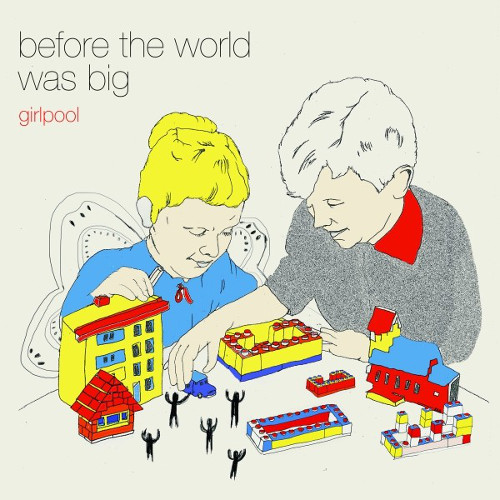
Girlpool prove that electric instruments can foster intimacy too on their new Wichita release, Before the World Was Big. Reductionism pays off for guitarist Cleo Tucker and bassist Harmony Tividad: the ten tracks on Before the World Was Big resonate with meaning, rather than the self-absorbed hiss of musical egos. The title track is a strong point on the way to a climax of sorts in “Crowded Stranger.” “I Like That You Can See It” is a fittingly abrupt denouement.
Looking forward to more from Girlpool.
“Before the World Was Big” Official video:
Girlpool on tour.
You can buy the album here.
The Artist as Producer: The Milk Carton Kids, Monterey

Music is made from things. Some–the great majority of the productions on the radio or iTunes chart at this moment–is built from a remarkably predictable collaboration between machines. Humans sit atop the machines, to be sure, pressing the buttons and typing the commands that guide their logic. But the machines make the music. Pressing the hard plastic keys or soft rubber pads of a synthesizer produces the same sound, by design, every time. So, too, clicking the mouse or applying pressure to the trackpad to carefully arrange drumbeats results in a strong, predictable rhythmic skeleton. The programmed bass kicks and snare taps kick and tap with remarkable precision, over and over again, until the human clicks the mouse again to end the loop. This kind of music is one solution to an algebraic function that could just as easily produce the parenthetical smile of an emoji on the screen or guide the decision-making processes of a linebacker in the latest installment of Madden. The same math makes this kind of music a natural choice for record executives, bean counters, and stock analysts. The formula is well-known, as are the tools.
The Milk Carton Kids’ fourth album, Monterey, is made from different things. The quiet, haunting harmonies of folk duo Kenneth Pattengale and Joey Ryan evince the more subtle workings of wood and air, flesh and string. Their delicately interwoven guitar work reminds the listener of the instrument’s traditional bona fides. Equal parts philosopher and showman, the guitar in the hands of Pattengale and Ryan is an instrument of nuance and intimacy. The dynamic relationship between performers, audience, instruments, and space makes each acoustic performance different from the last. In contrast with the cold predictability of digital pop, then, Monterey is contingent. It is honest.
The album opens with an earnest invitation to sit and reflect with “Asheville Skies,” an introspective piece reminiscent of Simon & Garfunkel and the California mellow sound that would be difficult to perform for a raucous audience. “Getaway” finds the duo descending from the foothills of the Appalachians to the darker reaches of the soul. “The shatter of the bottles would scare me somethin’ awful as a kid,” the duo sing in unison to open the track. “My fear how it would harden,” they continue: “and find a home in places that I hid.” The sunny guitar tones of Baja California trouble the song’s vague references to the Deep South, however–the pair mention an event “outside Tuscaloosa”–and briefly complicate the integrity of the piece. “Monterey” puts this tension to rest by evoking the classic country sound of Marty Robbins and Willie Nelson. “I can hear the road call,” Pattengale and Ryan sing in the eponymous track, pointing to “an old refrain to light the way.” American roads cut twisted paths through the middle of Monterey, indeed; The Milk Carton Kids pass through the postindustrial landscapes they reveal with the windows up, though, relaying only filtered impressions of what they see and feel. The miseries of abuse and the cryptic darkness of the Deep South are but distant blips in the rearview mirror by the third song on the album.
“Secrets of the Stars” and “Freedom” offer understated and straightforward technical ability. “Freedom” is quietly skeptical. “Candles burn in memory,” the duo sings at the end: “freedom is a fading dream.” “High Hopes” resolves this intellectual dissonance with consonant chords but refocuses the tension on the individual. “The war ain’t over there,” Pattengale and Ryan sing: “It’s here with me. The battle of the bloody century.” The rest of the album revolves around these individual struggles, introducing an occasionally refreshing note of clarity to otherwise tired themes. The thirty-something singers struggle with aging in “Shooting Shadows” (where, tellingly, “I heard your grandpa died” is meant to convey the advancing age of the singer and his listener) and “The City of the Lady,” but argue poignantly that “history is hangin’ as a picture in a frame/ everywhere we go we are the child of where we came.”
“Poison Tree” ends the album as quietly as it began. “I’m a little man in a little town,” the duo explain in the voice of a nameless narrator: “it’s a little cold [and] I’m a little down.” As if to give one final nudge before parting, the repetition of the word “little” throughout “Poison Tree” reminds the listener of Monterey’s understatement. Humility and restraint underwrite the confidence and maturity of Pattengale and Ryan’s songwriting and instrumental skill.
Sometimes they could push a little harder, in fact. If the folk revolution of the early sixties was about making space and finding time to think–to ponder “events too troubling to dismiss,” as the authors of the Port Huron Statement put it in 1962–folk music today is an increasingly hardy reaction to the false logic and icy predictability of neoliberalism and its popular soundscape. Monterey positively shimmers with this promise, inviting listeners with warm harmonies and charming instrumentation to be present with one another as they consider its modest claims. This modesty often translates into a frustratingly flat affect, however, and one song threatens to blend into the next by the end of the album. Pattengale and Ryan could better harness the power of contingency and intimacy on Monterey. They could push a few more emotional buttons. They could let the music drive them, sometimes, rather than the other way around.
There is much more The Milk Carton Kids could do, indeed; but Monterey is both challenging and rewarding all the same. It is rich and beautiful. Some music is made with numbers and plastic. This music is made from more natural elements.
Watch the official video for “Poison Tree” here.
Buy the album here.
 C.B. Crenshaw