Pretend–Tapestry’d Life

a1517676658_10

At some point in your life, someone will try to tell you that noodling jam bands, wispy art rock, odd time signatures, and unstructured song-writing are more rewarding—in their intelligence, you see—than the more pedestrian pleasures for which most of us line up at the trough, week after week, to consume like barnyard animals. And sometimes they will be right.

I’ll give you an example. There is a moment in the middle of “Epitaph” on King Crimson’s In the Court of the Crimson King that is sublimely transcendent. Under the right circumstances, it can carry you away, making apparent all of the pain and promise of the sixties in one brief chord progression. I have been moved by “Epitaph” and inspired by the entire album since a too-young age, probably twenty years. But such moments are ephemeral. In the Court of the Crimson King marked the one moment when King Crimson was a coherent band, rich with ideas; 1969 was one of only a few moments when “art” rock could move into the “real” world, “Epitaph” one of only a few songs capable of translation in that world.

Pretend’s Tapestry’d Life is nothing like In the Court of the Crimson King, but it comes close at times. It offers no era-defining moments or spine-tingling chord progressions, to be sure. But it’s not bad, either. The opening track “Wrapped in Fantasy” is cerebral and interesting, firmly planted upon the ground–unlike most other songs of its kind. All of songs are similarly grounded, and all are rich with ideas. “Patternless Tide” is a wandering yet promising reflection, but it kicks off a long series of introspections during which the band points in countless interesting directions but seems to complete few ideas. “Doors” is a reward for the patient listener in the middle of this long experiment, but its rewards, too, are ephemeral and easily forgotten. Tapestry’d Life is heavy with promise but its rewards are sparse.

The problem lies in the genre itself. The boundaries of ideas are rarely so apparent in the pulpy paperback music most of us enjoy. In pointing to new ideas, Pretend–like most “post-” whatever bands–also point squarely at their own inability to realize them. The result sounds like a band straining against its own limitations as it attempts to deal with complexity—which does not make for a satisfying rock album, but is not without its rewards.

You can pick up the album here.

Free Music! Paper + Plastick Winter Sampler

Another season brings another awesome sampler from Gainesville-based label Paper + Plastick. I might be biased when it comes to all things Gainesville, my former and beloved hometown (not to mention the setting for one or two questionable fashion decisions on my part), but with tracks like Bad Ideas’ “Damn My Clumsy Hands,” absolutely free, this sampler is hard not to love. Check it out.

Get the sampler here. And enjoy the video for “Clumsy Hands” below.


On the American Road: Hotels of North America


73e793248ccb5c32870f6a7067007976

Like many young Americans longing for autonomy, I was once transformed by On The Road. It is a book rich with adolescent delights: an uneasy balance between navel-gazing and catharsis, a few tantalizing moments of prurience, a restless tapping of the foot, a bantam pulse. It was a book I could wear like a jacket or ponder closer to the skin, and I never looked at the highway, the bus station, or the dented stainless sheathing of passenger rail cars with quite the same gaze ever again. The road cuts through the heart of my imagination.

As important as On The Road has been to my life, though, I have only read it twice. The first time, I was somewhere in the middle of junior high, fumbling my way through a dog-eared Viking critical edition. I remember the used paperback well—unlike my first dog, oddly, or my first beer. It was spare: a deep and stolid yellow, embellished merely with a line drawing of a viking ship in an oval frame at the bottom of the cover that could have equally been the sly Ulysses’s trireme plying the wine-dark sea. I read it sitting on the curb waiting for the school bus or lying on the twin bed in my bedroom, the neighbors just fifteen feet away—their whole lives separate from mine in our whimsically-named subdivision, equal but separate in a way that Kerouac and his cast of intrepid boddhisatvas would have misunderstood as thoroughly as I misunderstood them.

The second time I read Kerouac he left a deeper mark. I was nineteen and working in a door factory, going through the first period of serious reading in my adult life. It was a mass market paperback for a letterpress life. I woke up in that year or two at 4:30 AM to catch an early ride with my friend and his dad in the dark, enclosed back of his pest control truck; onto a bus on the westside of Jacksonville, Florida at 6:10 for a forty minute ride downtown, weaving through the suburban warrens of the New South city; off into the cold morning and through the mostly-abandoned streets on foot to the warehouse on Harper Street by 7:00. I remember one morning in particular when I read and walked at the same time, my eyes dodging back and forth from the page to the road as I weaved in and out of the outstretched ends of trailers backed up to loading docks in order to avoid traffic. I slipped the book into a back pocket as I climbed the stanchions of a flat railroad car stopped on the tracks. Up and over and down again, onward to work breathing steam in the riverine cold with the book in one hand and a time clock in the other. Hemmed in by necessity and bad decisions, however, I could only mimic Kerouac’s perambulations in my morning walks. I could not leave it all behind. I did not have the imagination.

Similar to my experiences reading Kerouac, narrator Reginald Morse’s life in Hotels of North America reveals its meanings through the places in which it unfolds. Morse is not a traditional narrator, or a reliable one. Instead, he reveals his story piece-by-piece, in memory, through hotel reviews on the fictional travel website rateyourlodging.com. Morse’s story is as tragic as it is germane to the first decades of our century. From brittle affluence in investment banking and a salacious love affair through pathetic ruin to a sort of rebirth through nomadic scamming and motivational speaking, Morse’s online screeds track the tensions underlining the end of the American century and mimic the twilight howls of the white American male. Like myself as a young man riding the bus and climbing over railroad cars, Morse is not in control of his own growth. The hotels in which he lives and the people and ghosts and regrets with which he shares them mark his experience in ways that Dean Moriarty and Carlo Marx would have scorned.

Morse is in control of his story, however, in ways that Sal, Dean, and Carlo—stuck behind the pale glow of the headlights and between the yellow and white lines of the highway—could only envy. Morse offers his reflections in a seemingly random order: jumping from year to year and place to place. This is a form of power for Morse, who writes like an erudite and professional reviewer instead of a motivated amateur. But the flaws in this construction rapidly make themselves known. Morse’s language plods at times like a walrus on the beach; his faux professionalism quickly gives way to bold explanations of scams and crude sex acts. Though his story unfolds through a slipshod collection of reflections rather than a linear narrative–like Jay Gatsby glancing into some of his rooms as his own story begins to spiral out of control—Morse is as compelled to recount his failures as his readers are to arrange them into some sort of order. These are the kinds of spaces and identities the Internet encourages us to create: grand palaces of erudition or experience, beauty, and worldliness that are nonetheless bound to ourselves and limited by our own weaknesses.

It is unfair to compare Rick Moody’s Hotels of North America to On The Road, but one cannot read Moody’s tragicomic portrait of postmodern isolation without indirectly reading Kerouac. Roads and margins, isolation and self-absorption run through the heart of both. But where Kerouac’s protagonist Sal Paradise is firmly in control of the narrative–a uniquely postwar optimism that could find the shining possibilities even In vagrant idol-worship–Moody’s protagonist Reginald Morse reflects an inverse experience. Presented with the ability to tell his own story through online reviews, he is instead locked into the trajectory of his own failure. Sal Paradise could turn the relentless order of the road into an order of the self; Reginald Morse uses the chaotic tools of the digital age to offer an indefinite and unreliable self-portrait. Both are powerfully evocative of their times. Sometimes Hotels of North America is underwhelming in its yearning for accessibility, yes; and George Saunders is undeniably the master of this kind of individualistic prose, indeed. Yet this is a small novel with large ambitions. It achieves almost all of them.

Buy Hotels of North America or find it in your local library here.

Punk Rock Hometowns: The Red Owls — Do You Feel Any Better? EP

The Red Owls' Do You Feel Any Better EP Cover

“Everywhere, New York” is not a hometown. Neither is “South Florida” or “Orange County,” “The Research Triangle,” nor any of the other city limit-defying amalgams of suburbs, strip malls, and asphalt that most of the Americans I know call home. We live in less durable mental categories: states of mind; places connected by experience; places that feel alike.

Punk rock is one such place. More than just sound, punk rock is a network of sensibility. It is connected by performances and commodities, structured by claims on legitimacy. Its boundaries, like it or not, are as well-defined as those between zip codes: shows, vans, DIY, scenes.

The Red Owls claim “Everywhere, New York” as a hometown. I buy it. The lines connecting The Red Owls to other New York bands on the punk roadmap are too dark to ignore. Fans of Taking Back Sunday, Brand New, and Bayside—especially Bayside—will appreciate the yin and yang balance of polished veneer and rough-hewn materials The Red Owls strike on Do You Feel Any Better?, while those troubled by the mainstream accessibility of these bands can take comfort in The Red Owls’ DIY ethic and upcoming appearance at The Fest in Gainesville.

At the same time, “Everywhere, New York” seems to miss the boundless appeal of this music. The opening track, “Bad Advice,” would be equally at home on EPs by bands from more tropical climes. The connection with Paper + Plastick Records (and Less Than Jake) founder Vinnie Fiorello is apparent on this and the third track, “Party Lines.” Both are as much expressive of the irreverent spirit of Gainesville chill-punk as the album’s other two tracks, “Do You Feel Any Better?” and “Chaser,” are of the rust belt’s anxious energy.

Better than any recent release, Do You Feel Any Better? outlines the contours of punk rock. Members John Collura, Sean-Paul Pillsworth, and Justin Meyer—currently or formerly of The Ataris, Nightmares for a Week, and Anadivine—strive to “[add] a healthy dose of new life to this nostalgic genre.” While they point in new directions on this EP, only time and a full-length release will tell whether they follow the road forward. As it stands, Do You Feel Any Better? feels like the hometown I know and love.

Buy the EP here.

Straight Outta Compton and the Historian’s Dilemma

“Instead of sharing an experience the spectator must come to grips with things.” – Bertolt Brecht

Straight_Outta_Compton_poster

What is it that historians do?

On the one hand, they must tell The Truth. This means reading, watching, listening to, tasting, smelling, or touching every bit of evidence they can find, weighing them against each other, and then putting it all together into a faithful account of the past. Which is pretty much what they do. But on the other hand, because they are humans, living in this noisy and contentious world, historians always have some axe to grind. History means something, they maintain. And besides killing readers with boredom, history without meaning would be useless. It would just be a list of things that happened. Everything that ever happened. So historians have to make the past mean something, too. This means throwing some evidence out, maybe pointing at other evidence that might not seem important and saying, “there it is! The Truth!” Figuring out what to keep and what to ignore is a real dilemma. Nobody will agree. This, in short, is the historian’s dilemma: making choices without appearing to make choices. Making claims about today by appearing to make claims about the past.

This is contentious stuff. Most academic historians have long taken postmodern subjectivity for granted, attempting in turn to do the least harm by pulling into their work as much evidence as possible, from as many opposing voices as possible. Their readers, however, are impatient with both the problem and the solution. Most readers tend to see the past as immutable—as a story just waiting to be uncovered—and the documents required to tell that immutable story as mostly self-evident. Rather than complications of interpretation, readers see challenges of comprehension and accessibility. Knowing where to find documents and how to translate their archaic prose is challenging enough, they claim. With this arcane knowledge, historians should have no problem interpreting what they find and telling The Truth. Efforts on the part of academic historians to incorporate alternative sources, to include an abundance of notes, or to challenge their readers with theory are routinely derided. Amazon reviewers often savage academic books for being too detailed, too unsure—too boring—while school boards argue that they are too interesting, too provocative or heterodox for students. What is a historian to do?

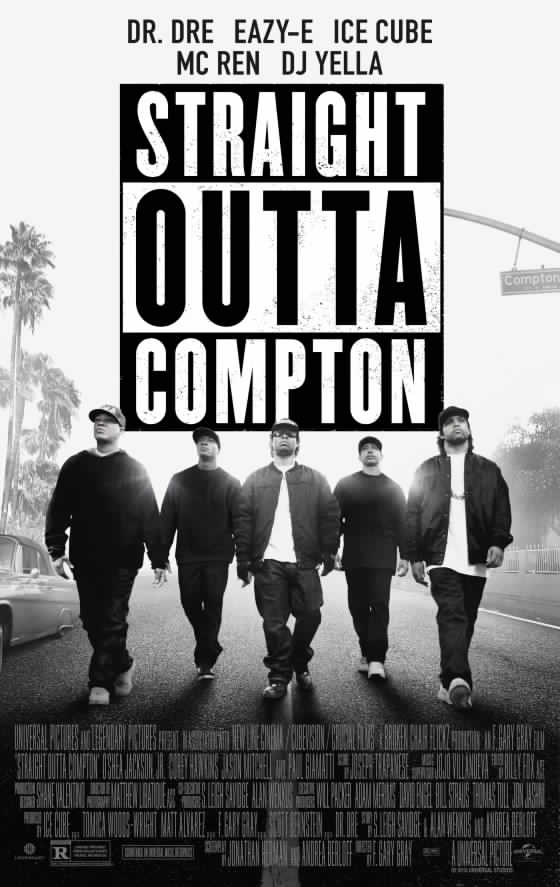
It is clear that Director F. Gary Gray and the producers of Straight Outta Compton faced the historian’s dilemma. Compton is a film obsessed with its own history, as though viewers are listening to a deep conversation between Dr. Dre, Ice Cube, and their own reflections in the bathroom mirror about where they’ve been and how they got there. Gray offers is an exceptional rendering of those conversations, replete with outstanding performances from a fairly green cast—anchored by Paul Giamatti—and a workmanlike attention to detail.

Too bad it doesn’t have much to say.

Let me tell you a story. Once upon a time—the late 1980s, a time increasingly shrouded in pre-Golden Age mystique—it was rough in the Los Angeles ghetto. A group of young black men were making their way through the hard times, honing their talents (or courting an early grave) in obscurity despite the efforts of the police state to break their will or end their life. One day, the group of young men decided to do something about their obscurity and formed a rap group. It wasn’t very difficult to record a hit single, but it was even easier to find a manager who could sell their talents to a record label after they did. They were immediately successful. A bunch of rock-star stuff happened, the group of young men got into a fight, and then the rap group split up. Two of them were immediately successful after the breakup; one wasn’t. A bunch of other stuff happened. The now-unsuccessful one ended his relationship with the agent and then, right before staging a comeback with the still-successful young men who used to be part of his rap group, succumbed to AIDS. The other young men cry and reflect.

That’s pretty much it. One does not get an honest sense of the struggle involved when obscure young black men build a career out of sheer talent and provocation from the very heart of the American nightworld. Police violence, for example—such a prominent part of the film’s first two acts and in the real-life NWA’s meteoric rise to fame—simply disappears in the third act. Gone. Manager Jerry Heller’s treachery is only vaguely outlined. Less vague, perhaps, are the hints of cultural and social tension between the fairly affluent Heller and the rappers he represents, but not much. Dr. Dre and Ice Cube’s success is not vague at all, however. Both easily sidestep the belligerent malfeasance of entertainment capital: Ice Cube by obliterating obstacles with a baseball bat, Dre by rolling over them with a steam-powered Suge Knight. Eazy-E alone struggles with the system. One-by-one, the fragments of late twentieth-century failure pile on E’s shoulders: friendships broken by bounced checks, a heartbreaking series of moves back toward the underclass, and, finally, the cruel denouement offered by HIV and AIDS. These are Eazy-E’s problems, though, and don’t belong to his friends or the viewer. None but E are complicit in his fall from grace.*

These are tragically missed opportunities. Unfortunately, Straight Outta Compton takes the easy way out of the historian’s dilemma: mere narrative; evidence without meaning. The narrative itself is solid and entertaining, absolutely, but the whole is dissatisfying. By refusing to answer or even pose deeper questions of meaning, the filmmakers leave it up to viewers to formulate their own questions and answers. Is this just another touchstone of American consensus, another tired affirmation that we, too, can be successful if we are talented and hard-working enough to overcome adversity? Perhaps. Or is there something else here, some covert meaning in the filmmakers’ refusal to pose these questions? Maybe that too. Eazy-E is a remarkably tragic figure, after all.

But then again, maybe not. Ultimately, one must ask: what is the argument? I don’t know. Straight Outta Compton doesn’t have the answers.

* And maybe Jerry Heller, but, again, the details are hazy.
Birds in Row — “Weary”

As hardcore withdraws back into thousands of local fastnesses to rethink and regroup, decent national releases like this one are rare. European bands have been holding down the scene’s bona fides for some time now, though—tough-guy mistranslations like pretty much anything in the Hardcore Worldwide video catalogue aside—and France’s Birds in Row is a prime example of post-hardcore’s lingering impact on the vast frontiers of the heavy music world. The band’s 2012 release You, Me, and the Violence was top-to-bottom quality. Personal War (October 30, Deathwish Inc.) promises more of the same.

“Weary” is a tantalizing taste of the forthcoming album. Watch below, pre-order above.

Go Set a Watchman and the Moral Economy of Tumblr

go-set-a-watchman-US

“It is not simply a matter of undoing something whose meaning is too easy to find; to be able to know it, you have to unlearn and not think you know it from a first reading.” – Arlette Farge, Le Gout de l’Archive

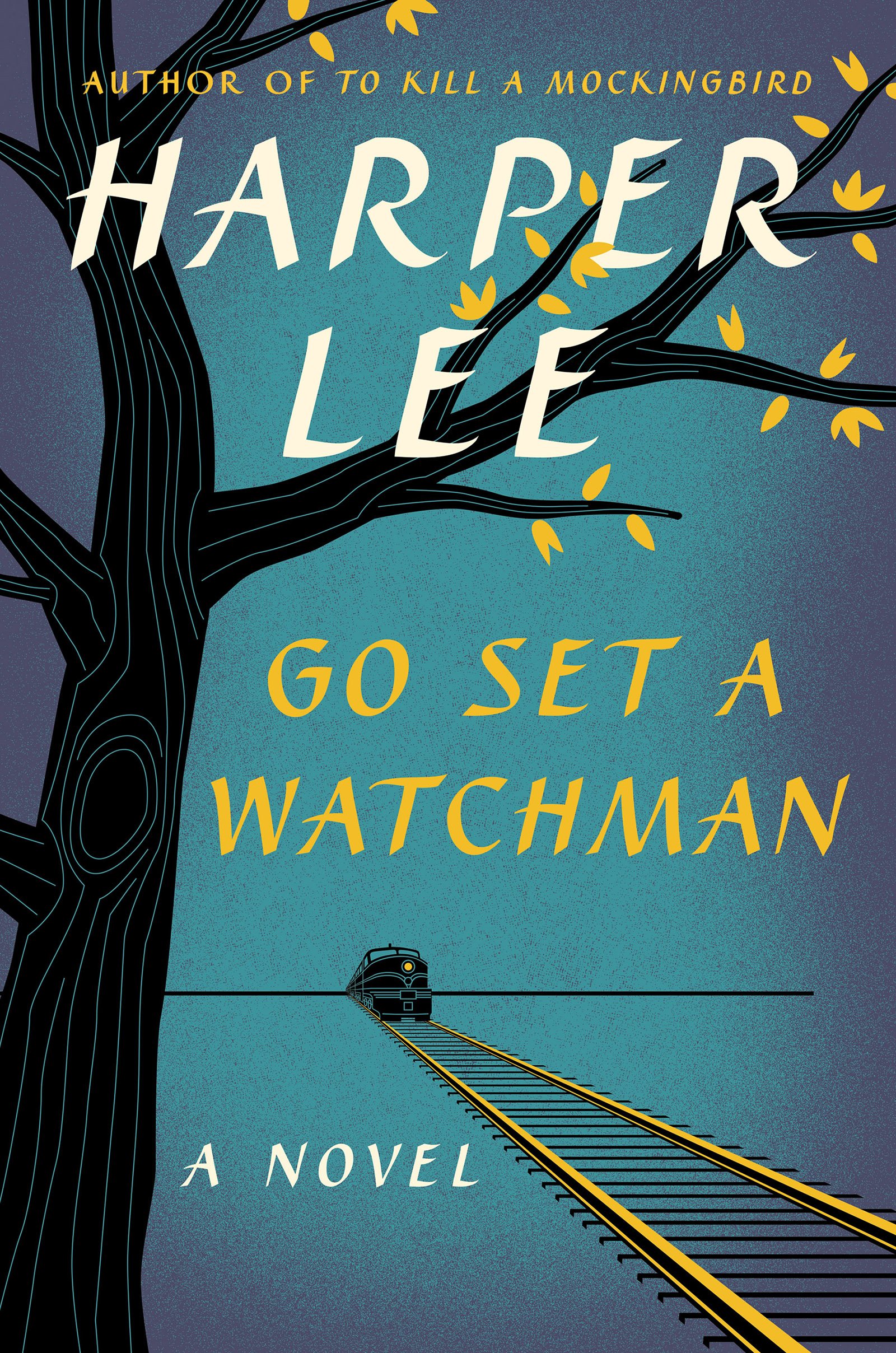
This is about Go Set a Watchman, but it is also about the internet. That the two should be somehow married the way they are is tragic, but Watchman was born six decades late: in a time when the demands of fast relevance, immediate content, and quick messages have supplanted the mechanical assurance of newscopy or the tortoise-paced calculation of magazine reviewers for which it was intended. So the internet is what we have. Let’s start there.

The internet isn’t a thing, of course, apart from time. It is in time, of it. And in case you haven’t noticed, the internet right now is obsessed with reactions. MFW and TFW gifs pass over Tumblr like inflationary currency. Instead of Washingtons and Franklins, Minions and ogres and Nickelodeon stars from the Nineties rule over the vast fiefdom with a nuanced vocabulary of eye rolls, blank stares, facepalms, and raised eyebrows. Half-a-million people subscribe to /r/reactiongifs on reddit, upvoting everything from politics and culture to “MRW when I fart and enjoy the fragrance.” Youtube is a hotbed of reactions as well. 9,000,000 people have watched children react to rotary phones. 7,000,000 have watched kids listen to the Beatles. And more than 4,000,000 people—including me—have watched 7 year-old Evan try to explain a typewriter in “KIDS REACT TO TYPEWRITERS.” “It is basically like a computer,” Even tells us confidently, “all except it doesn’t have a screen. All you do is type out messages.”

This summer, the part of the internet that deals with books sounded a lot like Evan trying to explain the typewriter. “It is basically like a sequel,” the bloggers and freelance reviewers told us about Go Set a Watchman. I’m paraphrasing here. “Except Harper Lee wrote it first, before Mockingbird. And it feels icky.” This kind of treatment works well for superhero movies and video games—which, by sheer dint of numbers, are the most meaningful cultural products for most Americans right now—but it just doesn’t work for a novel written in the 1950s. Yet, for months before Watchman’s release, the biblionet rocked back and forth between anticipation and shock. Was Harper Lee exploited? Is Atticus Finch really a klansman? Is there a third manuscript out there somewhere? A producer grabbing the film rights to a Hobbit-esque movie trilogy for the NPR crowd? Driven by this never-ending hype train, Go Set a Watchman set sales records at HarperCollins.

But To Kill a Mockingbird is not a franchise. Go Set a Watchman is not an installment in that franchise. Atticus Finch is not a superhero.  Nor is Watchman a rejected draft. To treat it as such is absurd. Watchman is a completely different book.

It is brilliant. Where Mockingbird offered readers the kind of complications they could understand—bad racists, wrongfully accused innocents, children coming-of-age—Go Set a Watchman offers the more intractable frustrations of adulthood: good people who happen to be bigots, the guilt we feel by association, and the inevitable crush of aging. To Kill a Mockingbird was the book that the United States needed in 1960. As Americans struggle with many of 1960’s problems in 2015, Go Set a Watchman may be the book we need now. Lee’s meditation on coming to terms with the things we cannot change vibrates with the kind of life, humor, and wit that the square-shouldered Atticus Finch of Mockingbird might not understand. More importantly, it points readers toward the kind of empathy he would understand. Good people say and do and believe disagreeable things. We should not condone them—Scout Finch does not—but we cannot always write them out of our lives, either. The urgency of this message in a time when Americans seem violently divided yet again suggests that Watchman’s message is every bit as important as that of Mockingbird.

It is just more frustrating. Like Mockingbird, Go Set a Watchman challenges us. Some booksellers have offered “refunds and apologies” to customers, advising, “we suggest you view this work as an academic insight rather than as a nice summer novel.” Parents in Colorado changed their son’s name from Atticus to Lucas after reading the book. “When the new book came out,” they told a reporter from People, “we just felt like, this does not at all encompass the values that we want for our son to have and know.” Even the editors of the Chicago Tribune were challenged. “We can’t reconcile the change either,” they wrote, “as much as this elder Atticus might illustrate the way people’s views ebb and flow through life…. With so many real-life characters tumbling off their pedestals (Bill Cosby comes to mind), why knock such a noble literary hero off his?” And so on. Indeed, the merest whisper of Atticus Finch being anything other than what he was in the eyes of his six-year-old child in the depression is enough to send adults in the twenty-first century stomping straight for the exits.

Go Set a Watchman is authentically challenging. For readers trained to read the frugal moral economies and straightforward story lines of franchises, the split-second impressions of reaction gifs, or the predictable binaries of the internet’s never-ending culture wars, Harper Lee’s mid-fifties manuscript is perplexing. “Unlearning” the simple—and total—demands of hashtag morality can clear the confusion. Harper Lee’s difficult questions call for nothing less. Thankfully, her prose makes it easy.

Dope and the Location of Culture

Dope Poster

“A boundary is not that at which something stops but, as the Greeks recognized, the boundary is that from which something begins its presencing.” – Martin Heidegger, “Building, Dwelling, Thinking”

A month after its release, there’s a particular scene from Dope that still sticks out in my mind. It’s when Shameik Moore’s character Malcolm Adekanbi—a charismatic protagonist, I’ll just say here at the outset—is frantically driving to meet a Harvard alumnus as part of his college application. He’s driving away from an impossibly, hilariously complicated situation to one that is even more outrageous and complicated. Along the way, he sees someone completely unexpected, however, in a completely unexpected situation. The camera pans to his face. Dumbfounded, he asks aloud: “what the fuck?” The audience asks it with him before he (and they) are inexorably carried onward, further into a story rich with anomalous characters and ridiculous situations. The scene I remember is a fleeting moment, unnecessary to the story, but that question—Malcolm’s bewildering and fleeting encounter with the wholly new and unexpected—captures Dope’s cultural meanings more than any other could.

First, the film itself. Dope is a bildungsroman for the twenty-first century. Protagonist Malcolm Adekanbi is a product of Ira Berlin’s fourth great migration—a Nigerian-American geek living in a rough section of Los Angeles—where he and his friends Jib and Diggy share a love of early-nineties hip-hop and play robopunk songs in their band, Awreeoh, while they finish their senior year of high school. Malcolm is ambitious. He plans to attend Harvard University, on one hand, and his college application frames the narrative. Much of the story takes place at school and in classrooms. But Malcolm wants to be “dope” on the other hand. An encounter with drug dealers and street violence offers Malcolm an inside look at his neighborhood and his own strength. Stuck with a backpack full of molly, death threats and the danger of arrest hanging over his head, and looming standardized tests, Malcolm (and Director Rick Famuyiwa) must resolve the tension between his ambitions in order to survive. Famuyiwa resolves them in style. Dope is engaging, warm, outrageously funny, beautifully rendered, and vibrant.

While I’d like to take credit for reading Heidegger closely and taking detailed notes, the quote that opens this review is the epigraph of postcolonial scholar Homi Bhabha’s 1994 book The Location of Culture. In The Location of Culture, Bhabha argues that the re-iteration and repeated translation of hegemonic cultures associated with colonialism—or “globalization,” if that term is more palatable—leads to the formation of new cultural identities in the “interstices” between opposing social or cultural forces. Because they can only translate the received hegemonic wisdom of nation, race, gender, and so on for themselves, minorities and oppressed populations create “hybrid” identities that transcend these simple categories. Globalization and hybridity go hand-in-hand. Forced to puzzle over entirely new identities and situations, colonizer and colonized alike must both sometimes throw their hands in the air and ask, like Malcolm Adekanbi, “what the fuck?”

Dope is about hybridity. Malcolm crosses the boundaries between “geek” and “dope”; between generations, marrying his love of nineties hip-hop to his skill with the tools of twenty-first century cunning, like bitcoin, digital money laundering, and the dark web; between poor and affluent; between East Coast and West Coast; between African and African American. Without entirely new categories, it is impossible to pin Malcolm down and label his identity.

Malcolm’s friends and enemies demonstrate the futility of creating new labels. Drug dealer and gang member Dom quizzes his street counterparts on logical fallacies; Malcolm’s lesbian friend, partner-in-crime, and bandmate Diggy crosses the boundaries between genders; friend Jib—who claims to be 14% African—and stoner hacker Will—emphatically not African but unapologetically crass in his use of the N-word—cross the boundaries between races. Even Malcolm’s band, Awreeoh, crosses the boundaries between punk rock and hip-hop with a subtle nod toward race. Situations, too, cross the boundaries of class and morality: upper-class acquaintances struggle in vain for street cred; Malcolm is sympathetic and good, but he sells drugs to earn his way into the Ivy League. Hybridity abounds.

And it is wonderful.

Dope crosses boundaries without turning the mirror on itself and preening for attention. Its characters navigate a world of ambiguous definitions and unsteady moorings without sinking beneath the onerous weight of racial awareness and class-consciousness. Their awareness feels more real, more like a tool to adapt to the world as well as shape it to their own ends, rather than the self-destructive rebellion or acrobatic accommodation a previous generation of storytellers demanded from their characters. Famuyiwa—perhaps uniquely positioned to comment on hybridity by his location within the Nigerian diaspora—captures the fracturing of the twentieth-century’s colonial order better than any filmmaker in recent memory. If millennials exist, this is surely their film.

Insidious: Chapter 3 and the Wage of Postmodern Capital

images

Open with a reluctant medium, an unsuccessful reading.

These first five minutes or so of Insidious: Chapter 3 sum up the remaining ninety-two minutes with depressing clarity. Sure, Leigh Whannell and Blumhouse have manufactured a suitably dark aesthetic, an occasionally unsettling package of jump scares and visceral death fetishes, a nightmarish and demonic villain, and an angelic white protagonist, but the parts are greater than the whole.

Neither individual parts nor whole package, to be clear, are very substantial.

The story takes place a few years before the initial installment in the Insidious series, some time in the late-mid 2000s, when teenager Quinn Brenner opens a door to the dark reaches of “The Further”–readers familiar with the rest of the Insidious series will recognize this dreary world of underpowered handheld lamps and hideously re-embodied voices–by visiting spirit medium Elise Rainier in order to make contact with her departed mother, Lilith. After the reading goes wrong, Quinn ignores Rainier’s frank advice to avoid talking to dead people and makes a connection with a respirator-wearing demonic presence–an angry old miner with black lung, perhaps?–through the air vents of her family’s hipster-proletariat apartment building while trying to reach her mother. This initiates a classic haunting sequence–what screenwriters call “fun and games”: bumps in the night escalate rapidly to full-on bodily violation and spirit possession. Skeptics must turn believers and seek the assistance of psychic intermediaries. Elise Rainier returns, thus, and overcomes her own demons to lead the final confrontation with evil. But–surprise!–the battle is far from over at the end. The Lambert haunting from the first movies hangs over the ending and clears the air once again for a fourth instalment in the series.

Storylines float to the surface and sink away again, barely acknowledged. Main character Quinn’s teenage friendships, fledgling romantic interest, and acting ambitions form an important leg of the story in the beginning of the film, for example: they are almost completely forgotten by its conclusion. The “Man Who Can’t Breathe” haunts a seemingly empty building. His backstory–a former resident of the building turned soul-devouring denizen of “the further”–is left undeveloped. The fact that he is old and was obviously disabled at death is enough, apparently, to explain his paranormal anxiety. Quinn’s troubled relationship with her father is unconvincingly resolved; her brother is a foil, at best; her friends are forced caricatures.

There is little here for viewers interested in questions of race, gender, class, and age–Insidious is a rather retrograde product on the whole in these areas, in fact–but the cinematography is effective in a workmanlike way, and the movie will keep your attention for the entire 97 minute runtime. Which is nice, I guess.

This, then, is the wage of postmodern capital: a wholly predictable haunted house, a ham-fisted and cynical rumination on mortality mediated by basic cable spiritualism, and an open door for the next commodity in the series to enter the pop culture milieu. Insidious: Chapter 3 is effectively ineffective. It is maximally profitable with a minimal investment on the part of its producers. They’ve risked no cultural capital, placed nothing more than money on the line. Viewers–myself included–have so far responded by paying them back the money and then investing our own cultural capital in the film. This insidious arbitrage is the truly horrifying part of the entire experience.

The producers of the Insidious series are not alone. Neither are they cynical magnates laughing and rubbing their hands together as they steal from bovine audiences. They are logical actors at work in a global system that glorifies the most gruesome forms of self-interest. Hollywood is driven by profit, after all, and motivated by an army of willing promoters among the public to profit from the easy sell of franchises today more than ever before. They can’t help themselves.

We can’t help ourselves. Brand relationships broadcast through social media are an easy and powerful forge of identity claims. If I’m the kind of person who likes Insidious in a public way, whether you agree with my preference or not I hope that you’ll form an opinion of me that is favorable to my social strategy. Bundles of preferences are movable pieces in a game of identity claims that, powered by the internet, forms the very fabric of postmodern existence. Preferences can be easily and quickly located on the left-right spectrum of the culture wars; rapidly deployed to build or dismantle relationships with other people; worn; shouted aloud; photographed. We are what we like.

Hollywood franchises like Insidious are vitally important pieces in this game. Simple preferences–for the color green, say, or for long walks on the beach–are easily overshadowed by the cultural complexity of brand relationships. More than merely personal decisions, preferences for brands involve negotiating bundles of meaning. Apple computers, for instance, are symbols that stand in for images, videos, songs, other people you’ve known who have owned them, and conversations you’ve had or overheard–in addition to objects that do things and with which you may spend a great deal of time in interaction. These symbols do thirty years’ worth of cultural work daily. So, too, The Avengers, Jurassic Park, and so on. So, too, Insidious.

Viewed alone, Insidious: Chapter 3 is mostly hollow. It is merely visceral. As part of a franchise, it is completely empty. It is little more than a single level in a vertical marketing video game. The “Man Who Can’t Breathe” is just a minor boss in a dungeon, a bump on the road to progressively “harder” bosses in even more deeper dungeons. Where does the game end? Who will be the final villain? Will the whole finale be one long jump scare planned and carried out by the Dark Angel Beelzebub to put this “insidious” horror film brand in a shallow grave once and for all? One can hope.