On the road for a conference. I took these yesterday when I had some free time.
Olustee Battlefield was one of the places that inspired me to be a historian. I was a dorky little kid who was fascinated by the American Civil War–primarily because of a trip to this place some time around the first grade. I was surprised by how small everything is. I remember a full museum and a large battlefield that cast a durable spell on my six-year-old person. What I found now in my thirty-fourth year was a small, one room interpretive center with a 19″ television on repeat and a little field with a couple cannons and a confederate monument tucked into the recesses of the prison complex in Baker County. The past is larger and more majestic than the present in more ways than one.
This time around I was more interested in the beautiful pine woods in back of the interpretation center. The forest was alive with woodpeckers when I visited, the red-hooded birds rapping the trees to a wooden staccato beat in the spaces between the low rumble of timber trucks making their way to the interstate on US-90. Those trucks underline the importance of conservation lands like this. Even a quiet memorial tucked in a rural corner of North Florida offers an oasis of quiet and beauty from the nonstop cacophony of development that leaves no corner of this Dream State untouched.
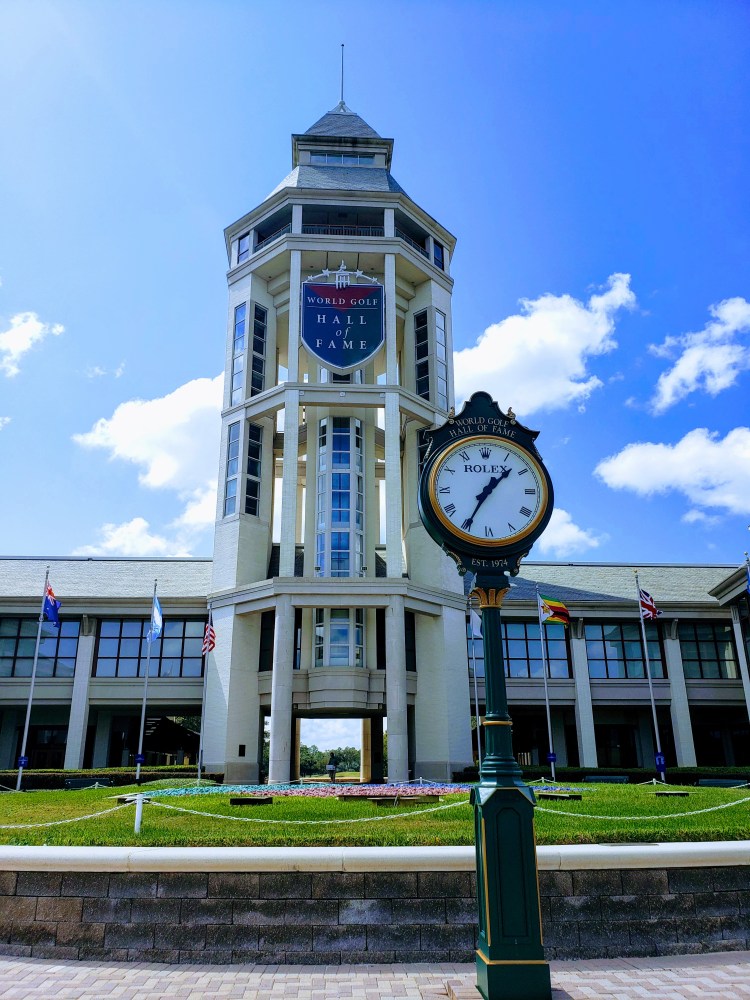
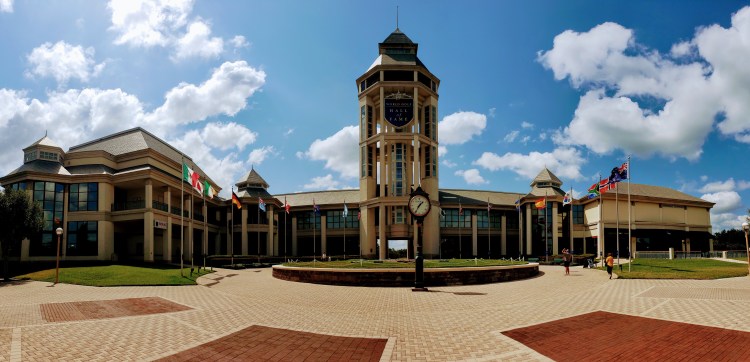
The World Golf Village feels a bit like a ghost town. Vacant buildings remain where shops and restaurants once ringed the pond in front of the World Golf Hall of Fame. Even the roofs and sidewalks of the businesses that are still open look bad. The putting course for tourists is closed–abandoned and overgrown. Jacksonville tried hard to identify itself with golf when the capital was raised and mobilized for this project in the eighties and nineties. Tiger Woods exploded on the scene right around the time that the World Golf Village opened, and it all must have seemed like a great idea right around the time that my seventh grade class pulled into the parking lot for a screening of The Prince of Egypt on the Village’s IMAX screen in 1998. Now that golf is collapsing on itself, leaving only the dark remains of abandoned courses and the spectral relics of shattered HOAs on their fringe, the Village feels like an enormous folly, as ephemeral as Dog Land or Ancient America in their Florida heyday.
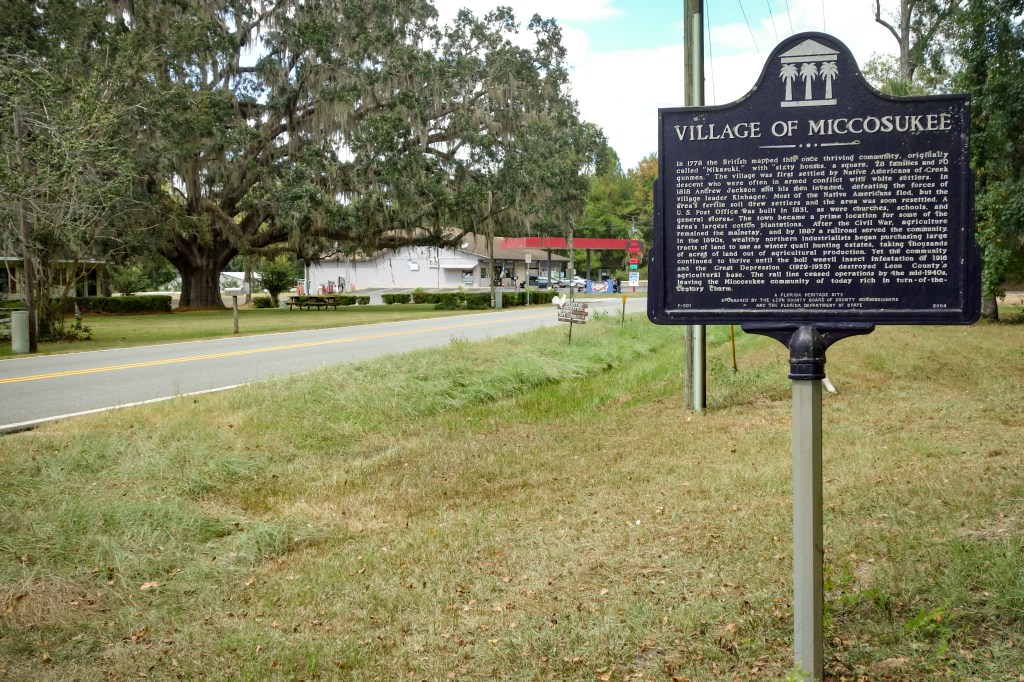
Out exploring the logic of dispossession on the “Seminole Wars Heritage Trail.” Stop #1: Miccosukee Village. Taking notes toward a book.
Only a historic marker remains to remind people of the thriving Native community that once drew a living from the fields, forests, and lakes northeast of the Tallahassee old fields. State Road 59 leading to the memorial cuts a meandering line between fabricated plantation gentility on one side and desperate poverty on the other, but it’s easy to see what the settlers saw in this land, nevertheless, as you pass beneath the spreading oak and pine boughs and smell the first hints of autumn pass through your open car windows.
I’m so happy to have found these! If you struggle to read Shakespeare, try reading along with these excellent recordings: The Complete Arkangel Shakespeare.
Archive.org is a wonderful, fantastic, amazing resource that makes me happy literally every time I think about it–which is way more often than one really should think about a website, if we’re being honest.
I’m inspired by Niels Bohr’s thoughts on openness this morning:
“An open world where each nation can assert itself solely by the extent to which it can contribute to the common culture and is able to help others with experience and resources must be the goal to put above everything else.”
Niels Bohr, “For an Open World,” Bulletin of the Atomic Scientists 6,7 (July, 1950): 217.
Bohr was thinking about openness in the years just after the Second World War, when the advent of devastating nuclear weapons made it seem like a far worse war was looming just over the horizon. We don’t live in quite such grave times–even if it feels like it sometimes–but Bohr’s solution to the problem is just as prescient today as it was in 1950. Unlike 1950, we have the tools to make information accessible to everyone, everywhere, at any time. Do we have the will? Do we have the courage to give up our secrets and work together?
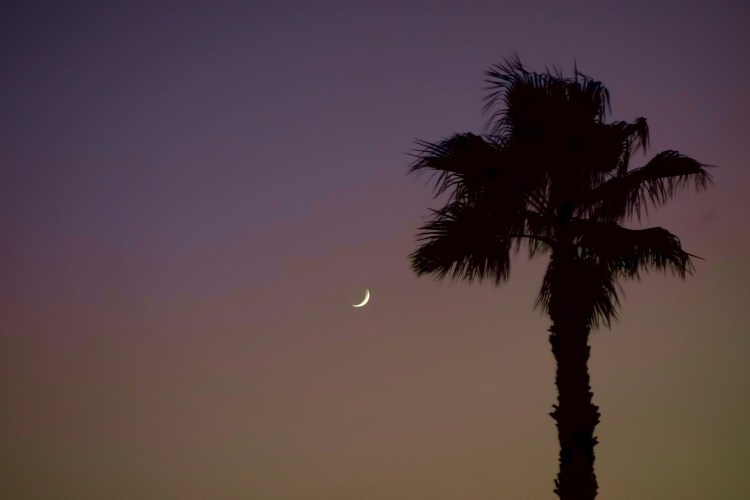
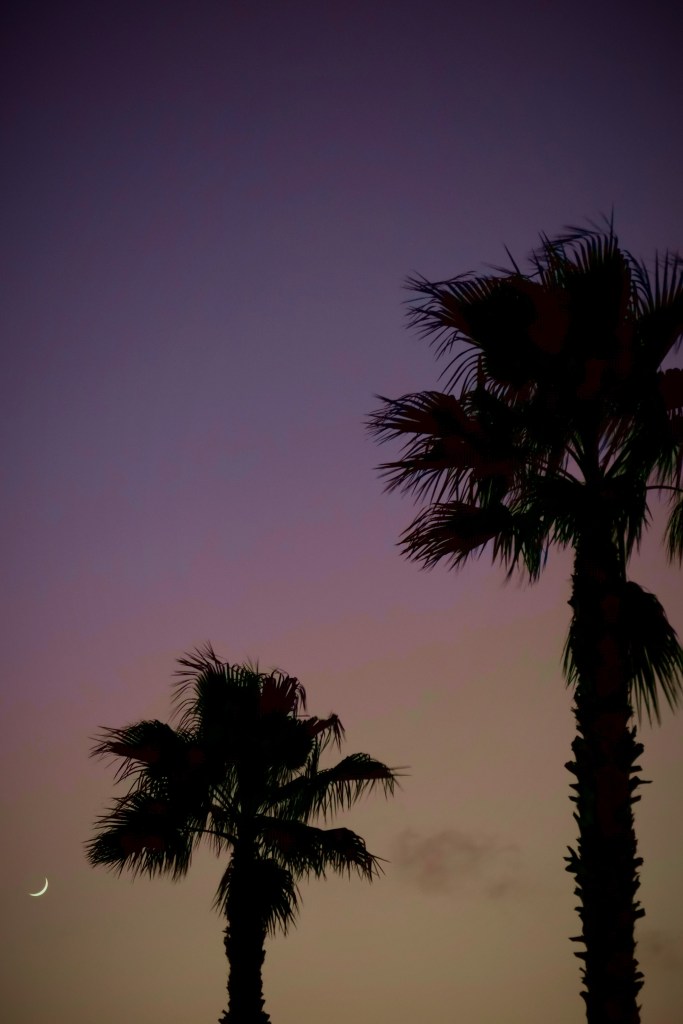
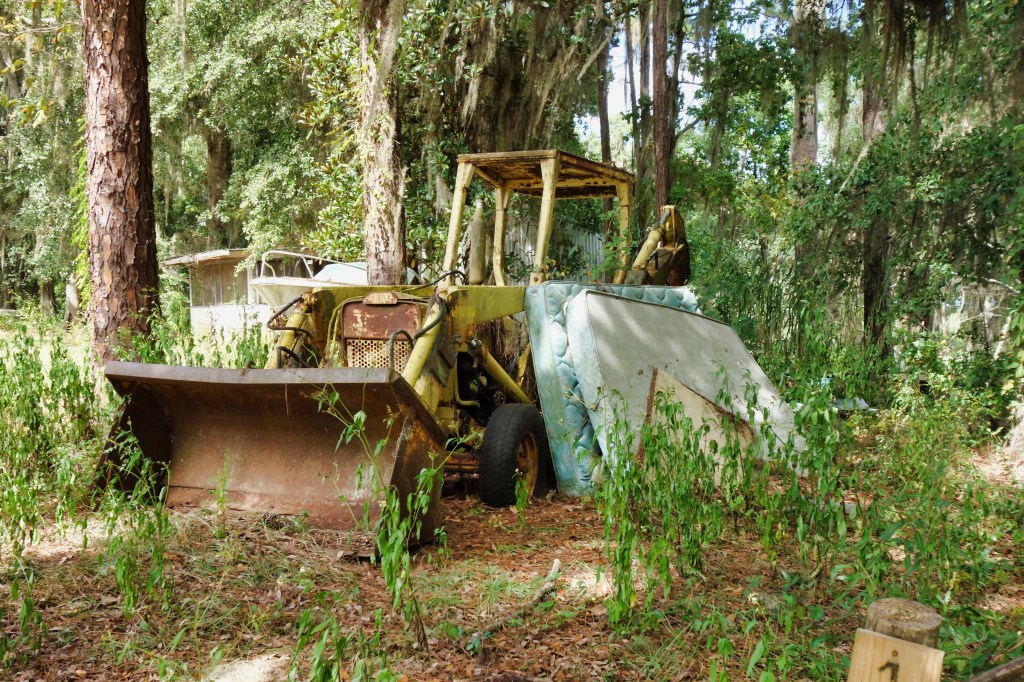
In Florida, a different is always just a short ride away. These magical scenes are less than forty-five minutes away from my house in midtown Tallahassee.
Stop hustling for platforms that steal from you. Make things that you like and share them in places that you control. No hashtags. No SEO. No analytics.
Legend has it that Miami Vice was born when the President of NBC, whom I (unfairly and probably incorrectly) like to imagine deep in the throes of a head-spinning fugue state around 11:30 in the morning on day 3 of a coke binge in the summer of 1984, scrawled the words “MTV Cops” on a sheet of paper and pitched it to a producer. We can imagine a similar scenario playing out in 2016 or 2017. Some producer on a flight from Los Angeles to Shenzhen to make a superhero movie pitch jolts awake from a psychedelic jet lag dream, fumbles for his iPhone, head lightly spinning from a single Lime-a-Rita before the flight, and scrawls “The Departed with women” in the Notes app. The Kitchen is born, and I sit down to watch it on a Tuesday night many months later in a suburban multiplex on the edge of the woods in North Florida.
It’s
hard to talk about The Kitchen. I
think all of us gathered in the multiplex on Discount Tuesday this week were
extremely aware of the trail this
movie is trying to blaze. The stars are badasses, alright? They don’t take any
shit. They dominate every man in the film—with the exception of fathers and
Italians—and we all love that. If you’ve ever thought to yourself, “this
gangster movie is good, but what if the wiseguys were women?” then this is probably the movie for you. I loved that part
of it. But if you value good films or human life, it probably isn’t the movie
for you. Let’s talk about that.
First,
life and death. Like Stuber, which I
talked about on Discount Tuesday a few weeks ago, The Kitchen kills with impunity. People die in this movie and
nobody really cares. Heads are blown open; dead people are dragged on the
sidewalk; bodies are dismembered and dumped in the Hudson River. Spoiler alert:
Haddish and McCarthy sniffle for a moment when they kill their husbands, but
the audience is discouraged from joining in these brief moments of quiet.
Watching these badass women rampage is just too fun, I guess, for the filmmaker
or the audience to go and turn the killers and the victims into humans. That
would require empathy, right, and who wants to bother with that on Discount
Tuesday in the summertime?
The Kitchen’s failures as an example of filmmaking art follow, in part, from all of this sexy dehumanization. If films are meant to shed some light on the human experience, death should do something. Take the gangster movies that this movie clearly wants to emulate. In The Godfather, benefiting from death makes Michael Corleone into a monster. Each killing in the film’s pivotal seizure-of-power sequence severs him from his humanity and isolates him from his family until, finally, a closing door figuratively seals him within his own personal hell. In Casino, death is a grotesque ritual which so scars the fantasy landscape that the killers operate in the depths of the desert. Death is a reminder of the cruel masters back east, and a consequence of flying too high. Goodfellas treats death like a cruel joke, but the audience clearly understands that Ray Liotta’s character is both hero and heavy. He’s a ghoul.
You may be wondering: what if all of the people who die in The Kitchen are bad guys? Does that make it OK, like Inglourious Basterds or revenge movies? It might, except The Kitchen isn’t about revenge or redemption, and the bad guys aren’t Adolph Hitler and Joseph Goebbels. The “heroes” in this film kill the “villains” in order to become the villains. With the exception of one rapist—killed by a male savior/mentor instead of one of the badass women, it’s worth pointing out, as though some villains are still too formidable for women to handle—we don’t know anything about the small-time gangsters who die in this film except that they’re standing in the way of the “heroes” racing to reach rock bottom. There is a moment near the end of the film—in the nadir of the “dark night of the soul” every screenwriting manual will instruct budding artistes to include in the script—when Melissa McCarthy says that she’s built something too great to give up. I was left wondering: does she mean the criminal enterprise the hero-villains built from theft, rackets, blood, and graft; or just the relationships they made along the way?
It’s impossible to watch this movie without thinking about its moral and historical counterpoint: J.C. Chandor’s 2014 masterwork, A Most Violent Year. That film takes place just three years later and engages the late-seventies underworld this movie glorifies. It has everything this movie has: crooks, a gritty, desaturated New York cityscape, gangsters, a badass woman, even Hasidim. But instead of cruel, half-baked stereotypes, these are real people, living in a real place. Instead of racing to the bottom like the soulless heroines of The Kitchen, Oscar Isaac and Jessica Chastain struggle to do the right thing in a world that rewards badness. If Donald Trump is the Bizarro Obama, an inverse agent whose entire political program is built on undoing his predecessor’s legacy, The Kitchen is the Bizarro Violent Year. Its nihilism betrays the talents of the performers and craftspeople who brought it to life.










 C.B. Crenshaw