TikTok is the future of web browsing. You won’t surf the web; it will be served to you “algorithmically” instead. After a while you’ll be served the content you want and it will feel like it was your idea all along.
AI is the engine to do this. The AI feed will repackage the web, all of the books, all of the recorded audio, and all of the video (which it has already consumed) and deliver it in a feed. You will open the browser and the content will appear. You will scroll and new content will appear.
This is basically the Facebook News Feed or TikTok FYP, but there is a crucial difference. Content there still leads users away from the source. People make the content (or prompt it); people (or their scripts) post the content. They need you to click on it and they want you to follow them off the feed. It’s a dialectic twisted around revenue. Facebook and TikTok want you to keep scrolling so your eyeballs roll over their ads, but Facebook and TikTok need content from users to keep you coming back. Creators who post there want you to click on their content so your eyeballs roll over their ads (or you send them money directly, but they need Facebook or TikTok to put your butt in the seat.
The AI Feed will certainly be burdened by its own internal contradictions, but it will escape this dialectic. Users will stay on the feed because it can endlessly generate content in a way that makes them feel like they’re unique, living on the cutting edge of information, and in control. Creators may post on their own sites (like this one!) but, lacking the “algorithm” and the network effects of a major platform, they will labor in obscurity. Further, the Feed will just consume their content and repackage it.
Maybe the Small Web will come back. Maybe print media will come back. I’ve explored both of those ideas in this blog at many points in the last ten years. Or maybe the AI Feed will be amazing. Who knows? The only certainty is change, change, change.
I have just finished Will Blythe’s searching essay on the future (and present) of literary fiction at Esquire. I’ll let Blythe’s argument stand for itself, but to briefly recap: the web, and the devices we use to access it, are radically splintering attention spans. This has already dramatically reduced the viability of literary fiction in traditional venues, he argues, but may spell serious trouble for the future of the literary novel, as well. It’s a powerful, sobering essay. I have thought and written at some length about digital tools, reading, and distraction in these pages, and I largely agree with Blythe on the impossibility of serious, focused thought in our current technological paradigm. I don’t have anything new to say on the subject of distraction, but I did have some thoughts about technology while reading the essay.
When we say “Technology” in 2023, for most people that means smartphones and apps.
This is not just how things worked out. It doesn’t have to be this way. Technology can foster immersive experiences as well as it can splinter attention spans. Technology can contribute to a flowering of literary fiction as readily as it can spell its demise. Technology could give us more literary fiction, more genre fiction, more historiography and literary criticism, more poetry, more everything, as well as extremely powerful tools to annotate, index, summarize, and recall all of these texts.
In fact, technology has given us all of these things. Take a spin around the listings of online literary journals at Duotrope. Look at the insane library of classic literature, periodicals, and texts of all kinds at Project Gutenberg or the Internet Archive. If you are an inveterate notebook-keeper, like me, look at Joplin or OneNote (just not Evernote any more, after recent changes, including a massive price hike). Or just take a look at Notepad and a filesystem. If you take notes specifically around books and articles, and need to build bibliographies, check out Zotero. Need an immersive word processor? Check out FocusWriter. I could keep going, but the point is hopefully clear by now: technology feels hopeless and limiting because our definition of technology is too narrow. One need not look far beyond the confines of iMessage or Twitter X to see that technology has radically exceeded the promise of the “Information Superhighway.”
The smartphone is not the best tool for immersive reading, thinking, and working–but not, necessarily, because of some logic inherent to the form. Smartphones are platforms for apps, and the most popular apps steal their users’ attention because that is what they have been designed to do. Take away the distraction-inducing apps, and you would take away the distraction. But which apps are you willing to delete? The makers of these apps know that attention and relationships are more powerful and pleasurable inducements to action than pretty much anything else in the world–right up there with nicotine, sugar, and opium–and using that fact to drive traffic to their apps is how they make their living. They won’t stop doing it until the demand goes away.
Here are some ways to start reducing that demand.
For Users:
Turn off app notifications on your phone for everything except phone and messaging.
Remove all but the most essential apps from your home screen. If you need to open an app, search for it. Bonus: if you keep notifications enabled, you won’t see badges on the app icons to draw you in.
Instead of replying to messages throughout the day, set aside an hour or so for focused correspondence. You can use this time to write emails, check your DMs, or whatever. Let the messages pile up otherwise. In my experience, people understand after a very short time that you will respond later.
It falls upon those of us who build technology and care deeply about attention and immersion to build experiences that foster attention and thought. For developers, then, two quick thoughts:
Resist user notifications at all costs. If your company uses notifications to drive engagement growth and sales, rather than meet legitimate business needs for the user, you work at the wrong place.
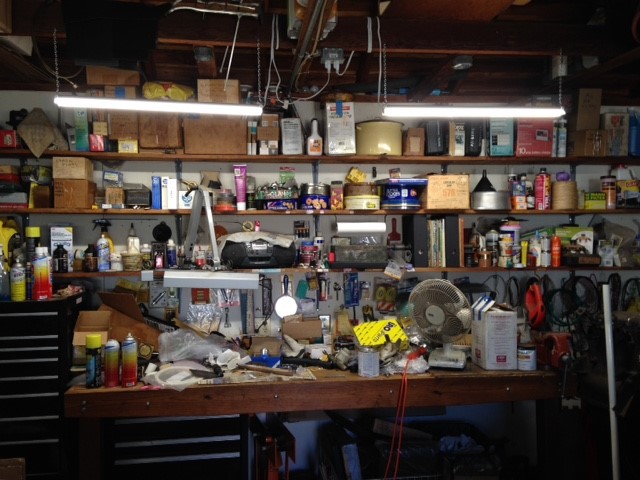
Declutter the interface of dynamic elements, like popup hints and user nudges. Clutter it with tools instead. The interface of LibreOffice Writer affords a great example of this principle. Some would call it ugly, and they would be right. I believe it is ugly in the way that a well-used workbench is ugly, however. This is a happy, focused place for those who thrive among their tools. (You might think this doesn’t work well for smartphone apps, but look at how much dynamic garbage Meta crams onto the Facebook app screen. It works.)
My cluttered LibreOffice Writer workbench.A cluttered workbench. Image credit to Circacies.
Let’s broaden our definition of “technology” beyond smartphones and apps, and then use what we find in that land beyond to make apps on smartphones better. If we do that, much more than literary fiction is sure to benefit.
Microsoft is bloating Windows with garbage and ads (and also, have you seen how bad Microsoft-owned sites like LinkedIn work on Firefox? Ugh!)
Apple is chasing pipe dreams and developing a large and unwieldy portfolio of products
These are not strictly web-related, but I’ll throw it here as items (7) and (8).
(7). Physical media of every type remains very much alive
(8). Streaming services are cannibalizing their own content–and therefore the very reason they were attractive to users over physical media and broadcast in the first place–for short-term gains
In my own practice, I’m moving away from cloud file storage and streaming media back to owning and controlling my own data. I am canceling every subscription service I can, and I even bought an old mp3 player to control my own music again (in addition to all of the glorious physical media I could never part with in the first place).
I’ve been cooking a post on “free” computing for a little while now, but not tonight.

 C.B. Crenshaw
