“When we gazed upon all this splendour at once, we scarcely knew what to think, and we doubted whether all that we beheld was real.”
Bernal Diaz del Castillo, The Conquest of Mexico and New Spain
You land on a strange “installation” and there are a few moments of silence for you to take in this unique world. After a quick look around at the clearing where your shuttle crash-landed, you make your way across a narrow bridge high above a bubbling stream. To the right, the stream cascades down a well-beaten course cut through a precipitous rocky valley. To the left, this. This expanse of land, water and sky slicing the inky vastness of space. There is a dialectic of sublime beauty and precarious terror in this space. You feel as though you could peer into the cumulus distance for hours, exclaiming at the wonder of it all like Bernal Diaz del Castillo and his murderous crew of invaders. They felt as alien in Tenochtitlan as you feel in this place. The only choice, though, is to pass through an evergreen grove up the rough path leading toward the source of the stream. There is gunwork ahead, unfortunately.
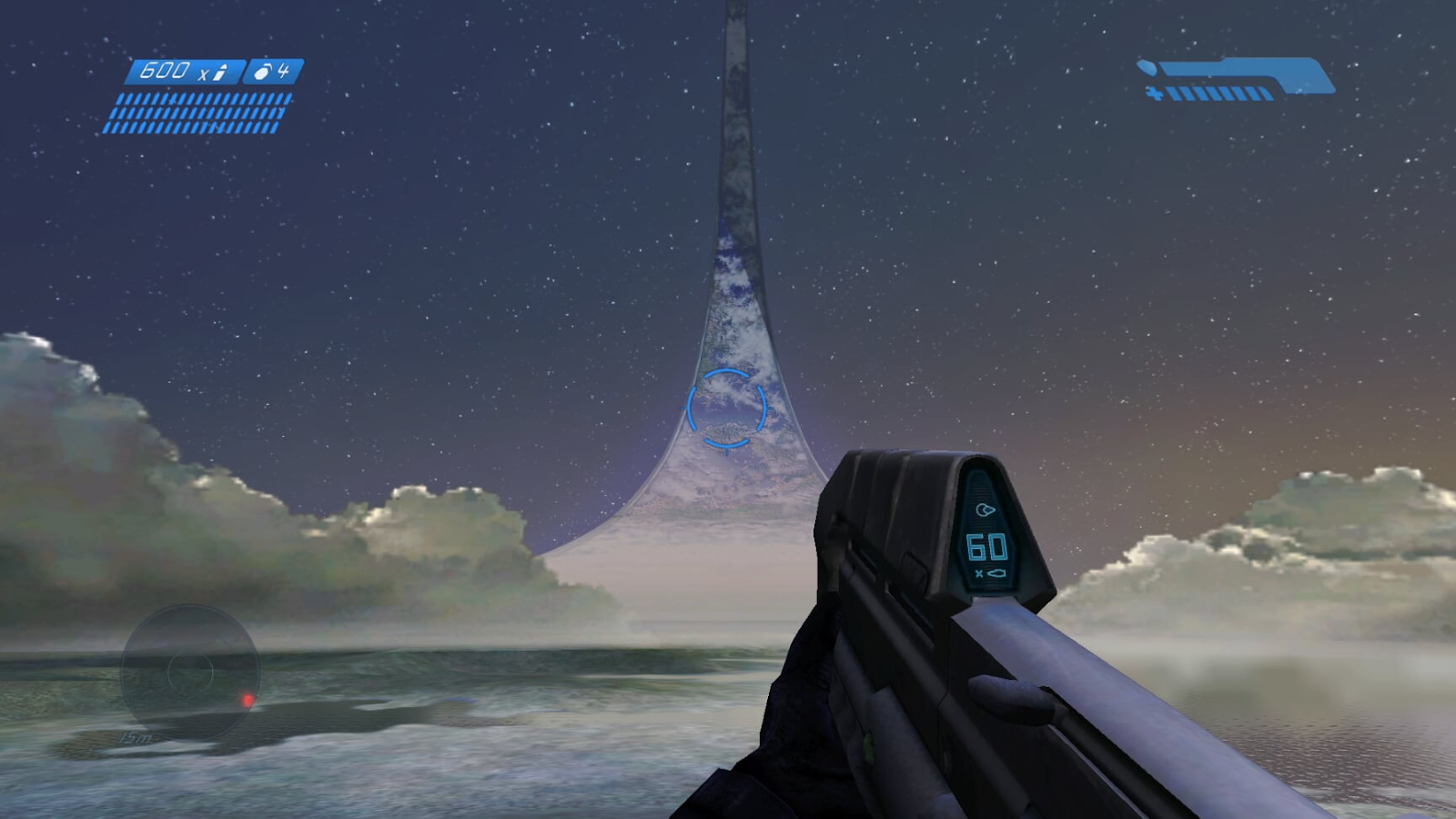
What I want to suggest, in this and future posts about video game spaces, is that games are a new design commons — a new public architecture that we should take just as seriously as we do “real” spaces. We inhabit games for longer periods of time than we inhabit most public spaces. I’ve spent more time running around the archives level on GoldenEye than I have spent in church; far more time driving around the virtual streets of San Andreas than riding the subway in New York City. All of these spaces were shaped by human hands and minds for humans to inhabit.
I also hope to think through some of the design problems inherent in games. These are not democratic spaces, for example, and they are not free in any sense of the word. Burning electricity instead of calories, too, may not be sustainable for our bodies or the planet. As in Halo, violence is the dark centerpiece of most video game spaces, as well. What cultural work are these costly, undemocratic, and violent realms performing? Are we designing and inhabiting beautiful hellscapes?
I’ll share spaces in games here when the inspiration strikes. I hope you can use them to question your assumptions about architecture, landscape, and industrial design, as I am. At the very least, I hope that you can appreciate their beauty and the skill that goes into designing and building them.






 C.B. Crenshaw