My new hobby is walking around the store and taking notes on all of the things I can make myself for a fraction of the cost. For example, I can spend $17 on a jar of Chili Crisp, or less than $5 (often far less) with ingredients I already have.
1. Take a picture, 2. Pull the recipe, 3. Profit
I know this isn’t anything new, but it’s new to me. Lately I’ve been making my own bread, dog treats, soda (because the SodaStream is amazing!), barbecue sauce, and other staples that would otherwise cost a lot of money or result in a lot of waste. Making as much as possible at home saves both money and waste, and. I try to cook every meal at home, and focus on buying ingredients, rather than products.
I’ve always been amazed by the people in cookbooks or on TV who can just stock a pantry and be ready to make just about anything at home. I’m learning how to do that now, and it feels good.
Every tool on my computer and phone stopping me from working for a moment to introduce new AI “features” is not helpful. Why does Notepad, of all things, need an AI Assistant? Are there any safe spaces left?
I think there is another post here somewhere (found it -CBC) which makes the same point in greater detail, but I cannot stress enough how strongly I believe this. Two more articles I read today continue to beat the drum punctuating the internet’s rapid fall from the mountaintop of human experience.
The Future is Local. This does not mean that people will turn away from global culture. There will still be K-Pop fans, Russian goths, and other Very Online™ people; but they will use these global identity traits to find meaning among their friends and neighbors in person, rather than an anonymous clique of forum users on the disenchanted, sterilizing network of computers that have dominated our lives since around 2008. Networked computers aren’t going anywhere; they’re just moving to the backseat.
The Future is Physical. Digital artifacts are dismally fucking boring. It’s as simple as that. People aren’t reading magazines on the internet because reading text on the internet is an awful experience. Building a collection of streaming music is about as exciting as sorting paperclips. We do it, but we don’t enjoy it. Watching videos on the internet is what it was like to watch TV in the decades before. You can have a good time, but it doesn’t stick like going to a movie or buying a disc (or a tape, for that matter). Looking at art on Instagram or the web is like watching free porn; do it long enough and you’ll make yourself crazy for the real thing. For all these reasons, the internet cannot take the place of physical things in our lives.
Print, burn, press, paint, draw, record. It’s the way of the future.
This is a list of articles documenting the ongoing destruction of the environment. If you believe “it’s just weather,” or “the climate is always changing,” click around below and tie yourself up in a few more knots.
“We see increasing magnitude of certain types of disasters. We see increasing socioeconomic impact from disasters. We’re also seeing disasters in places where we don’t usually see certain types of disasters, and different types of disasters interacting with one another.”
Andrew Kruczkiewicz, senior staff associate at the International Research Institute for Climate and Society at Columbia Climate School, wuoted in Justine Calma, “Climate Change is Redrawing the Disaster Map”
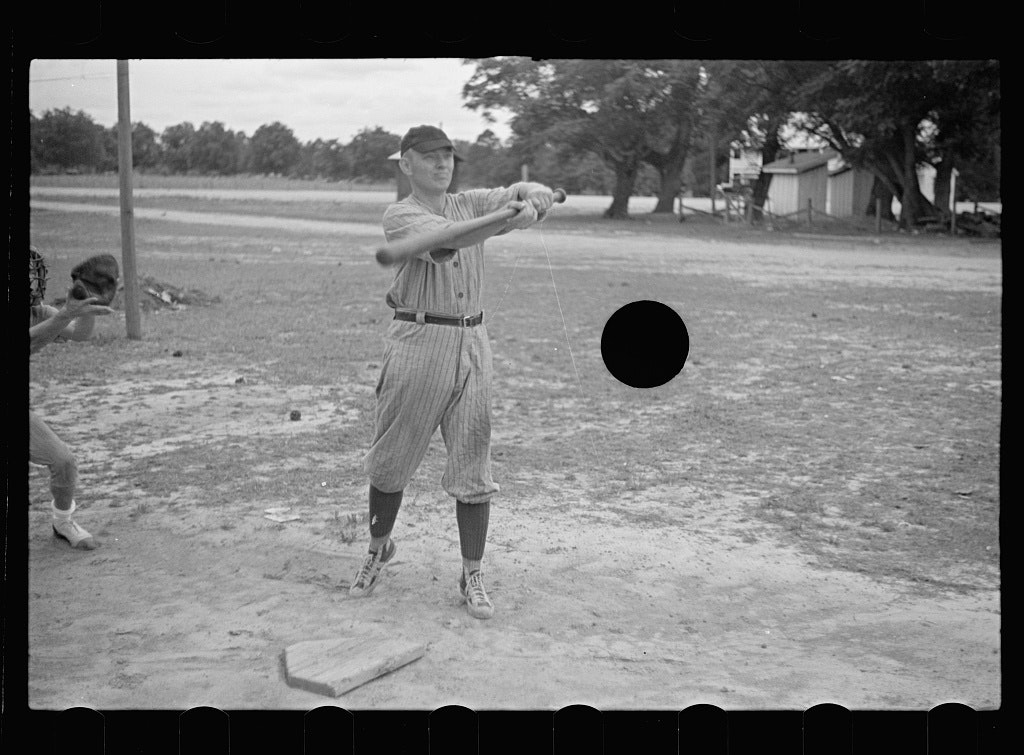
I just stumbled across a post on Instagram highlighting a series of photos printed from negatives rejected by the US Farm Security Administration. These photos were “killed” by agency leadership, who punched a hole in the negative to avoid printing the image.
Roland Barthes argued that photographs possess two qualities: “studium” and “punctum.” Studium is an observational quality, the way a photo exists in social, cultural, and aesthetic context. Punctum is a quality which “wounds” the viewer, transcending context and piercing their spirit. These holes–literally puncta on the negatives–pierce the viewer’s spirit by subverting their expectations of the photographs, which were commissioned for strictly “studious” purposes.
These would not be nearly as effective if they did not include the entire film strip in addition to the photograph. This underlines the materiality of the film, the hole-punch, and, by extension, the subjects captured by the image–the flesh and blood existing at a moment in time.
Here are some captures of the woods and wilds of Walden Pond in Walden, a Game.
One thesis of my exploration of video game spaces here is that they are a sort of architecture, like any other, which shapes our potential to become fully human (or somewhat less so) as we inhabit them. Exploring the natural world in this game as Henry David Thoreau may have done in Concord in 1845 inspired me to take up the pen, to invest the minute with spiritual significance and record its impact upon me. To that extent I think this game succeeds as a work of architecture.
A sublime experience at the end of a long day. I am three days into July of 1845 in the game. So am I worlds removed from the weekday cares here.
A list of interesting things new and old that I’ve read or experienced this week. I do not endorse or even necessarily agree with anything on the other side of these links.
Poser, Rachel. “He Wants to Save Classics From Whiteness. Can the Field Survive?” in The New York Times Magazine. https://www.nytimes.com/2021/02/02/magazine/classics-greece-rome-whiteness.html — What was the classical world, and why do we pretend like it was full of white people? Scholars have been attacking the classical canon and the western civilization myth since the dawn of postcolonialism. Now the New York Times Magazine is on the scene, so I guess it’s real now?
McClendon, Blair and Jenny G. Zhang, Matt Christman, Merve Emre, Rosemarie Ho, Sasha Frere-Jones, Sophie Haigney, Tausif Noor, “‘Speak to the Moment’: Art and Culture Under Trump,” in The Drift.https://www.thedriftmag.com/art-under-trump/ — Unflinching , necessary takes on the last four years of our lives.
Warzel, Charlie. “I Talked to the Cassandra of the Internet Age,” New York Times. https://www.nytimes.com/2021/02/04/opinion/michael-goldhaber-internet.html — By now, it’s old news that the internet has rewired our brains and, as a result, rewired society. This article tries to claim that the subject is the guy who predicted that, but, you know, that’s not really possible. It is an interesting read anyway.
Video
I know these are old. If you haven’t seen them, maybe you’d like them.
The cause for the slight progress is to be found in a series of fateful events which struck like a relentless broom , tearing down the web of enterprise again and again . And like industrious spiders the promoters rebuilt their schemes upon the same foundations.
(From Alice Whitman, “Transportation in Territorial Florida,” Florida Historical Quarterly vol. 17, no. 1 (1938): 25-26.)











 C.B. Crenshaw