Syllabus: February 14th

A list of interesting things new and old that I’ve read or experienced this week. I do not endorse or even necessarily agree with anything on the other side of these links.

Articles

Adegbuyi, Fadeke. “LinkedIn’s Alternate Universe: How the professional platform makes networking weird.” Every.to. https://every.to/divinations/linkedins-alternate-universe-21780381 — Adegbuyi says what we’ve all been thinking: LinkedIn is weird.


Evans, Benedict. “Retail, Rent, and Things that Don’t Scale.” https://www.ben-evans.com/benedictevans/2021/2/6/things-that-dont-scale — Evans offers some interesting thoughts on the retail experience and, as a result, challenges readers to stop thinking of Amazon as a sort of indomitable dragon.

Ford, Paul. “The Secret, Essential Geography of the Office.” Wired. https://www.wired.com/story/the-secret-essential-geography-of-the-office — What makes a successful essay? One thing you can do is take something commonplace, like the office, and make us see it in a new way. Consider the passage: “I think of those as ‘weeping paths,’ part of the secret map of every office. You cannot sob at your desk, so you must go on a journey, smiling at the floor, until you find a place where emotion can flow.“Litvinenko, Yuri.

“Windows’ Little Brother, Bearer of Microsoft’s Grand Ambitions.” 30pin. https://www.30pin.com/features/windows-ce-history/Perhaps you think that a history of Windows CE couldn’t possibly be interesting. Think again. This article sheds even more light on how Microsoft’s total dedication to the Windows brand between around 2002 to around 2010 seriously damaged the company’s ability to execute anything else.

Lowe, Katie. “The Rise of the Digital Gothic.” CrimeReads. https://crimereads.com/the-rise-of-the-digital-gothic/ — A thought-provoking critical perspective from an unexpected place. Perhaps, by placing us in constant contact with the many ghostly presences of capital, technology is hastening the end of the end of history.

Rizvic, Sejla. “Everybody Hates Millennials: Gen Z and the Tiktok Generation Wars.” The Walrus. https://thewalrus.ca/everybody-hates-millennials-gen-z-and-the-tiktok-generation-wars/ — Just to be clear, generational discourse is bullshit. But since we’re surrounded by people who believe in it, and then act on that belief, articles like this one are necessary. Roy, Sumana. “The Problem with the Postcolonial Syllabus.” The Chronicle of Higher Education. https://www.chronicle.com/article/the-problem-with-the-postcolonial-syllabus — Roy asks, what’s the matter with merely taking pleasure in novels? Why must novels written by authors living in “postcolonial” settings impart some sort of moral or offer some deep criticism?

Videos

The Little Things.

Music

Death by Unga Bunga. Heavy Male Insecurity.

Various Artists. Cuba: Music and Revolution: Experiments in Latin Music, 1975-1985. https://soundsoftheuniverse.com/sjr/product/cuba-music-and-revolution

Art

Andrew Salgado. — https://www.instagram.com/andrew.salgado.art/

Roadsworth. http://www.roadsworth.com/

Takram. “Moriota Shoten.” http://www.takram.com/projects/a-single-room-with-a-single-book-morioka-shoten/ — profile of a unique bookstore in Japan which sells one book at a time. Benedict Evans discusses this store in his article above.

Books

Coupland, Douglas. Bit Rot: Stories & Essays. New York: Blue Rider Press, 2016.

Cory, Cynie. Here on Rue Morgue Avenue. Tallahassee, Fla.: Hysterical Books, 2018.

See you next week! (Or, you could keep an eye out for more writing, photos, art, and other stuff here during the week)…

Discount Movie Review: Thoughtless Violence in Hell’s Kitchen

                Legend has it that Miami Vice was born when the President of NBC, whom I (unfairly and probably incorrectly) like to imagine deep in the throes of a head-spinning fugue state around 11:30 in the morning on day 3 of a coke binge in the summer of 1984, scrawled the words “MTV Cops” on a sheet of paper and pitched it to a producer. We can imagine a similar scenario playing out in 2016 or 2017. Some producer on a flight from Los Angeles to Shenzhen to make a superhero movie pitch jolts awake from a psychedelic jet lag dream, fumbles for his iPhone, head lightly spinning from a single Lime-a-Rita before the flight, and scrawls “The Departed with women” in the Notes app. The Kitchen is born, and I sit down to watch it on a Tuesday night many months later in a suburban multiplex on the edge of the woods in North Florida.

                It’s hard to talk about The Kitchen. I think all of us gathered in the multiplex on Discount Tuesday this week were extremely aware of the trail this movie is trying to blaze. The stars are badasses, alright? They don’t take any shit. They dominate every man in the film—with the exception of fathers and Italians—and we all love that. If you’ve ever thought to yourself, “this gangster movie is good, but what if the wiseguys were women?” then this is probably the movie for you. I loved that part of it. But if you value good films or human life, it probably isn’t the movie for you. Let’s talk about that.

                First, life and death. Like Stuber, which I talked about on Discount Tuesday a few weeks ago, The Kitchen kills with impunity. People die in this movie and nobody really cares. Heads are blown open; dead people are dragged on the sidewalk; bodies are dismembered and dumped in the Hudson River. Spoiler alert: Haddish and McCarthy sniffle for a moment when they kill their husbands, but the audience is discouraged from joining in these brief moments of quiet. Watching these badass women rampage is just too fun, I guess, for the filmmaker or the audience to go and turn the killers and the victims into humans. That would require empathy, right, and who wants to bother with that on Discount Tuesday in the summertime?

                The Kitchen’s failures as an example of filmmaking art follow, in part, from all of this sexy dehumanization. If films are meant to shed some light on the human experience, death should do something. Take the gangster movies that this movie clearly wants to emulate. In The Godfather, benefiting from death makes Michael Corleone into a monster. Each killing in the film’s pivotal seizure-of-power sequence severs him from his humanity and isolates him from his family until, finally, a closing door figuratively seals him within his own personal hell. In Casino, death is a grotesque ritual which so scars the fantasy landscape that the killers operate in the depths of the desert. Death is a reminder of the cruel masters back east, and a consequence of flying too high. Goodfellas treats death like a cruel joke, but the audience clearly understands that Ray Liotta’s character is both hero and heavy. He’s a ghoul.

                You may be wondering: what if all of the people who die in The Kitchen are bad guys? Does that make it OK, like Inglourious Basterds or revenge movies? It might, except The Kitchen isn’t about revenge or redemption, and the bad guys aren’t Adolph Hitler and Joseph Goebbels. The “heroes” in this film kill the “villains” in order to become the villains. With the exception of one rapist—killed by a male savior/mentor instead of one of the badass women, it’s worth pointing out, as though some villains are still too formidable for women to handle—we don’t know anything about the small-time gangsters who die in this film except that they’re standing in the way of the “heroes” racing to reach rock bottom. There is a moment near the end of the film—in the nadir of the “dark night of the soul” every screenwriting manual will instruct budding artistes to include in the script—when Melissa McCarthy says that she’s built something too great to give up. I was left wondering: does she mean the criminal enterprise the hero-villains built from theft, rackets, blood, and graft; or just the relationships they made along the way?

                It’s impossible to watch this movie without thinking about its moral and historical counterpoint: J.C. Chandor’s 2014 masterwork, A Most Violent Year. That film takes place just three years later and engages the late-seventies underworld this movie glorifies. It has everything this movie has: crooks, a gritty, desaturated New York cityscape, gangsters, a badass woman, even Hasidim. But instead of cruel, half-baked stereotypes, these are real people, living in a real place. Instead of racing to the bottom like the soulless heroines of The Kitchen, Oscar Isaac and Jessica Chastain struggle to do the right thing in a world that rewards badness. If Donald Trump is the Bizarro Obama, an inverse agent whose entire political program is built on undoing his predecessor’s legacy, The Kitchen is the Bizarro Violent Year. Its nihilism betrays the talents of the performers and craftspeople who brought it to life.

Stuber and the Guns

It is a statistical inevitability that someone, in a few months time when it comes out on streaming and DVD, will sit on their couch and knit a cute little hat while they watch Kumail Nanjiani’s new buddy-slash-cop-slash-odd couple comedy blockbuster Stuber. And you know what? That’ll be OK. They’ll have a great time, because it’s a funny movie. The chemistry between Nanjiani and co-star Dave Bautista is great. The timing is pitch perfect. The script is decent. I laughed a lot and I am responsible for at least one loud snort in an otherwise respectable darkened room. You should watch it. But I hope we are reaching a point in America where it will be just a little weird to knit and scroll through instagram and eat pizza rolls on the couch while this movie is on the TV, because it involves a lot of shooting. Like, a lot of gunfire. Are we still OK with this? It’s time to check in with one another.

People die in this movie. They die hard, painful, terrifying deaths involving acute shock and the extreme loss of blood–which is what happens when a person is shot in the lungs, legs, shoulders, heart, head, stomach, liver, and so on. We don’t see it in the movies, but we should know by now that most of the time people who are shot take a long time to die. They gasp and struggle. If they haven’t passed out from the shock, they moan and cry and try to cling to life. They shit in their clothes. They frequently gurgle from blood in the throat. It’s fucking terrible. No one who witnesses it can ever leave it behind, and it happens a lot in this movie.

Our movies, even the cute buddy comedies with a happy ending, continue to pass right over the hard reality of death by gunshot. Dozens, sometimes hundreds of humans–people who took their first steps, who enjoyed cookies and cakes, who scratched dogs behind the ears, who cried and loved and listened to music, even if they were bad people–die horrible deaths in pictures, and we rarely give them a second thought as the bodies pile up on the screen. They just fall dead, and the story moves on. But as we deal with the increasingly heavy toll of gun violence in the United States, it’s clearer than ever before that it’s not that easy. The dead will always be part of the story. This is why we have ghost stories. To quote the title of another recent film, the dead don’t die. They haunt us. They haunt their killers. They leave people behind. There’s no such thing as a completely happy ending if people had to die to get there.

To its credit, Stuber at least tries to deal with this. Nanjiani’s character, Stu, is never really OK with violence. He cries and vomits; he screams after a gunfight. But the basic premise of the movie is this: he needs to toughen up, while his hard-boiled counterpart, Victor, needs to soften up. They go through an extremely difficult situation together, and at the end both of them have grown. After a six-hour ordeal, Stu–who, spoiler alert, ends up shot in the shoulder–has overcome his insecurities and learned to be clear with others about what he wants from life. Victor–who also, you guessed it, has been shot in the shoulder by the end of the night–has learned to show some affection to the people he cares about. Stu gets a girl. Victor gets a dog. It’s not clear who cleans up the bodies or which funerals Stu and Victor will attend, but everyone is happy.

So, then, is Stuber trying to tell us that it’s OK for people to die horrible, bleeding deaths if the people who survive get to be a little more self-actualized in the end? Probably not. But while we struggle, as ever, with the horrible toll of gun violence, it should be weird that we could walk away from the movie with that interpretation. It felt weird to me. It should be weird that we can sit on the couch and knit a cute little hat while people die on the screen, over and over again, and it doesn’t really matter. Shouldn’t it? Are we OK yet?

Dope and the Location of Culture

Dope Poster

“A boundary is not that at which something stops but, as the Greeks recognized, the boundary is that from which something begins its presencing.” – Martin Heidegger, “Building, Dwelling, Thinking”

A month after its release, there’s a particular scene from Dope that still sticks out in my mind. It’s when Shameik Moore’s character Malcolm Adekanbi—a charismatic protagonist, I’ll just say here at the outset—is frantically driving to meet a Harvard alumnus as part of his college application. He’s driving away from an impossibly, hilariously complicated situation to one that is even more outrageous and complicated. Along the way, he sees someone completely unexpected, however, in a completely unexpected situation. The camera pans to his face. Dumbfounded, he asks aloud: “what the fuck?” The audience asks it with him before he (and they) are inexorably carried onward, further into a story rich with anomalous characters and ridiculous situations. The scene I remember is a fleeting moment, unnecessary to the story, but that question—Malcolm’s bewildering and fleeting encounter with the wholly new and unexpected—captures Dope’s cultural meanings more than any other could.

First, the film itself. Dope is a bildungsroman for the twenty-first century. Protagonist Malcolm Adekanbi is a product of Ira Berlin’s fourth great migration—a Nigerian-American geek living in a rough section of Los Angeles—where he and his friends Jib and Diggy share a love of early-nineties hip-hop and play robopunk songs in their band, Awreeoh, while they finish their senior year of high school. Malcolm is ambitious. He plans to attend Harvard University, on one hand, and his college application frames the narrative. Much of the story takes place at school and in classrooms. But Malcolm wants to be “dope” on the other hand. An encounter with drug dealers and street violence offers Malcolm an inside look at his neighborhood and his own strength. Stuck with a backpack full of molly, death threats and the danger of arrest hanging over his head, and looming standardized tests, Malcolm (and Director Rick Famuyiwa) must resolve the tension between his ambitions in order to survive. Famuyiwa resolves them in style. Dope is engaging, warm, outrageously funny, beautifully rendered, and vibrant.

While I’d like to take credit for reading Heidegger closely and taking detailed notes, the quote that opens this review is the epigraph of postcolonial scholar Homi Bhabha’s 1994 book The Location of Culture. In The Location of Culture, Bhabha argues that the re-iteration and repeated translation of hegemonic cultures associated with colonialism—or “globalization,” if that term is more palatable—leads to the formation of new cultural identities in the “interstices” between opposing social or cultural forces. Because they can only translate the received hegemonic wisdom of nation, race, gender, and so on for themselves, minorities and oppressed populations create “hybrid” identities that transcend these simple categories. Globalization and hybridity go hand-in-hand. Forced to puzzle over entirely new identities and situations, colonizer and colonized alike must both sometimes throw their hands in the air and ask, like Malcolm Adekanbi, “what the fuck?”

Dope is about hybridity. Malcolm crosses the boundaries between “geek” and “dope”; between generations, marrying his love of nineties hip-hop to his skill with the tools of twenty-first century cunning, like bitcoin, digital money laundering, and the dark web; between poor and affluent; between East Coast and West Coast; between African and African American. Without entirely new categories, it is impossible to pin Malcolm down and label his identity.

Malcolm’s friends and enemies demonstrate the futility of creating new labels. Drug dealer and gang member Dom quizzes his street counterparts on logical fallacies; Malcolm’s lesbian friend, partner-in-crime, and bandmate Diggy crosses the boundaries between genders; friend Jib—who claims to be 14% African—and stoner hacker Will—emphatically not African but unapologetically crass in his use of the N-word—cross the boundaries between races. Even Malcolm’s band, Awreeoh, crosses the boundaries between punk rock and hip-hop with a subtle nod toward race. Situations, too, cross the boundaries of class and morality: upper-class acquaintances struggle in vain for street cred; Malcolm is sympathetic and good, but he sells drugs to earn his way into the Ivy League. Hybridity abounds.

And it is wonderful.

Dope crosses boundaries without turning the mirror on itself and preening for attention. Its characters navigate a world of ambiguous definitions and unsteady moorings without sinking beneath the onerous weight of racial awareness and class-consciousness. Their awareness feels more real, more like a tool to adapt to the world as well as shape it to their own ends, rather than the self-destructive rebellion or acrobatic accommodation a previous generation of storytellers demanded from their characters. Famuyiwa—perhaps uniquely positioned to comment on hybridity by his location within the Nigerian diaspora—captures the fracturing of the twentieth-century’s colonial order better than any filmmaker in recent memory. If millennials exist, this is surely their film.

Insidious: Chapter 3 and the Wage of Postmodern Capital

images

Open with a reluctant medium, an unsuccessful reading.

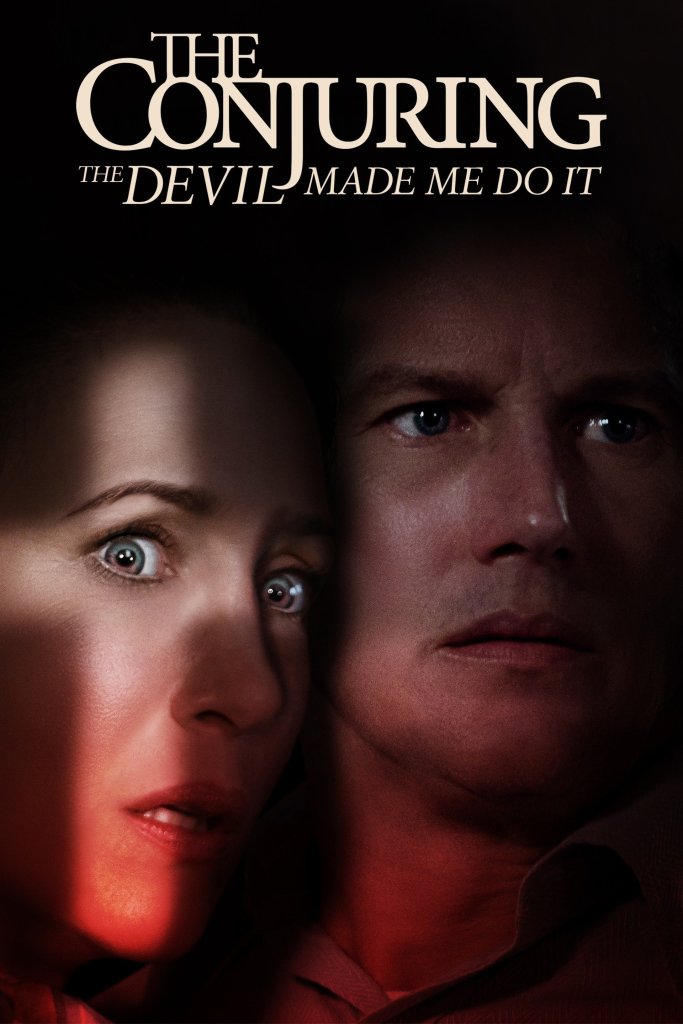
These first five minutes or so of Insidious: Chapter 3 sum up the remaining ninety-two minutes with depressing clarity. Sure, Leigh Whannell and Blumhouse have manufactured a suitably dark aesthetic, an occasionally unsettling package of jump scares and visceral death fetishes, a nightmarish and demonic villain, and an angelic white protagonist, but the parts are greater than the whole.

Neither individual parts nor whole package, to be clear, are very substantial.

The story takes place a few years before the initial installment in the Insidious series, some time in the late-mid 2000s, when teenager Quinn Brenner opens a door to the dark reaches of “The Further”–readers familiar with the rest of the Insidious series will recognize this dreary world of underpowered handheld lamps and hideously re-embodied voices–by visiting spirit medium Elise Rainier in order to make contact with her departed mother, Lilith. After the reading goes wrong, Quinn ignores Rainier’s frank advice to avoid talking to dead people and makes a connection with a respirator-wearing demonic presence–an angry old miner with black lung, perhaps?–through the air vents of her family’s hipster-proletariat apartment building while trying to reach her mother. This initiates a classic haunting sequence–what screenwriters call “fun and games”: bumps in the night escalate rapidly to full-on bodily violation and spirit possession. Skeptics must turn believers and seek the assistance of psychic intermediaries. Elise Rainier returns, thus, and overcomes her own demons to lead the final confrontation with evil. But–surprise!–the battle is far from over at the end. The Lambert haunting from the first movies hangs over the ending and clears the air once again for a fourth instalment in the series.

Storylines float to the surface and sink away again, barely acknowledged. Main character Quinn’s teenage friendships, fledgling romantic interest, and acting ambitions form an important leg of the story in the beginning of the film, for example: they are almost completely forgotten by its conclusion. The “Man Who Can’t Breathe” haunts a seemingly empty building. His backstory–a former resident of the building turned soul-devouring denizen of “the further”–is left undeveloped. The fact that he is old and was obviously disabled at death is enough, apparently, to explain his paranormal anxiety. Quinn’s troubled relationship with her father is unconvincingly resolved; her brother is a foil, at best; her friends are forced caricatures.

There is little here for viewers interested in questions of race, gender, class, and age–Insidious is a rather retrograde product on the whole in these areas, in fact–but the cinematography is effective in a workmanlike way, and the movie will keep your attention for the entire 97 minute runtime. Which is nice, I guess.

This, then, is the wage of postmodern capital: a wholly predictable haunted house, a ham-fisted and cynical rumination on mortality mediated by basic cable spiritualism, and an open door for the next commodity in the series to enter the pop culture milieu. Insidious: Chapter 3 is effectively ineffective. It is maximally profitable with a minimal investment on the part of its producers. They’ve risked no cultural capital, placed nothing more than money on the line. Viewers–myself included–have so far responded by paying them back the money and then investing our own cultural capital in the film. This insidious arbitrage is the truly horrifying part of the entire experience.

The producers of the Insidious series are not alone. Neither are they cynical magnates laughing and rubbing their hands together as they steal from bovine audiences. They are logical actors at work in a global system that glorifies the most gruesome forms of self-interest. Hollywood is driven by profit, after all, and motivated by an army of willing promoters among the public to profit from the easy sell of franchises today more than ever before. They can’t help themselves.

We can’t help ourselves. Brand relationships broadcast through social media are an easy and powerful forge of identity claims. If I’m the kind of person who likes Insidious in a public way, whether you agree with my preference or not I hope that you’ll form an opinion of me that is favorable to my social strategy. Bundles of preferences are movable pieces in a game of identity claims that, powered by the internet, forms the very fabric of postmodern existence. Preferences can be easily and quickly located on the left-right spectrum of the culture wars; rapidly deployed to build or dismantle relationships with other people; worn; shouted aloud; photographed. We are what we like.

Hollywood franchises like Insidious are vitally important pieces in this game. Simple preferences–for the color green, say, or for long walks on the beach–are easily overshadowed by the cultural complexity of brand relationships. More than merely personal decisions, preferences for brands involve negotiating bundles of meaning. Apple computers, for instance, are symbols that stand in for images, videos, songs, other people you’ve known who have owned them, and conversations you’ve had or overheard–in addition to objects that do things and with which you may spend a great deal of time in interaction. These symbols do thirty years’ worth of cultural work daily. So, too, The Avengers, Jurassic Park, and so on. So, too, Insidious.

Viewed alone, Insidious: Chapter 3 is mostly hollow. It is merely visceral. As part of a franchise, it is completely empty. It is little more than a single level in a vertical marketing video game. The “Man Who Can’t Breathe” is just a minor boss in a dungeon, a bump on the road to progressively “harder” bosses in even more deeper dungeons. Where does the game end? Who will be the final villain? Will the whole finale be one long jump scare planned and carried out by the Dark Angel Beelzebub to put this “insidious” horror film brand in a shallow grave once and for all? One can hope.