If your mind works anything like mine, at some point during Luc Besson’s Dracula—which is, let’s just get it out of the way, a sumptuous visual feast inspired in equal parts by John Boorman’s Excalibur, Tom Tykwer’s Perfume, and Disney fairy tales—you may find yourself asking: why are we asked to identify with this bloodthirsty creature? Is it actually good and noble to be an undead hematophagous thing, spreading a curse across Eurasia like a dark blot of ink? Should we aspire to be evil legends like this beautiful medieval knight-turned-cryptid fiend?
I think Besson is saying: yes, go for it. Which—without recounting the history of the man here—is not altogether surprising.
And, you know, come to think of it, Dracula and Iron Man and Film Directors have much in common. Iron Man and Dracula are solitary geniuses. Both toil in dark, secret lairs, where they manufacture mysterious and invincible technologies. Iron Man makes a suit of miraculous alloys, rocket-powered shoes, a futuristic computer familiar. Dracula produces mad familiars, enchanted gargoyles, armies of animal allies. Film Directors also like to imagine themselves as genius auteurs. Both Iron Man and Dracula have an inexhaustible supply of money. We see Dracula’s gargoyle minions stacking his dining hall with riches here, and the hellish fiend simply does not care. Film Directors, I like to think, are much the same.
It’s no wonder, then, that we are asked to see Dracula as some sort of hero. In the same way we are asked to see the rogue billionaire Tony Stark as a hero, and we are encouraged to look upon the definitely-not-a-sex-criminal Film Director (all of them, that is) as a singular genius, too.
Another thing you might think about, if you’re like me, is how each generation of films seems to ask us to identify ever more closely with Dracula and other horrifying things. The Count was always steeped in gothic romance, it is true, but it is only since the End of History in the 1990s that we have been asked to properly empathize with the beast as a modern man—to consider his point-of-view and find in it something worthwhile. This is a creature who sinks his teeth into the flesh of the living and either drains their life or damns them to an eternity of dark and vile urges. That the creature also happens to be in love with the memory of a woman who died in the 15th century seems beside the point. Doesn’t it?
Is it because the industry is peopled with monstrous men like Harvey Weinstein, Steve Bannon, and Jeffrey Epstein that we are encouraged to look upon seducing and drinking the blood of nubile young women, plunging cold steel into the hard bodies of young men, or murdering a convent full of nuns as kinda fun things you might want to do on a Friday night? Is it because we are ruled by an unstoppable gang of cheapjack thugs and bone-crunching weirdos that our movie villains refuse to stay dead? Again and again they die. Again and again they come back. Nothing changes. They want more.
Besson, at least, brings Dracula to an end in this film. When Christoph Waltz’s steel spike breaks the fiend’s cold, dead heart, his cursed ashes rise toward the brilliant light of salvation like a murmuration of swallows. Here’s one very bad man, at least, who goes straight to heaven. So that’s something.
(Edit: I’m not the only one thinking about the literal monsters running things. Here’s a blog post about the vampires of Silicon Valley I found linked on Hacker News the morning after I published this review. -CBC)
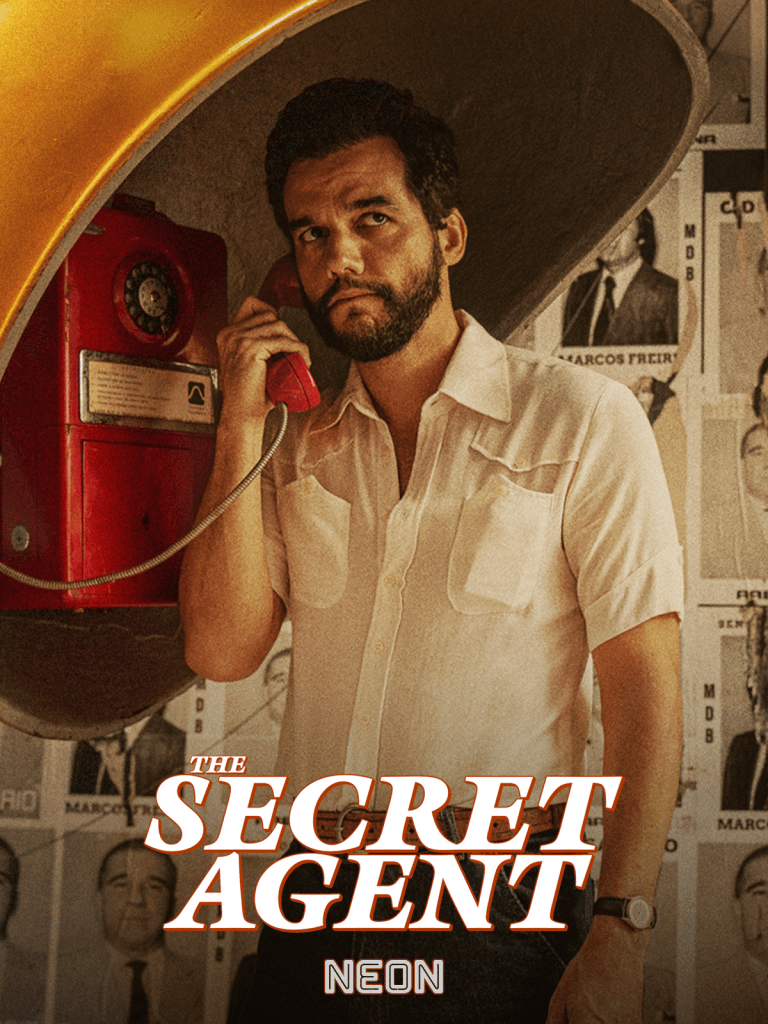
If you watch The Secret Agent at an AMC theater or similar megaplex, the odds are good that you will be forced to sit through a few commercials before the film starts. For me, before the lights went down, there was a new ad from Coca-Cola–not the ubiquitous “movie magic” couple dancing, drag-racing, and kissing through the streets, but a new one valorizing the history of bottles as though these tubes of glass have some emotional valence–and then another one, from Amazon, about a young, single Asian woman who lives alone learning how to cook ramen for herself by ordering a range of bullshit cooking accessories from Prime.
You watch these ads and they are lonely. It’s just humans, humans who are meant to live, work, and think together, standing instead alone, powerless to resist a gleaming world of products. The Products dance around our solitary heads. They assault our senses with lens flare, booming audio, bright colors, and all the other cinematic sleights of hand needed to turn a bottle of soda pop or a new slotted spoon into a life-changing, identity-affirming, spiritual revelation. We need other people to do that, and we all know it, so this–this noisy insistence that consumer products and the consumer product-driven life are beautiful and meaningful–feels bad. It feels wrong.
And then the movie starts. On the surface, it’s “about” Wagner Moura’s character fighting for his life against powerful forces that seek to silence him. Beneath that, it’s “about” the lawlessness of Brazil during the dictatorship and the vibrant resilience that percolated in the boiling kettle of that brutal state. Blah blah blah. Reflect on those Coca-Cola and Amazon ads and the film opens up a little more. This is a movie about what happens when the hand that performs the cute illusions in all of the commercials grows weary of your resistance, curls itself into a fist, and slams itself into your bleeding mouth.
Mendonça Filho wants us to think about Jaws. We come back to it again and again–in posters, drawings, a shark-tooth necklace wrapped around a villain’s throat. You may make of it what you will, but I think the shark here is the lurking danger–of death squads, brutally corrupt and murderous police, plotting executives, clutching politicians–constantly churning the water beneath our feet as we struggle to stay afloat. From the 1960s to the 1980s, the shark roared to the surface and pulled many thousands of Brazilians down into the depths, where they would never return. During that same period, the same shark terrorized the rest of Latin America, along with Southeast Asia, most of Africa, the Middle East, and other places in the world where people dared to challenge the beauty and justice of Products.
Walter Salles’ beautifully-executed I’m Still Here, from 2024,covers much of the same territory as this film, but Salles seems to think we live in a time of truth and reconciliation. Watch Bacurau, Mendonça Filho’s 2019 work (which is, I think, a better film than The Secret Agent), and you will see that the shark, the evil hunter, is still alive and well in Brazil.
It is with us, as well. That shark is the id of Coca-Cola and Amazon and all the others.
In a more just world, some might argue that Kinds of Kindness is a masterpiece. It is a strong expression of the surrealist impulse, skillfully joined to the antique traditions of medieval art, and combined with Hollywood’s realist aesthetic by visual and textual threads so thin at times that they may as well be the result of a magic spell, or so obvious, at other times, that they compel the viewer to delight, disgust, or some exciting combination of the two. It is a remarkable film. Too bad, then, that this dazzling work is twisted into sad, disappointing shapes by the scalp-numbing banality of the Hollywood bankrollers and the professional creative class they’ve cultivated to reliably convert money into more money. Instead of a masterwork of surrealist cinema, Kinds of Kindness offers a masterclass in the contradictions of capital. What a shame.
First there is the merchandising. About three days after I watched Kinds of Kindness, I began to see the ads on Facebook. The first one that caught my eye was a plastic model of a severed thumb suspended from a keychain—$28 before shipping costs–floating atop an image of the movie’s logo. I tapped the image of the severed thumb keychain and found other oddball ephemera from the film at the link. A water bottle labeled “Contaminated” glows in the dark and costs $24. A sweatshirt—$80 before shipping–features the film’s logo on the front breast and the words “Take life from my hands” on the back. A glow-in-the-dark T-shirt—$42–reads “Contaminated” on the front. Whoever designed this merchandise had one idea they simply cannot not give up. Maybe some vertical marketing intern at Searchlight Pictures fed the script into a chatbot and asked it to produce ideas for obscure merchandise. Maybe these are the best examples of the insane tchotchkes the video cards at the data center could dream up.
The letters scroll quickly across the advert like trains going endlessly nowhere in opposite directions
This merch should not exist. Imagine, for a moment, that you could buy a Salvador Dali clock, or a Rene Magritte tote bag. Oh, wait, you can buy those things? That doesn’t make them any less fucking stupid than the merch associated with this film. What irritates me is that all of this, and all of us, are so utterly predictable. People often think Facebook and other data brokers tailor adverts to users by spying on them. Did Facebook know, from other data on my phone, that I had seen the movie? Maybe! But it is also all-too-sadly plausible that Facebook’s advertising placement algorithm can wager that I am the type of person who would like this movie, and who would like pointless and overpriced movie-themed merchandise. It’s not a bad bet for the algorithm to make.
Kinds of Kindness, with its 165-minute runtime, its playful subversion of power relations, and its careful deployment of colors, costumes, locations, and shots for maximum ironic affect, seems to want me to believe it is above this banality. It isn’t. It’s down in the shit with the rest of us pigs.
There are products associated with the film, and then there is the film as product. I watched Kinds of Kindness at an AMC Theater, where they screened the film last Tuesday in one of the smaller rooms, way in the back of the building past the MacGuffins Bar and the second bathrooms. There was me and my date and about ten other people in clusters of two and three scattered around the upper part of the room, decadently reclining in plush red faux leather seats where we dropped popcorn between the cushions while the film worked its magic on the screen. This experience happens in a material context we should not ignore. My AMC Theater is the only part of the old Tallahassee Mall that still feels like a shopping mall, carved like a holy relic of the 1990s from the claustrophobic maze of state government offices that used to be Bath & Body Works, Old Navy, and Aeropostale. This, or something very much like it, is how most Americans who see the film in a theater will watch it. They will be reclined in a seat they selected from an app, nestled deep within a massive multiscreen complex attached to a shopping center or mall. Almost everyone else will watch it on their couch at home, scrolling occasionally through feeds on their phone while their streaming device decodes an insanely long string of ones and zeroes into moving images on the screen.
Is it possible to experience transcendent art in a space like this? Those of us who saw the film in Tallahassee’s AMC 24 last Tuesday sat through a thirty-minute block of trailers and three advertisements for Coca-Cola which informed us to stay quiet and embrace cinematic enchantment following the introductory messages. At home, IMDB or Amazon beckon; emails, texts, and information feeds demand attention. Is any of this capable of leading the viewer to communion with the unconscious?
Let’s take off our materialist philosopher costumes and put on our hipster art-critic glasses.
Get past the advertising, the merchandising, and the distraction, and you will find in Kinds of Kindness an alluring, beautifully-rendered, sometimes disturbing, darkly comic triptych of interconnected short films featuring the same cast in different roles. The first tale features a man longing to be free of the total influence exercised upon him by his all-powerful employer and mentor. The second tale is focused on a police officer who questions the identity of his wife when she is rescued from a prolonged ordeal marooned on a desert island. The third featurette follows a woman from a sex-and-water cult seeking a spiritual leader who can heal the living and raise the dead. Each tale is interleaved with the others through visual and verbal cues, unified by a common style and a shared set of preoccupations. These generic unifying elements offer us a glimpse at the film’s beating heart.
First, style. The film is a triptych because it really wants to be a painting. Look at the painterly strokes throughout: the long focus on lips locked in a kiss, the lingering gaze on food, the absurd decor and serenely sinister landscapes. Lanthimos is clearly inspired by surrealism, but this is not a surrealist painting. Instead, Lanthimos approaches the subjects here with a medieval sensibility. The tales end on ironic notes, like vignettes in the Decameron or The Canterbury Tales.The first tale details the fall from grace and dark redemption of a wicked king’s favored knight. Maybe you’ve read something like it in a medieval fantasy. The second tale toys with themes developed in The Return of Martin Guerre, a 16th-century case of assumed identity. The third tale, with Emma Stone’s renunciation of her family and Jesse Plemons’ ascetic wardrobe, recalls monks and pilgrims on the road to Jerusalem.
What this film wants to be, then, is a medieval panorama, a Hieronymous Bosch allegory of absurd delights and tantalizing terrors doing their work under the discursive cover of moral instruction. However, the goals of this surrealist triptych and the medieval work it emulates diverge at the most basic level. Both triptychs and motion pictures are made for public display. The medieval tryptich turns the lens outward from the self, instructing the viewer in the many ways of the world and urging them to seek salvation through Righteous Action and Righteous Belief. Similarly, a Hollywood movie urges viewers to examine themselves by watching others. Absent the Church, however, or the personal and social imperatives of modernity which followed the Reformation, the instruction ends there. The lens points inward at the self. What you should do with the knowledge is up to you.1
So far we have peered at Kinds of Kindness through two interpretive lenses: surrealism and medievalism. Together, these constitute a dialectic worth exploring. Medieval art was dedicated to active contextualization: placing things in a narrative of meaning; breaking situations down to constituent parts or lessons; instructing and enriching the viewer. Figures point to where we should focus our attention. Beams of light shine down from heaven on meaningful people, places, and things. Surrealism is the antithesis of this contextual ideal. Surreal artists attack narrative and context at the root by refusing to grant them any supremacy. Nothing follows from anything; anything follows from everything. Thereby, the dual existence and non-existence of all things is revealed.
Why surrealism, though? In a seminal 1936 essay, the polymath physician, hermeticist, and surrealist writer Pierre Mabille argued that surrealism is interested in what he called the “unconscious of forgetting.” Separate from the indidivual and the “visceral unconscious” of social norms, the unconscious of forgetting is a sort of natural history shaping the self and society, from which ideas form like “islands which emerge from the ocean of forgetting…. They are the natural and normal protrusion of lands elaborated slowly by the ages and the corpses.” The unconscious of forgetting is not the self, and not the set of unconscious rules guiding our behavior, but something older, an often inchoate thing slithering deep in the recesses of human minds. This theoretical construct—the idea that dark and true things writhe deep in the recesses of culture and the psyche—unifies the three tales in the film. Without it they are just three short films.
Kinds of Kindness achieves neither the contextual ideal of medieval art nor the unsettling of oppressive norms by illuminating the unconscious through surrealism. Instead, the film attempts achieve these goals by serving up the empty calories of postmodern irony and self-absorption, sex and spectacle. These are its preoccupations. Go watch the movie and think about the scene where Margaret Qualley plays the little Casio keyboard. Think about John McEnroe’s broken tennis racket, the group sex film in the second tale, Emma Stone’s dancing, the masturbation scene on the beach. Think about the long, close, painterly zoom on the juice being squeezed from the orange, the eggs frying, or Willem Dafoe’s lips locked on Emma Stone’s face. Each of these leaves an indelible mark, but rather than informing or unsettling they are irritating, tantalizing, like riding the edge of an amazing orgasm but never falling into it.
That orgasm is the synthesis of context and consciousness. Setting up this strange dialectic, and then failing to synthesize its urgent questions, leaves the audience hot and bothered.
This failure to synthesize is not limited to Kinds of Kindness however, but in the system which produced it. Orange juicers, Casio keyboards, John McEnroe’s broken tennis racket, muscle cars, the massive spa at the cult mansion in the third tale: these are specific products, commodities if you’re so inclined, and they do hard work in the film. Revisit the key surrealist moments and you’ll find in almost every case a commodity at stage center or very near it.2 This is characteristic Hollywood irony. Billion-dollar studios excel at delivering viewers to these postmodern lacunae, as if by design. Every “artistic” film which makes it through the major Hollywood system in the past few years seems to ask viewers whether meaning is even possible or desirable. To what end? While this feels like the sort of cool detachment which has characterized the American counterculture since the 1950s, the question these films really ask is whether capitalism itself is desirable or undesirable.
Underlining the question with postmodern irony and detachment while partnering with the Walt Disney Company or Mattel Toys, Hollywood ponders on the screen whether anyone could ever truly know the answer to these fundamental questions while on the balance sheet answering in the affirmative again and again. Considering the cosmic formations of capital underwriting these films, and the commercial imperatives they must satisfy to be successful, this question might be better read as a taunt. Is capitalism bad, you ask? You will never know, Disney’s Searchlight Pictures says by bankrolling this dazzling but frustrating work of art, but it sure is good for us.
Kinds of Kindness hasn’t yet turned a profit, but its journey as a commodity is only just beginning. As it makes its way through the world realizing the immenseness of surplus value, it is certain to delight and inflame. It does this by juxtaposing the opposing contextual tendencies of medieval and surrealist art. Instead of synthesizing the dialectic these opposites create, however, it falls back on the forty-year-old playbook of postmodernism to avoid answering their urgent philosophical questions. Those questions remain. Maybe someone working outside of Hollywood can help us answer them.
If postmodernism is, as Fredric Jameson argues, “an attempt to think the present historically in an age that has forgotten how to think historically in the first place,” the self and its observations of others through media are the only archives available to the postmodern subject.
Where commodities fail, sex picks up the slack. As the principal interface of consumption, however, the body is a synecdoche of all commodities, and therefore the most important construct in capitalist culture. Capitalism routinely problematizes the body, driving people to consume more: more and better food, more space, more clothing, more makeup, more skincare, more pleasure. As its most psychologically acute pressure point, sex is the most effective way to problematize the body and drive this consumer growth. So when you see a hard nipple on the screen, instead of a sleek SUV, the image merely cuts closer to the bone in its effort to manipulate you.
Some research this afternoon led me to an archive of FSU’s student-run newspaper, the Florida Flambeau, from 1985. Skimming over this issue from October 11, I paused to look at these advertisements for movies playing here in Tallahassee.
Look how many theaters there were! I’m counting eight theaters on the list, where now there are only three. And look at that variety! It’s not like now, where all of the theaters are playing basically the same features and differentiating their offerings based on screen size, food options, and app memberships. Instead of a cartel organized against streaming headwinds, this was a vibrant marketplace of competitors.
Aside from the number of theaters and the variety of features on their screens, I also thought about what has replaced these theaters in place. Where these independent cinemas once stood, there are now the following chains:
Target
YouFit
Whole Foods
REI Co-Op
World Market
AMC Theaters (still movies, at least!)
Plus an office building and an empty lot being developed into the new police headquarters.
Someone could probably tell me all the reasons why movie theaters and chains are better today, but I felt a rush of nostalgia anyway for this bygone era of variety and independent business when I saw this old newspaper page.
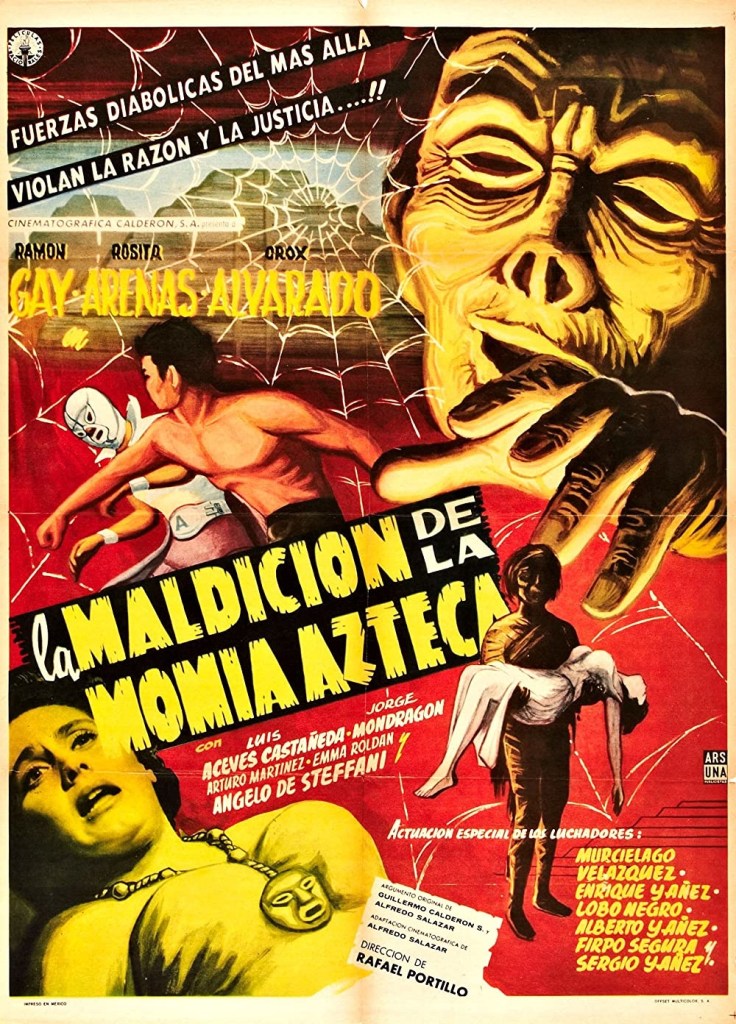
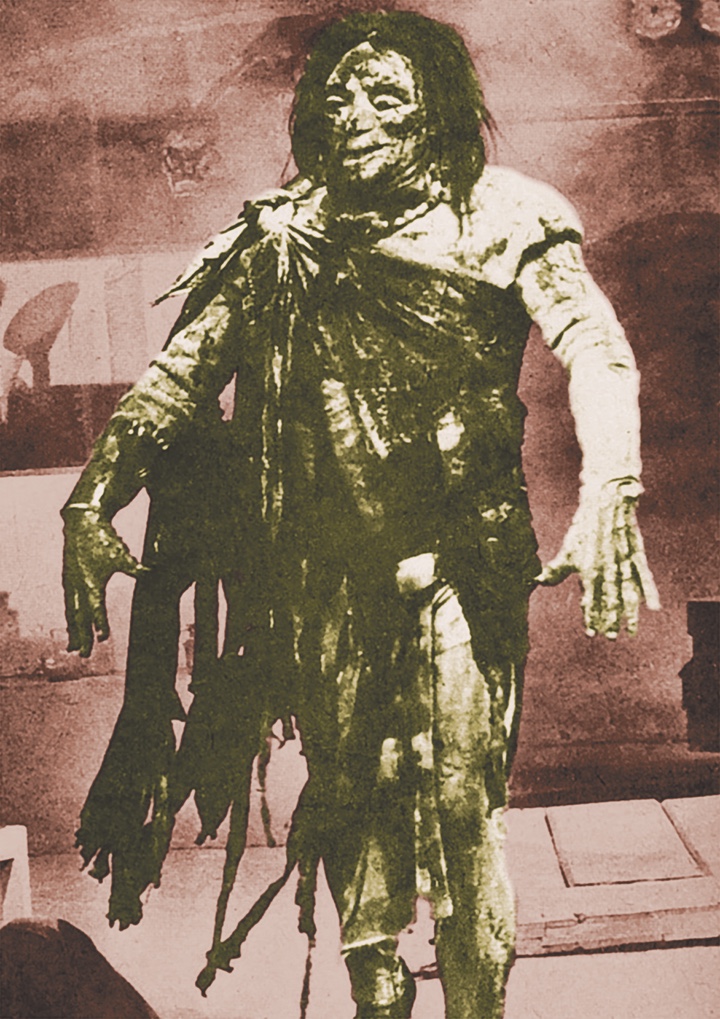
I’m not going to pretend that this is a good movie. The acting and production are about as good as you might expect from a late-fifties crime/horror/monster/science fiction/action hero film produced in Mexico City and dubbed by a crew in Coral Gables, Florida. It’s bad.
I’m not pretending this bad movie is good, but I’ll make an argument for why you should watch it anyway.
With all of the strikes against it, this is still just about as good as any Roger Corman feature from the era. And it was produced without access to the deep pool of Southern California talent that Corman could skim to make his schlock.
While the Aztec story here shares similarities with Native American fantasies in US films—the Native Princess, the Brave Warrior, forbidden love, and so on—it treats indigenous names, culture, and ideas with sensitivity you won’t see in a film produced north of the Rio Grande.
You won’t see a cast like this in a Hollywood film from the era. Stars Ramón Gay and Luis Aceves Castañeda were Mexican, star Rosita Arenas was born in Venezuela, Crox Alvarado was from Costa Rica.
You’re bound to get a few unintentional laughs. Look at the obvious toy snakes in the snake pit! Come back and here tell me you didn’t laugh when you saw the Angel jump in his little coupe and drive away in his shiny Luchador costume!
Put it all together, and you get a decent little midnight movie to hell you forget the Sunday night blues.
After watching this film last night at our incomparable local independent video rental store and theater, Cap City Video Lounge, I came home and asked myself: what if Kathryn Bigelow’s 1987 vampire feature Near Dark was released in 1967 instead of 1987? Then I stayed up way too late and made this poster.
Ghostbusters: Afterlife is supposed to be about ghosts. Thinking back over the film’s 124 minutes, however, I don’t remember seeing very many of them. If you’ve seen the trailers, you’ve seen most of the spooks in the script. There’s the Gatekeeper, of course. There’s the Keymaster and Gozer the Gozerian. There are the little Stay-Puft men, indistinguishable from Minions in an alternate movie universe. There’s an old miner and a new Slimer. A few more ghosts ramble around here and there, and some old friends return, living and dead.
There may not be very many ghosts on the screen, but Afterlife is a thoroughly haunted picture. Forget about those old Sumerian demigods, though. This reboot is haunted by two insidious specters that Stantz, Winston, Venkman and the kids could never hope to bust: the ghost of the American century and the ghost of science. When you put them together, Afterlife is something more than a comedy-horror reboot. Afterlife is an tragedy mourning the decline of twentieth century liberalism.
The first ghost is the specter of the American century. Like any ghost, it is difficult to pin down. Don’t seek it in the foreground. Look for it instead in the film’s sensibilities, in the aesthetic choices that shape its sets, costumes, vehicles, and props. Those choices outline a ghost of the American century. It is a warm presence, all golden hour and oversaturation, permeating the film. The prevailing kitsch of this ghostly mirage—the corn fields, main streets, drive-in cafes, grain silos, electric guitars, blue jeans, and other heartland mid-century ephemera—susurrates quietly in the background and tilt-shifts the perspective, rendering the town of Summerville and the surrounding landscape in idyllic miniature.
Like the seismic charts hanging on the walls of Summerville, we can trace the epicenter of the American century’s ghost to “Spinners,” the drive-in café in the middle of town. This oversaturated temple to the departed teen culture of the 1950s and 1960s is where Finn Wolfhard’s character, Trevor, finds love and gets a job. “Spinners” seems to occupy the vital center of the town’s social life as well. In the “Spinners” scenes there are people everywhere, drivers and pedestrians mingling in conversation, music blaring, peals of laughter, old people and young, pickup trucks and Subarus. Contrast this with the scene at your local Sonic restaurant, where rolled-up windows on idling vehicles enforce the separation of the patrons into family units. One would be hard-pressed to find the sort of inter-class, open social environment thriving at “Spinners” anywhere in the real America.
The Epicenter of Mourning
Follow the tremors of nostalgia outward from Spinners, and you will find the ghost of the American century everywhere. It drifts around the crumbling grain silos outside of town. It haunts the faded Stay-Puft marshmallow advertisement painted on a downtown wall. It inhabits the beautifully maintained 1978 Ford Ranchero GT owned, inexplicably, by one of the teenagers who works at Spinners. It squeaks in the wheels of junky Radio Flyer wagons in the old field outside of the factory. It acts as a preservative in the old half-eaten Crunch Bar young Spengler pulls from the pocket of her grandfather’s Ghostbusters uniform. See it once; see it everywhere.
Twenty years ago, a ghost of the American century would have looked like a character from a Norman Rockwell painting. All pastiche and cliché, it still would have carried itself with a sort of genteel dignity, a winking self-awareness that connected the living present to the departed past. It was both an aspirational cliché and a self-reflection: a ghost we could all see ourselves becoming someday, if we die righteously. The ghost haunting Summerville, Oklahoma is not as legible. This is a ghost haunting the post-apocalypse. The element of self-reflection is gone. We are encouraged by light, sound, and decay to situate the town somewhere in the past, but it is unclear where in time its development is supposed to have stopped. Is Summerville stuck in the 1950s? The 1980s? It doesn’t matter. Viewers in 2021 can no longer discern the difference between the two. All of it now is the 1900s, a golden era gone.
Nostalgia on the Streets
We have a harder time than ever before seeing ourselves in the old American century, but Afterlife wants us to understand that it was a better time. Rusted silos, sagging rooflines, and burnt-out lights on the marquee signs suggest that the town’s best days are gone. Except for flipping burgers, stocking shelves, or policing, it is unclear what anyone in town does for a living. The mine shut down decades ago. The farm infrastructure is old and unused. Spinners, Walmart, and the state are the only going concerns. This, too, is a manifestation of the American ghost. The signal fades.
The ghost of the American century is a specter of history. The second ghost haunting the town of Summerville is the poltergeist of science. You need not seek this spirit lurking in the background, however. It is there, everywhere, in perfect focus, lavished with thought.
Writers Gil Kenan and Jason Reitman cast these two spirits in opposition to one another. “History is safe,” Paul Rudd—who plays Gary Grooberson, a geologist moonlighting as a summer school teacher to study the seismic anomalies in the area—tells the kids in one scene. “Science is all particle accelerators and hydrogen bombs.” One is boring, in other words; the other is cool. One is quietly dead; the other seems almost alive.
The Imperium of Gear
Set aside the question of history for a moment. What is science? “Science is punk rock,” Grooberson says. “Science is a safety pin through the nipple of academia.” Punk rock, like science, is an attitude, a set of beliefs. We learn little of the philosophy of science in Afterlife, however. Instead, the ghost of science in Summerville is made of gear. Egon Spengler’s old workshop overflows with stuff. Ecto-1 is top heavy with racks, hoses, antennae, and other things. Proton packs, goggles, scopes, sensors, containment units, gauges, switches, pedals, buttons, and other bits of equipment surround the characters when they do science. There is no method. There are no hypotheses, no failed assumptions, no notebooks. Characters see a problem; they deploy a tool. The problem is solved. If academia is full of uncertainty, science in Summerville truly is the safety pin in its nipple. There is no uncertainty in the haunted mansion of science.
We do not pierce the veil of science in Summerville, but we are encouraged to see its moral shadow. This, too, is not what the characters claim. Grooberson says: “Science is pure. It’s an absolute. It’s an answer to all the madness.” It was “science,” however, which flowed from Summerville’s vein of selenium through the twisted hypotheses of Ivo Shandor to shape Sigourney Weaver’s apartment building in New York.“Science”—the sciences of mining, smelting, electrical engineering, et cetera—enabled the construction of the building. Science, too, brought the original Ghostbusters together and informed their work. In the Ghostbusters universe, as in real life, science is yin and yang, promise and peril. Afterlife buries the peril in the promise. Where have we seen that before?
A “pure” world without uncertainty was a key promise of the American heyday, too. The brutal efficiency of the marketplace, the genius of its innovators, the inherent righteousness of its existence: these forces had triumphed over fascism, the story went, as surely as they would triumph over communism, cancer, hunger, the colonization of space. Along the way maybe history itself—that incessant dialectic of class warfare—would come to an end. It is an idea worth mourning, perhaps, if you can believe it.
Try as they might, however, the filmmakers cannot separate the ghost of America from the ghost of science. My schoolbooks from the 1900s maintained that these two were symbiotically linked. American greatness flowed from the font of science, they argued, which flowed from the font of greatness, and so on. American power was transcendent, airborne, contemptuous of limits, devastating in its mastery of the natural world. The comfort it enabled was highly engineered.
The ectoplasm of American scientific power paints a different picture. The chronicles of nuclear devastation on Planet Earth, the inexorable decline which renders the memory of the American century in Summerville through a darkening glass, and the persistence of an ancient Sumerian demigod in a mountain just outside of town suggest that history is unsafe, and science is impure. We should not mourn them, but we cannot escape them. Like intrusive thoughts, they color our experience of the world. They refract our understanding, twist our nostalgia in subtle ways. They haunt even our blockbuster film franchises. Our only hope to overcome their decrepit influence is to leave them in the past.









 C.B. Crenshaw