This is part of a series of posts exploring video games as spaces players inhabit. If you’re wondering what this is all about, I tried to explain myself here.
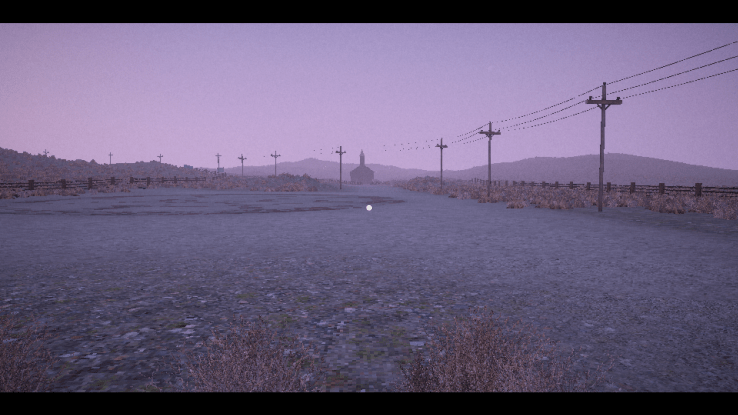
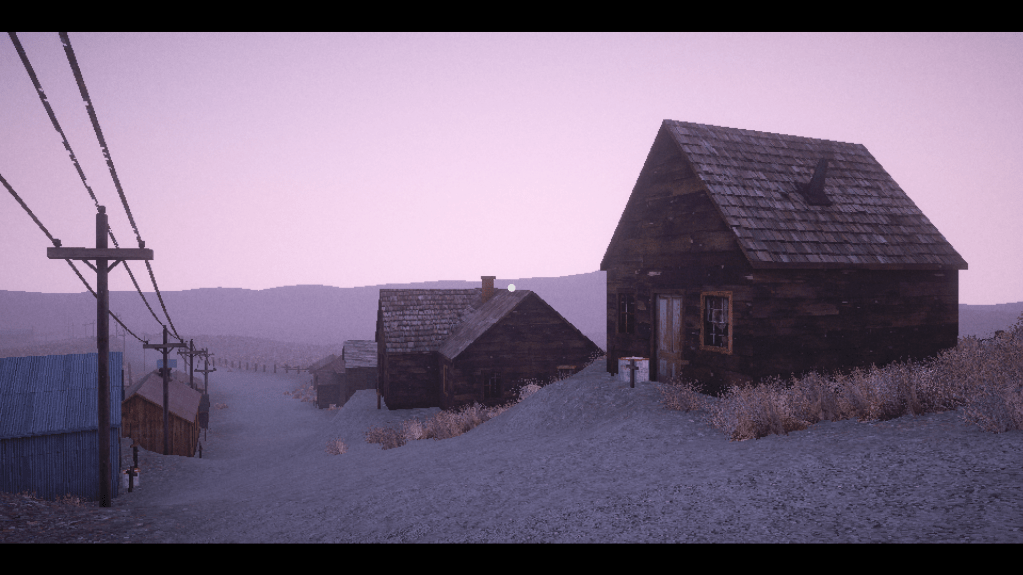
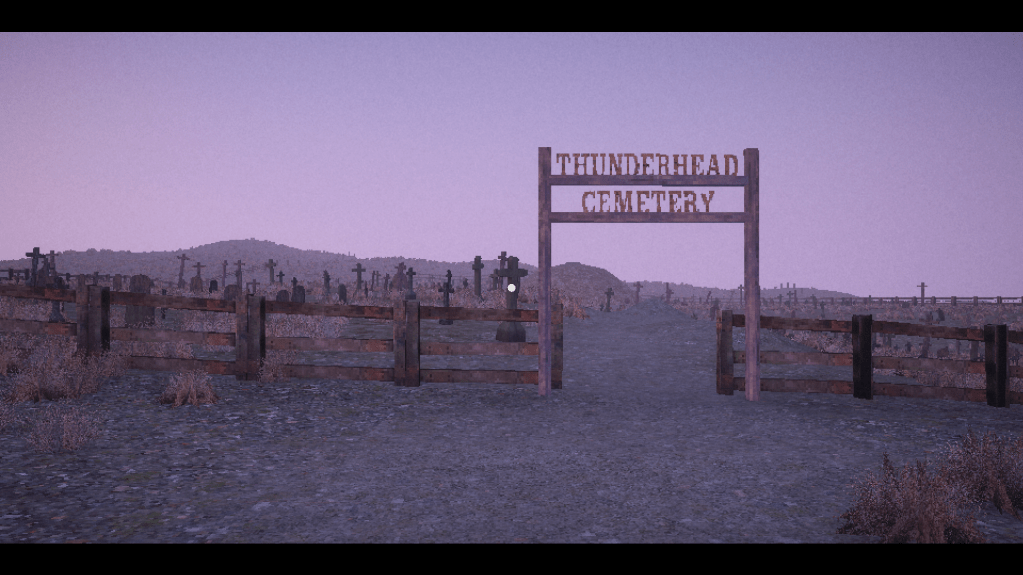
Here are some travel notes from a brief stay in Thunderhead.
People disappear; their commodities remain.
2. There is no stone here. All, save one brick building, is temporary.
3. Civilization passes away; nature, similar to commodities, endures.
4. Labor is spectral. It is silent, but always present.
This is part of a series of posts exploring video games as spaces players inhabit. If you’re wondering what this is all about, I try to explain myself here.
1: Bric-a-Brac
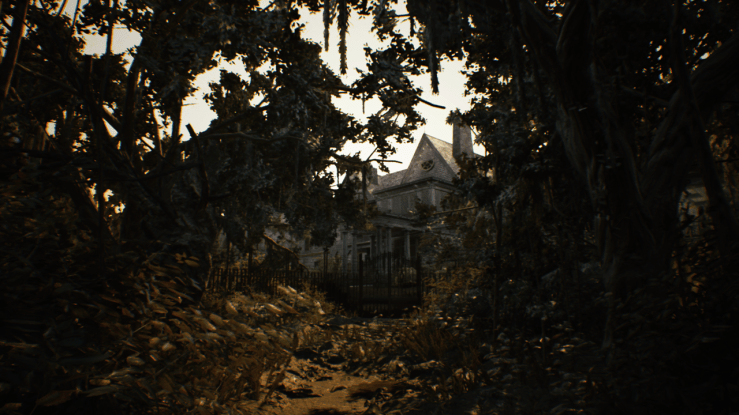
The house sprawls.
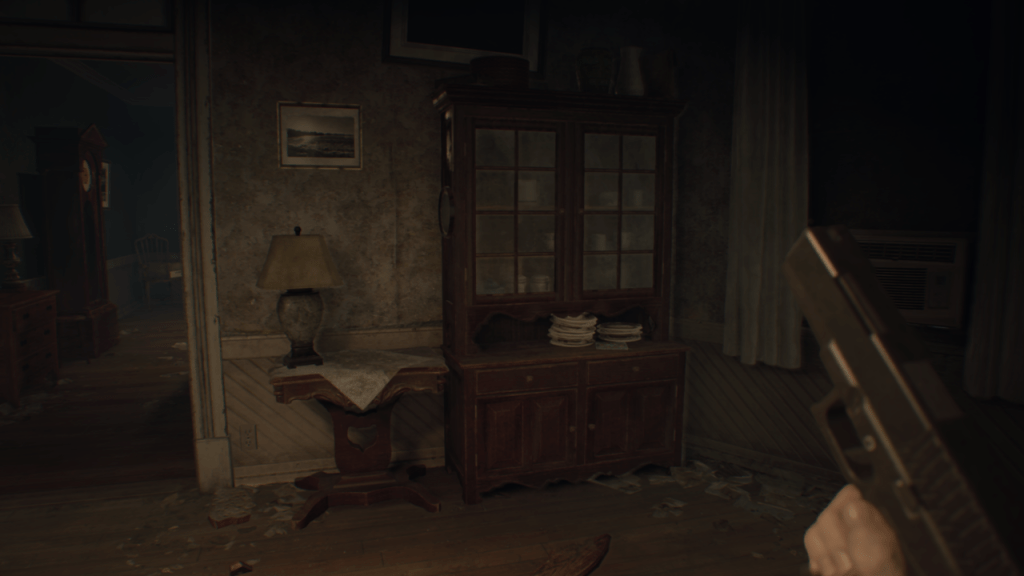
It is a labyrinth of jarring juxtapositions, a complex of rooms and ruins, corridors, bedrooms, workrooms, bathrooms, parlors, outbuildings. It is liberally decorated and lavishly electrified in decay. Its intact rooms remain gracefully furnished. Some of them might even be comfortable, perhaps, if you opened a window on a crisp spring morning. Some time ago this would have been a fine home, a stolid structure meant to house a family in comfort and grace.
There is a sort of disease spreading through the home, however, undermining its health and style. There are hundreds, thousands of objects inhabiting the space: books, papers, shelves, paintings, tools, plates, photographs, video cassettes, suitcases, more. It is a dizzying, terrifying mess that bestows upon the game a sort of misleading material cadence: calm in the ordered spaces shattered by violence, chaos in the ruins while the heart slows from conflict.
The disease haunting the house is the American disease, a malady of excess. The inhabitants of this house demand forever more: more house, sprawling through endless outbuildings and passages; more bric-a-brac on the tables and curios; more prints on the walls; more rotting meat in the refrigerator; more life on the bones. They are without regard of the cost, keen only to revel in the excess. “Heck of a thing, ain’t it?” the house’s first monster, Jack Baker, asks you when he appears again in some new corner of the vast residence. “Sure as shit beats the hell out of dying.”
Resident Evil: Biohazard wouldn’t be much of a game if the house did not sprawl, creeping across the miasmatic landscape like an invasive organism, but the player should ask: if architecture influences how we think and feel by shaping the ways that we experience space, what does the house do to us while we are here?
2: Postcards to the Soul
A house, Gaston Bachelard reminds us, is something we imagine into being. The walls, nails, doors, and windows exist in some configuration resembling a house for a little while, but in our imagination these objects take on a new configuration that surpasses the mere existence of the building. Intimate spaces, in particular, like bedrooms, attics, drawers, and so on, bring to mind images that we generate somewhere prior to thought. These images are postcards of the soul.
What postcards does this home send to the soul?
3: Eastman Johnson on the Walls
If we consider the fine art still hanging somehow on the walls of this sprawling charnel house, the postcards here have been inscribed by the sickly hand of a diseased presence, an even more insidious manifestation of America’s original sin than the piles of stuff everywhere. One of these, Eastman Johnson’s A Ride for Liberty, narrates the dark tale.
The painting confronts us again and again.
Consider this place in its surroundings. The Baker House is situated in fictional Dulvey Parish, Louisiana, a watery place on the coast separated from the rest of the state by a dark bayou. This is delta land; sugar country. The Baker House is a plantation home, glowering over what was once one of the most hellish landscapes in North America. The Baker House’s Resident Evil is the immutable ghost of slavery. It cannot be silenced, here. The chains rattle through the night.
In 1853, a northern transplant to the Louisiana sugar country described the typical plantation. “The stately residence rises” he wrote, “out from among groves” of citrus, magnolias, and live oaks. The walk leading to the home was shaded by “shrubbery of evergreen jessamines, and perpetually blooming flowers.” Behind the house, he continued, “in strange confusion, is a crowd of out-houses; useful as kitchens, store-rooms, baths, with a school-house, and perhaps a chapel.”1 Past as well as present, plantation homes lured visitors through a complicated mixture of fantasy and reality, of wealth real and imagined. They loom large still in the American imagination.
In the Baker House, the pretense of gentility that plantation homes package and sell to visitors—the live oaks and “evergreen jessamines,” the opulent antiques and mint julep porches—has been stripped and subverted. Instead of a wedding venue, the property is a tomb writhing with decay. Instead of a preservationist’s dream, the house is a crumbling wreck, more House of Usher than Tara. In this sense, the home’s dark, unspoken memory is cut closer to the joints of history than tourist plantations. It is difficult to imagine a more poignant monument to the unresolved legacy of enslavement in the United States. In another sense, however, the makers of this house in this game insist upon obscurity. They chose this setting for a reason. Rather than write a story about slavery, they evoke the dark stain through a painting which recurs throughout the house: Eastman Johnson’s A Ride for Liberty.
It is said that history rhymes, and that is true of ARide for Liberty hanging on the walls of the Baler House. The artwork, which Johnson claimed to have painted after witnessing an enslaved family in Virginia emancipate themselves from bondage as the Union army approached in 1863, is well-known today. Art historians class the painting in the top three or four most influential works by the painter. It graces the cover of American history textbooks, flashes on the screen of documentaries. You may be surprised to learn, therefore, that this apparent treasure of the nineteenth century never hung in a gallery. Johnson chose never to display it.
Johnson’s reasons for holding the painting back are unknown, but its departure from the refined brush work and chiaroscuro for which he was known suggests that hanging the work may have been somewhat off-brand in his time. Johnson was primarily a portrait painter. It may also be true that there was little appetite in the market after the Civil War for anything dealing with the subject of slavery. We will probably never know why Johnson kept the painting to himself, but we do know that he executed two copies of the work in addition to the original. Its significance for the artist may have been greater than its appeal to the marketplace. Over time, the painting in its quiet way has come to symbolize emancipation. Perhaps it symbolized the same for Johnson. Perhaps it thrilled him from time to time to recall that morning in 1863, the hope and joy of freedom.
A Ride for Liberty plays a subtle role in the Baker House as well, but its presence is jarring, rather than uplifting. Elevated to the iconographic heights of the American myth, the work has taken on an almost devotional significance. It reminds the player, on one hand, that salvation will not come riding over the hill. On the other hand, salvation from what? Objects made of code, rendered polygons, scripted sequences? A Ride for Liberty draws the player out of the game, out into the deepest horrors of history. The house is a museum, therefore. It challenges the player; jars them; instructs them.
This is the plantation tour turned upside down. The player is encouraged to fear monsters and scientific abominations, but the monstrous human past of the place they inhabit here towers over any antagonist the game’s developers could imagine. “Gothic tales dwell on fear of the past’s resurgence in the present,” Emily Alder writes in the foreword to a recent story collection. “Repressed memories,” Alder continues, “personal crimes, family secrets, and cultural anxieties take form as ghosts, monsters, or shadowy doubles.”2
Human bondage is the Resident Evil of the United States of America, and it is the wellspring from which this work of gothic horror flows.
4. The Republic of Nostalgia
Houses do not emerge from the minds of their builders already haunted. They are haunted by the weight of their pasts. The ghost of consumption haunts the Baker House. The screaming spirits of slavery haunt the landscape upon which it is situated. The moaning specter of nostalgia, finally, haunts its quiet places.
On a shelf upstairs there is a football helmet. On the shelf beside it there is simply a picture of a football, framed. The football, set against the crumbling household and the past and present evils within and without, is a synecdoche for innocence. Other nostalgic symbols abound. Old books and framed photographs clutter desktops and walls. Old-fashioned floral wallpaper reminds the player of their grandmother’s home. Tape recorders where players may save their game physically embody memory, transforming ethereal digital information to analog. The player may imagine dropping the tape in her pocket and carrying it from recorder to recorder
“The nostalgic,” Svetlana Boym writes, “desires to obliterate history and turn it into private or collective mythology, to revisit time like space, refusing to surrender to the irreversibility of time that plagues the human condition.” Like the historians plastering Eastman Johnson’s overlooked Civil War painting on the cover of the American history textbook to symbolize the march of freedom, nostalgia converts the inert stuff of history to the fabric of myth.
Nostalgia at the Baker House forms the crux of a dialectic. As an aesthetic it contrasts the dark present with the bright past, leisure with terror. As a narrative device, it compels the player to link the “good old days” these nostalgic objects recall with the history of bondage permeating the house and landscape.
5. Tourists
After wandering the corridors for hours rifling through the cabinets, running from the monsters, puzzling over old photographs, and playing haunted video tapes, it is little wonder that metaphors of travel, such as postcards and plantation tours, spring to mind so readily. We are tourists here. The mansion is an inverted attraction.
Read against the grain and you will find all the things here that tourists seek. First there is the allure of history. The old home, the fine oil paintings and sculptures, the endless curios: these make up a sort of museum, drawing players through a historical narrative told by objects on display. The narrative here, as in many museums, is about family. Like all families too, this one is wrapped protectively around its darkest places. Unlike the typical family narrative, however, this museum draws your eyes those dark places rather than away from them.
There is also the valorization of work. The well-appointed garage and the morgue-like laboratory in the basement offer players an idea of the work that is done here. Like the winery tour or blacksmith shop, we are fascinated by contact with work. We imagine the satisfaction of the worker twisting the wrench or hammering the boards which shaped the world around us. Inhabiting the world shaped by that work distances us from our own work. Here the work is strangely collaborative, though. The player works for hours on end to overcome the work of their antagonists. This is a different sort of distance from that established by the winery tour, but the effect is the same.
Tourism draws visitors with the promise of limitless consumption. Like the outlet malls and gift shops surrounding Disney World, overflowing with merchandise, consumption here is doubly encoded. It is evident, first, in the maximalist sprawl of rooms and bric-a-brac. These spread before the player/tourist like a promising vista of leisure: numerous doors to open, each full of treasures to behold. Consumption is also encoded in the endless confusion of stuff the player may acquire. Downloadable content promises greater success, a more interesting experience, the continuation of the story.
Tourism scholarship points to the ways tourists congregate at the scenes of trauma, gathering in throngs at Gettysburg, Buchenwald, Hiroshima. Like other gothic tales set in haunted houses, evil castles, and graveyards, Resident Evil: Biohazard draws strength from this fascination with the dead. The subtle invocation of human bondage at the game’s centerpiece setting offers players a form of veiledcommunion with the vicious past.
Slavery is the American Gothic. Resident Evil: Biohazard is one of its postmodern texts.
This is part of a series of posts exploring video games as spaces players inhabit. If you’re wondering what this is all about, I tried to explain myself here.
“If we compare the generic city with the old city,” Lieven de Cauter writes, “one thing stands out: whereas the metropolis was the scene in which the masses appeared, the generic city is the place in which the masses leave the stage.”
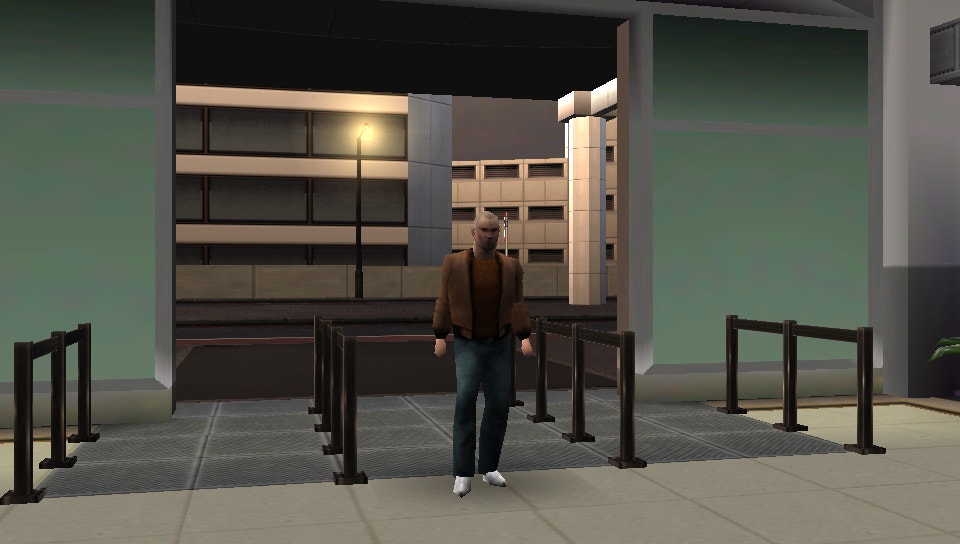
Consider these screenshots from the tutorial mission in Gangs of London (PSP – 2006). Set in the terminal and cargo areas of an airport, the mission guides players through a set of lobbies, corridors, warehouses, and city streets, teaching them the basics of gameplay along the way. In the first portion of the mission, the player is ushered through the terminal’s check-in area. Designed to support a large volume of people carrying luggage, in Gangs of London the space is eerily still and devoid of visitors.
Expending limited system resources on NPCs in this scene didn’t make sense, but the empty spaces and peopled spaces in the airport and cargo areas reveal several insights on the role of public architecture, the place of workers, and crime in the game’s London cityscape. These insights offer tantalizing clues about how the game’s designers and players viewed public spaces and the city in the early 2000s.
People in Gangs of London’s airport are secondary to the existence of the space itself. The airport here is not a space designed to serve travelers, but an ideal setting, a stage upon which individuals perform scripted acts and gain, in return, a sort of empowerment that will enable them to proceed to other spaces later in the story. This is similar to the role these spaces play in Rem Koolhaas’s vision of the “generic city,” a city which is (according to Lieven de Cauter summary of Koolhaas) “without characteristics, the city as a blank product – like an airport, everywhere the same: a city without a centre, without identity and without history.” The airport in Gangs of London is an ideal setting for the realization of the capitalist subject: a place unhaunted by the specters of the past, a blank slate upon which the subject may project their own fantasies.
It is helpful for this space sterilized for the workings of capital that there are only a handful of workers inhabiting the labyrinthine passages and warehouses through which the airport’s fictional cargo passes. This cargo provides the backdrop of the player’s actualization. Passing through an empty hallway and locker room “backstage,” behind the terminal area, the player progresses into a storeroom manned by an armed guard. Encouraged to sneak up behind the oblivious guard, the player is instructed that they may either kill the wage worker or take him hostage. It doesn’t make sense to take the guard hostage, so the actor on the screen snaps his neck. The body conveniently disappears. In the next room, the player gains two accomplices, who mercilessly beat two wage-earning guards with baseball bats. In this space, workers and their demands are mere obstacles on the path to actualization.
After dispatching the working class, the player encounters the state. When a handcuffed gang member informs the crew that the police are aware of the mission’s objective–to steal an armored truck and finance the gang’s takeover of London–the player is encouraged to work together with the crew and eliminate the police. Two cruisers and a paddywagon full of officers arrive shortly thereafter. Easily dispatched, the bodies of these salaried state employees, and the burning hulks of the public vehicles in which they arrived, disappear in short order. The state is powerless and ineffectual, unable even to exercise its monopoly of violence–the only legitimate power left to it in the generic city.
The post-9/11 generic city in Gangs of London is the anti-Rock Candy Mountain. Criminal activity is the only sign of life. The masses have fled public space, the workers are objects, the state is ineffective. There are no planes at the airport, and the armored cars are un-armored. At least the destroyed bodies and objects disappear, helpfully, when they stop being useful.
This is part of a series of posts exploring video games as spaces players inhabit. If you’re wondering what this is all about, I tried to explain myself here.
The Ace Attorney courtroom is a platonic ideal.
The Supreme Court of Judicature
Perhaps it is the image of justice. The room is an arena of truth. At its center there is a playing field, a boxing ring, maybe a battlefield upon which ideas are contested. At the top of the pitch there is a judge, impartial, a personification of the scales on the wall behind his head. On opposing sides of the pitch there are offense and defense, home and away, prosecution and defense. Opposite the judge, the witness–the panoptical eye of blind justice–sets the contest in motion. Justice is a game.
Perhaps it is the image of power. The room is a terrible mountain. At the summit there is the judge, a bearded demigod of the Upperworld here to enact the edicts of fate. At the mountain’s base, the adjudicated parties are encamped. The prosecution and defense camps struggle to climb, sweating and gloating in proportion to their standing with the inscrutable demigod. The witness camp, summoned against its will, struggles to avoid climbing. The witness is furthest from the steaming volcano, nearest the exit and consequently nearer to freedom. Power is a game.
Like any human architecture, the inhabitants subvert this platonic space. The judge is a fool, a branch leaning constantly with the prevailing wind. He is often powerless, his repeated gaveling as inconsequential as thunder without lightning. The opposing camps battle over context rather than content, surface rather than substance. Race, gender, colonialism, and every category of absurdity shape the proceedings. The witnesses are never impartial, always intertwined with the opposing camps. Justice is neither rehabilitative nor retributive.
Here are some captures of the woods and wilds of Walden Pond in Walden, a Game.
One thesis of my exploration of video game spaces here is that they are a sort of architecture, like any other, which shapes our potential to become fully human (or somewhat less so) as we inhabit them. Exploring the natural world in this game as Henry David Thoreau may have done in Concord in 1845 inspired me to take up the pen, to invest the minute with spiritual significance and record its impact upon me. To that extent I think this game succeeds as a work of architecture.
A sublime experience at the end of a long day. I am three days into July of 1845 in the game. So am I worlds removed from the weekday cares here.
This is part of a series of posts exploring video games as spaces players inhabit. If you’re wondering what this is all about, I tried to explain myself here.
Cosmopolitan Liberty: Dodgeball Nationalism
“Any text is constructed as a mosaic of quotations; any text is the absorption and transformation of another.” — Julia Kristeva, “Word, Dialogue and Novel”
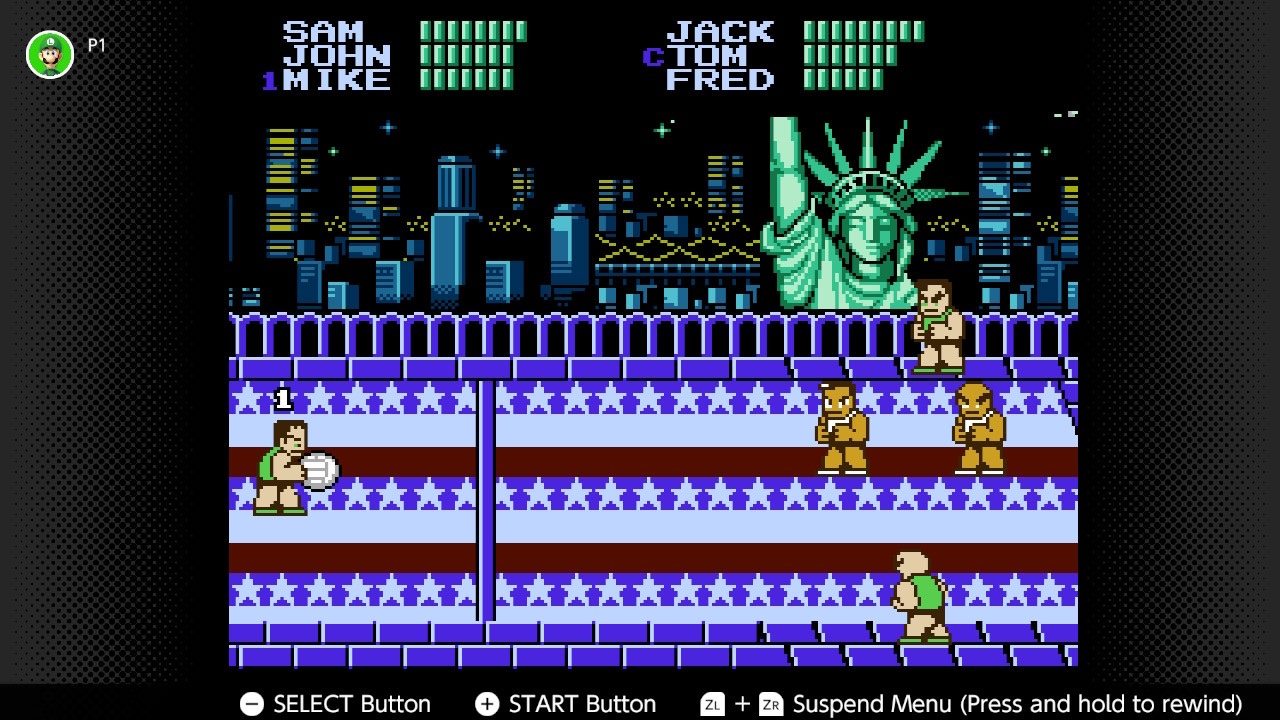
Super Dodge Ball is an NES game in which the player takes control of an American dodgeball team and competes against other national teams on a journey around the world.* There is an English team–replace New York and the Statue of Liberty in the screenshot with London and the Tower Bridge–an Indian team, an Icelandic team, a Kenyan team, Team Japan, and, finally, a boss battle with Team USSR. You should watch the playthrough here if you want to see the game in action. Nintendo thought highly enough of the game to include it with the NES games on Nintendo Switch Online, which is where the screenshot comes from.
Odds are, if you played this game in 1989, you were familiar with Rocky IV, which debuted in 1985, and Top Gun, which came out a couple years later. You might have watched the 1988 Olympics, which were relatively drama-free following the political scrimmages surrounding the 1980 and 1984 games, but still drew huge audiences to a spectacle of nationalist competition. Maybe, inspired by the World Cup in 1990, you pulled the game down from the shelf to play through it again. That is something I would have done, substituting dodgeball for soccer to reenact the thrill of the television event. Maybe the looming Kremlin in the game’s final showdown flashed across your mind when the Berlin Wall came down and the USSR along with it. Super Dodge Ball probably sat on your shelf when the United States invaded Iraq for the first time in 1991.
Rocky IV, Top Gun, the Olympics, the World Cup, Super Dodge Ball (and other games like it), the fall of the Soviet Union, Operation Desert Storm. These things appear disconnected, but they were woven together in an intricate pattern, disparate phenomena contributing to a noumenon of nationalist triumph in the eye of the American beholder.
Is this the moon? No, just Iceland. Screenshot from Youtube.
Set against world-historical events like wars and political collapse, cultural products like films and video games seem to speak with an infinitesimally small voice in the historical record. We should reconsider this point of view. Because these events take place out there in real time and space, the vast majority of people experience them passively. Movies, games, recorded music, and other cultural products occupy personal time and space. We experience them actively and use them to think through events.
For most Americans, the Soviet Union collapsed on the news. Americans who played Super Dodge Ball contributed to this collapse in their minds when they played the game. Along the way, they internalized certain ideas about difference, about strength, agility, and development. Many of these ideas were expressed spatially. Players have inhabited these spaces for more than thirty years.
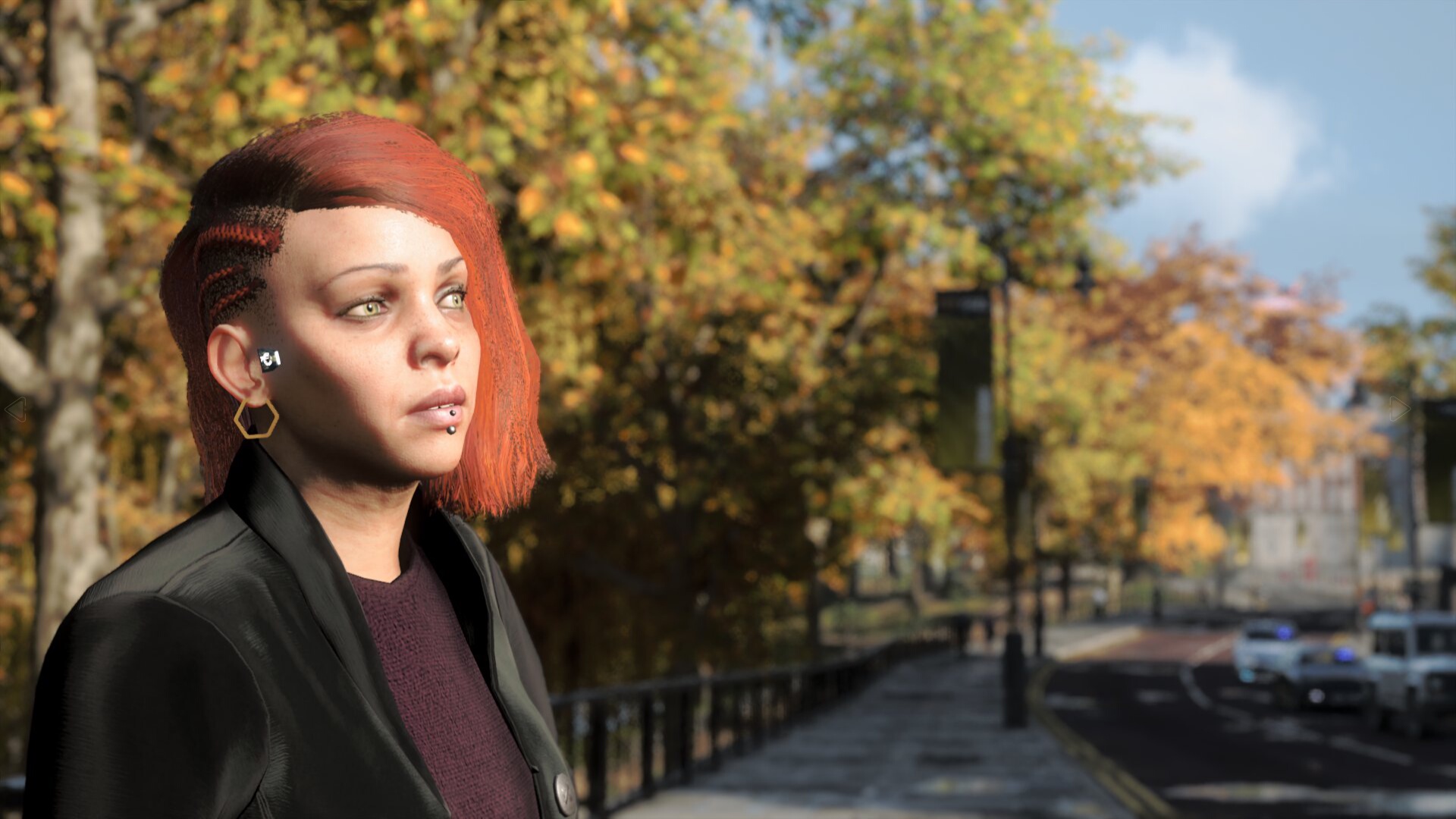
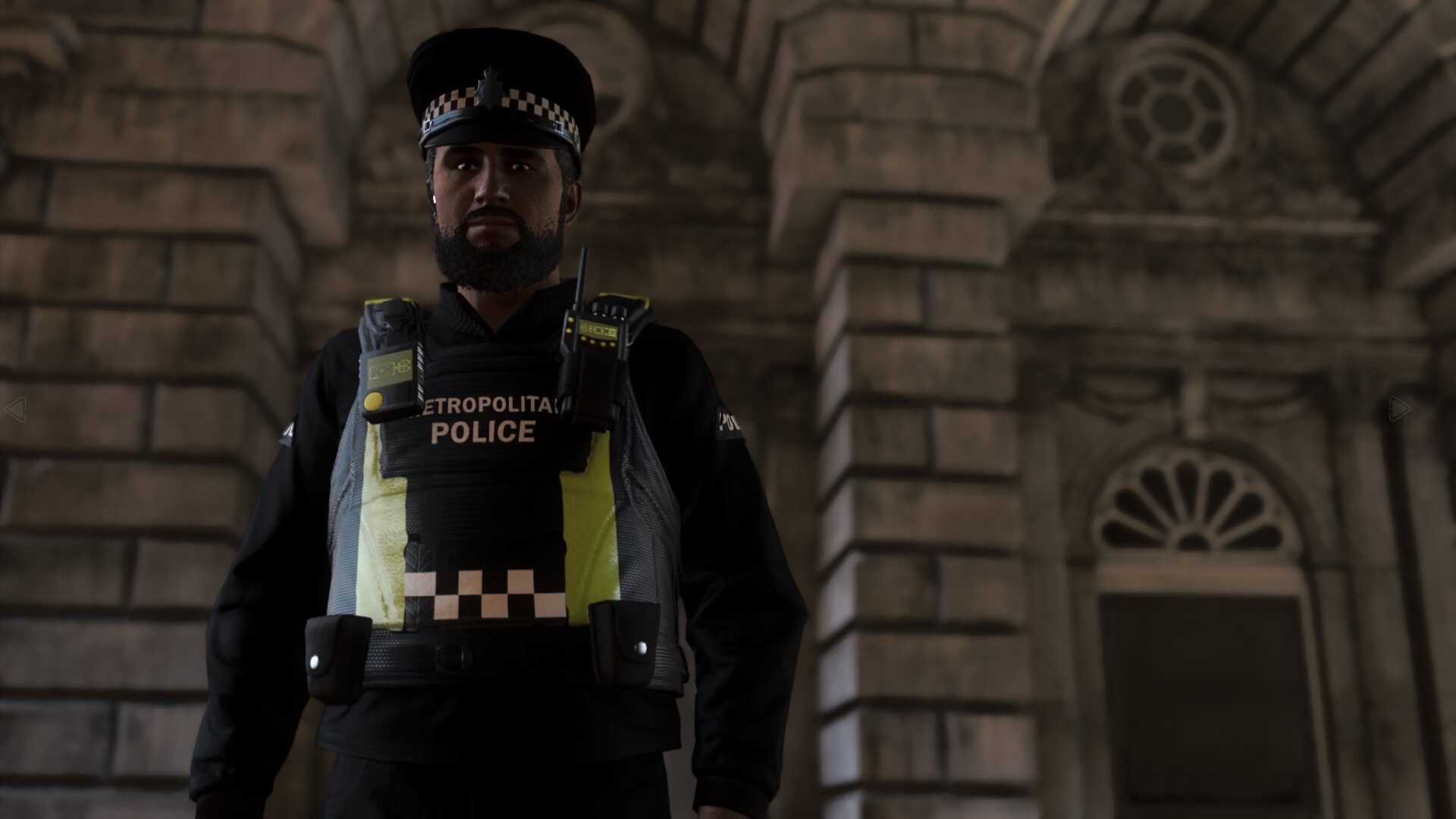
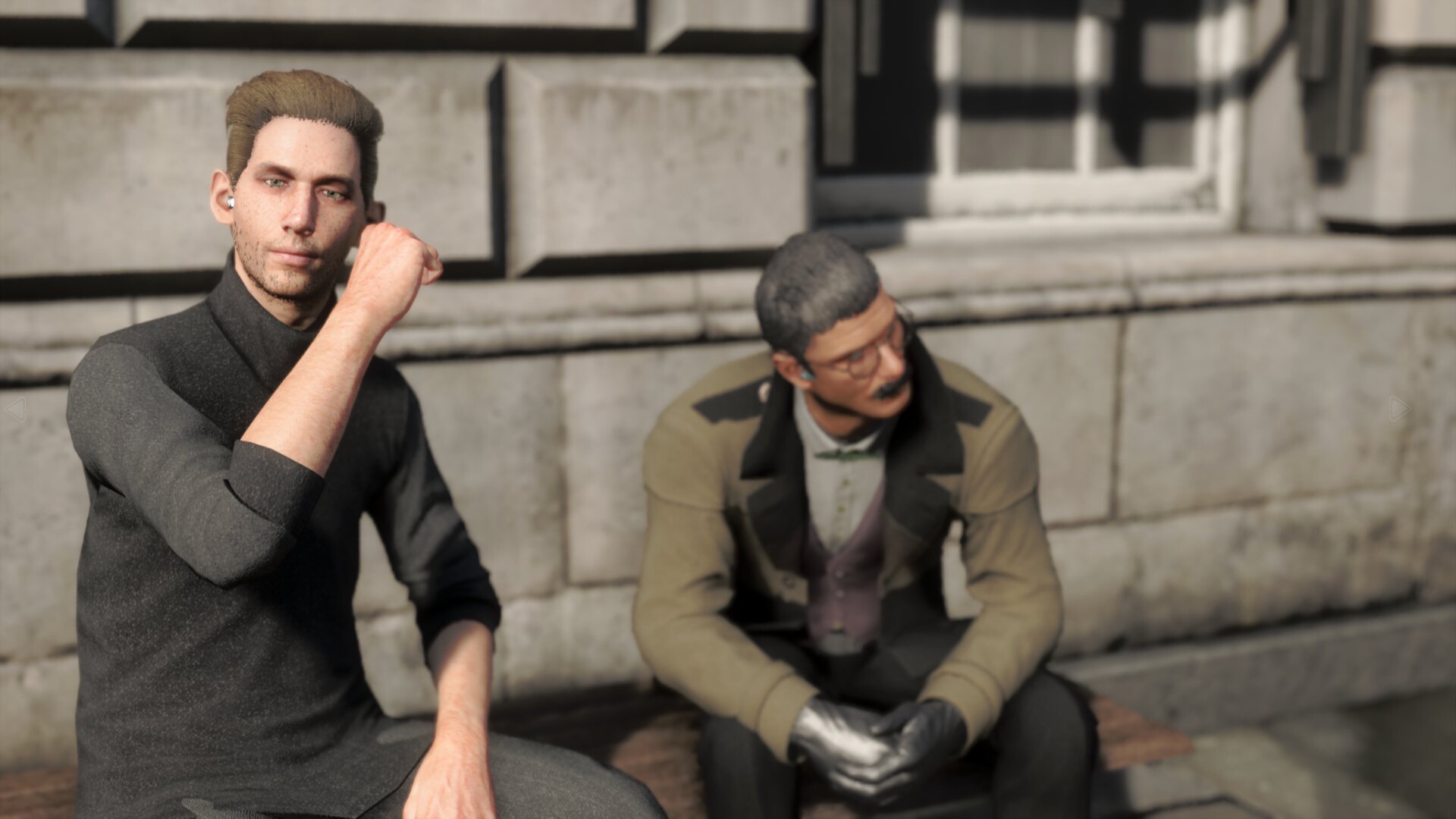
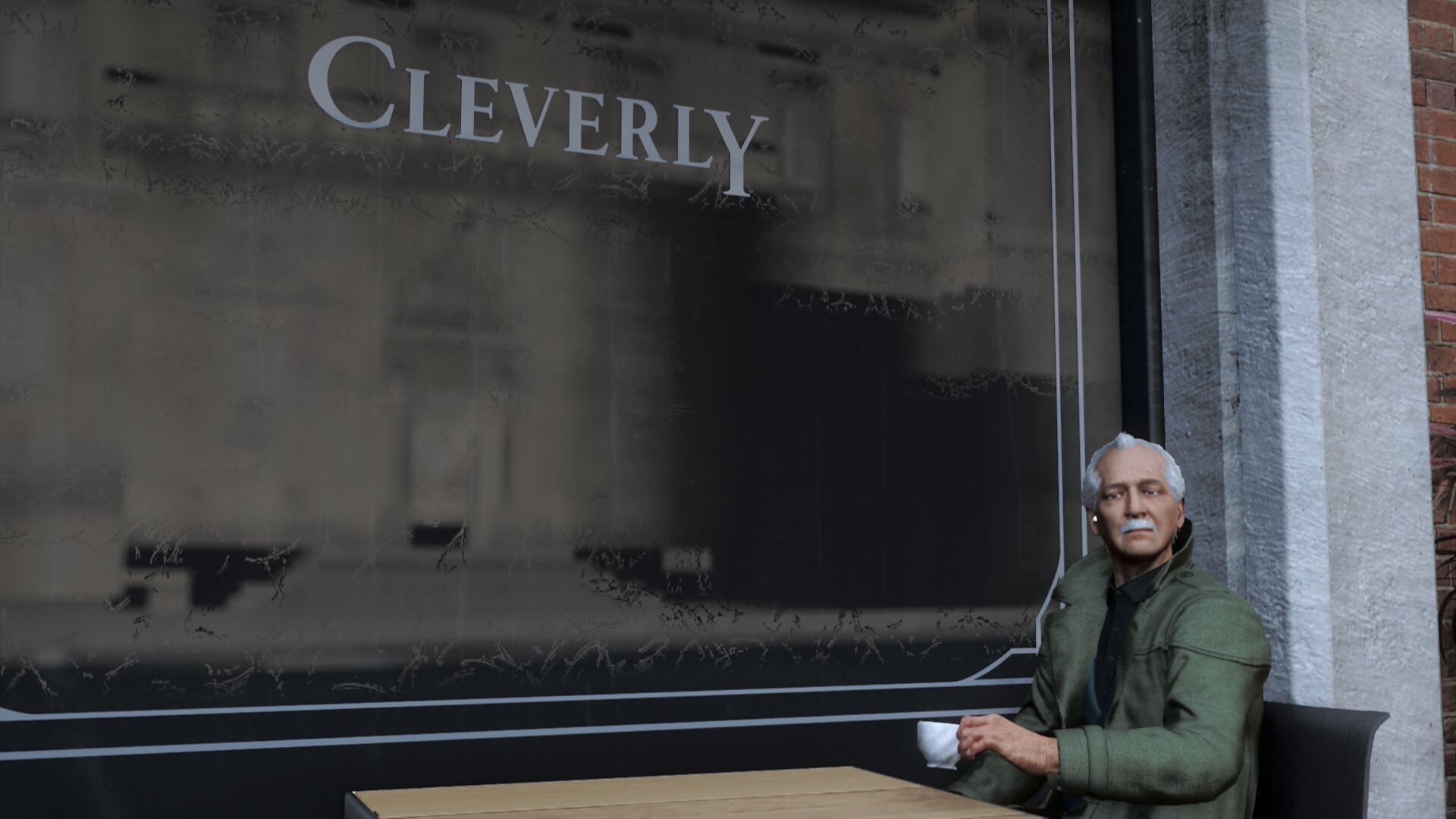
Photos from a single day in London in the game Watch Dogs: Legion. These people and spaces exist on a virtual machine within a Google server.
This photo essay is part of an ongoing exploration of video game spaces on this blog. This is only the second post. I explain what I’m trying to do here. If you like this, maybe you’ll like the rest of the series as it develops.
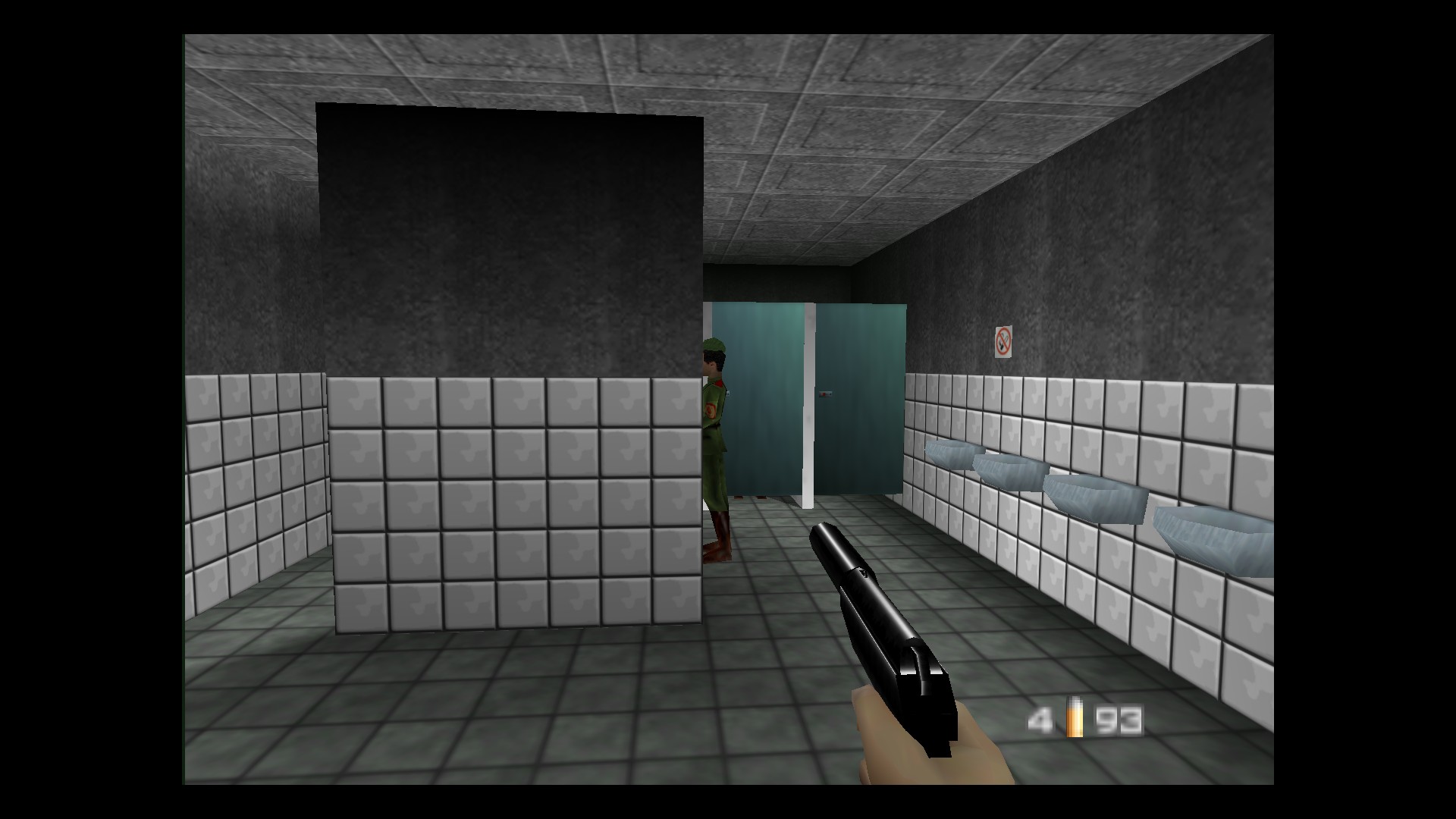
You enter the facility through an abnormally large air vent in the bathroom. The vent hangs open over an empty bathroom stall. You can see, in the next stall over, a young soldier in a garishly green uniform. You take aim at his head, probably not thinking about his neatly pressed garrison hat at all as you peer over the sights of your silenced handgun. You fire a single shot, killing the young man instantly. You drop—silently, ever so–into the stall below, careful not to slip on the toilet looming beneath the vent. You kick open the door, gun poised, and fire two more mercifully silent bullets tsk tsk into the body of another soldier regarding his reflection in the mirror. If you are skilled, he is dead before he even realizes you’ve entered the room. His body slowly disintegrates until nothing remains. One more soldier cowers in a stall across the room. You kick open the door, gun blazing, and he is gone.
Now the bathroom is yours. You’re free to take in the surroundings.
The ceiling and walls are an unassuming gunmetal gray—a dark, damp concrete poured, no doubt, with a careful eye on the ledger book instead of the architect’s vision board. An economical white tile begins at eye-level, continuing onto the floor beneath your feet. A large service column divides the room into moieties, like restrooms you’ve seen in a truck stop or rest area. There are sinks set into the outer walls. They are bare-bones fixtures; stainless steel, no flourishes to arrest the eye or introduce a measure of warmth to the fluorescent cold. Opposite the sinks there are urinals bolted in the recessed wall of the service column. Perhaps an elevator or chimney shares the column with the plumbing. Perhaps if you waited long enough you would hear the inner workings of the facility behind these spartan walls. Unlike the soldiers guarding this facility—two of whom will never live, laugh, or love again—you won’t be spending a great deal of time in this restroom. You are merely passing through.
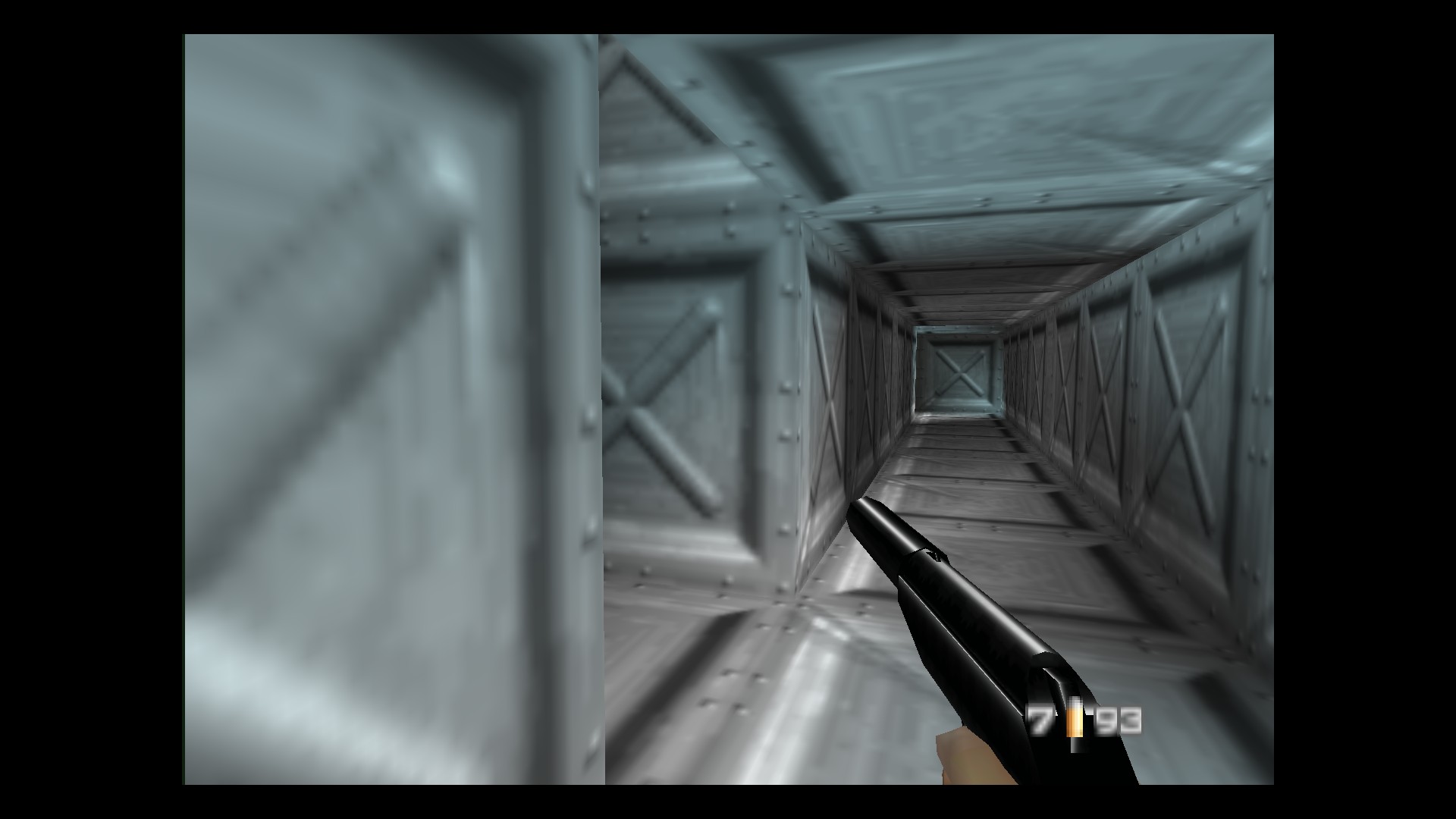
You are not an assassin or spy. Perhaps you are a student, in fact. You could be a cashier, a mechanic, maybe a teacher. But for a few nights a week, especially if you were alive around the year 1998, you may have spent a lot of time here or somewhere nearby. This is the opening scene in a level of the classic first-person shooter video game GoldenEye. The rest of the level, like the rest of the game, is full of similarly constructed spaces: offices, archives, corridors, laboratories, guard towers, missile silos, control rooms, closets, warehouses, a naval vessel, even a radio telescope. More than anything else, in fact, GoldenEye is characterized by space–by hundreds of spaces, each designed with care and constructed from raw materials and assembled through a combination of logic and skill. The facility in GoldenEye is a building. Its designers were architects.
If architecture is a way of shaping the human experience by shaping the spaces in which it unfolds, we must include video games in this category. We spend so much time there. My first exposure to a personal computer unfolded in the corridors of the Castle Wolfenstein nearly thirty years ago. I remember spending hours exploring the dungeons, hallways, banquet rooms, guard rooms, on and on, spellbound by the castle’s winding corridors, by its secrets. I’ve been back many times.
I still feel that sense of immersion and awe I experienced as a child. I’ve passed more time in the world of Wolfenstein and GoldenEye than the lavish spaces of the colleges and universities I’ve attended. I remember the facility bathroom in GoldenEye better than the restrooms at my middle school. If those schools are works of architecture, so is the facility.
GoldenEye is designed as a series of spaces through which the player navigates, but all video games—even card games, board games, and puzzles—are primarily spatial. They draw us into the action unfolding on the screen, compelling us through the strength of their design to withdraw from the space in which the screen is situated. Unlike television or movies, however, they invite us to interact with that space, to inhabit it and make changes.
Unlike movies or television, then, we should criticize and praise video games, perhaps glory in them, just as we would a work of architecture. We live in these spaces. We socialize there. If we view Zoom, Teams, and similar software as gamified work platforms, we work and go to class in these virtual spaces as well. As more of our life moves from physical to virtual spaces, the architectural aspect of video games—their ability to shape how we feel about ourselves and how we interpret the world—is more significant than it has ever been. It is worth exploring some of the many electronic spaces we inhabit in more detail.
Similar to other recurring features I’ve been launching lately, I will explore these virtual spaces on the pages of this blog by posting screenshots and recordings from the games I play along with personal or critical essays. Hopefully I’ll hear from you along the way! Feel free to comment below. I welcome thoughts and suggestions for spaces to explore.







































 C.B. Crenshaw