Jazz as a Social Force: Archie Shepp and Jason Moran’s “Let My People Go”

If you list the forces in 2021 working against jazz, and against an album like this one, it can feel overwhelming, depressing even. Do not despair. This is only a feeling. The truth is somewhere else, somewhere deeper.

Let us list the forces anyway.

First there is our shared understanding, taken as universal truth for at least sixty years now, that jazz is a thing for the museum set or the coffee shop, a factory of ambiance for Olive Garden or an upscale brunch. Jazz was once a living thing, this view holds, a music for crooks and drunks and junkies. Now its proponents and creators emerge from university programs, bleary-eyed from study, fingers inked by charts and ears indented by noise-canceling headphones, marching toward classrooms of their own. Don’t get me wrong, these are artists. They know every head in the fakebook. They’ve mastered their craft and many of them capitalize on this mastery to move the art in new directions. But many of them are equally at home serving as historians and conservators, pulling riffs and solos from the grimoire or Slonimsky’s Thesaurus. When you put it all together, jazz viewed from this frame of reference feels a bit like publishing monographs for the academic press. This music once moved mountains. Now it must exercise its influence through the same channels as philosophy and the social sciences: grants, endowments, public television. If you support Jazz at Lincoln Center, you may qualify for a thank you gift. Ask your operator for details. 

The old mountain-movers possess a sort of mystique, therefore, like former heads of state or old soldiers surveying the world with a thousand yard stare. Their numbers are dwindling, and with them passes a unique way of listening to the world and reacting to its vital rhythms. With jazz, popular music reached a crescendo of sophistication and creativity that took listeners to the very edge of popular sensibility and sometimes beyond. It was almost too much. It was almost as though Americans exhaled a collective sigh of relief when Little Richard took the stage. The best students of jazz will continue driving the form, and some of them will push it further, but it is almost seventy years since the heat of rock and roll displaced bebop’s cool, and the distance between here and there, now and then, feels greater than ever before.

It is mostly the session players from those heady days who remain with us now, not the stars, aging alongside the modern artwork in darkening valhallas from New York to San Francisco. If you dwell on it in this frame of mind, a jazz record can feel like a funeral procession. Perhaps this is appropriate. Born from the funeral marches of old New Orleans, jazz seems destined to return to the bayou shades. 

We live in the age of the funeral procession, but jazz is not the music for this age. Witness the first moments of the video for “Sometimes I Feel Like a Motherless Child.” A duo is a uniquely intimate mode of collaboration. Especially in an improvisational medium, each partner in the duo must understand the other’s moves, must know their very mind. In this light, the distance between Shepp and Moran in the opening moments of the video feels like a yawning gulf. If the moment hits you right, the gulf between the artists on that dimly lit stage feels like the chasm separating us from all of the friends and loved ones we’ve lost this year. It feels like the passage of time, the inevitability of entropy and change. Thank God for the horn that moves us past that moment, into the now. 

If you think of this album as a sort of fastness, a place made warm and safe through a powerful magic combining equal parts spirit, talent, collaboration, and history, you can hear the music repelling these forces like a force-field. Let My People Go is not a funeral march. It is not a testament to the passage of a generation or the decline of all things. It is, instead, a remarkable antidote to the depressing array of negative forces that send us into fits of melancholy at the beginning of YouTube videos or set us off on doom-scroling odysseys into the far corners of night. Let My People Go is a force for good. 

The album opens on “Sometimes I Feel Like a Motherless Child,” a spare rendition of the moving Negro spiritual rendered all the more powerful by this remarkable duo. Jason Moran’s expansive intro sets a fitting stage for Shepp’s piercing exploration of the melody. Shepp and Moran play in proximity to one another but rarely together, probing the song’s musical themes like murmuring voices in the darkness, seeking one another, seeking consonance. This is the power and the promise of a masterful duo. Each artist has the space to stretch out, but the restraint to fill the voids left by their counterpart without drowning them out. Shepp and Moran achieve this careful balance on the album’s opening track.

My favorite moments on the album come on its second cut, a meditation on Billy Strayhorn and Duke Ellington’s 1967 standard, “Isfahan.” Where Ellington’s piece is a perfect study in restrained beauty, Shepp and Moran draw out its blue notes, seeking shelter in the spaces in between the notes of the melody as though from a quiet rainstorm. Shepp’s time spent playing alongside Coltrane shines through on “He Cares,” which opens on an expressive, birdsong intro and slowly climbs toward a moving crescendo across the next six and a half minutes. When Moran moves into the spotlight around 3:30, the piece coheres beautifully. 

“Go Down Moses,” the fourth cut, seems to examine the dialectic of tension and possibility inherent in freedom through the interplay between Shepp’s opening improvisation, set against Moran’s restless, oceanic backdrop, and Moran’s solo improvisation building up to Shepp’s expressive, vibrato singing. The duo carries us into new territory with “Wise One,” a freer, more consonant space. With “Lush Life,” the duo flies the perennial Strayhorn standard beloved by Coltrane to transcendence, and the closing track, “‘Round Midnight,” keeps them firmly in those rarefied spaces. 

“If my music doesn’t suffice, I will write you a poem, a play. I will say to you in every instance, ‘Strike the Ghetto. Let my people go.’”

Archie Shepp, “An Artist Speaks Bluntly,” Downbeat, 1965

The forces this record repels only feel overwhelming when they are framed as cultural forces, and that is only because we’ve spent the last sixty years convincing ourselves that culture is somehow both sacrosanct, on the one hand, and thoroughly shaped by immovable hegemonic forces, on the other. For music, this view conflates market forces with culture, valorizing expression through its quantification to argue that its forms are no longer valid when they fail to move units or fill seats. To put it as simply as possible: fuck that. Of culture and music we may say this instead: jazz gives the world meaning through a set of coherent rules and rituals. This way of looking at the world was supremely influential for a brief period before and after the second world war before giving way, as a popular commodity in the marketplace, to other forms of expression. It did not die when its practitioners moved to conservatories. It is not passing.

It is the crushing inevitability of commodification that Let My People Go most powerfully counteracts. Shepp and Moran’s message is a cultural one, yes, but it is also a social one. It is there that we should spend some time. “Let my people go” harkens to Moses in Egypt, but it was the terrible lash of slavery that reduced millions of Africans to things, to motherless children on the auction block. From the beginning of his career in the 1960s, Shepp’s music has been centered on liberation—wailing for freedom, exalting in its possibilities, lamenting its elusiveness. In 1966, he told Downbeat that jazz was “for the liberation of all people.” “Why is that so?” he continued, “because jazz is a music itself born out of oppression, born out of the enslavement of my people.”

The pandemic is a social force. So is violence in defense of power. So is the market, with all its cruel iniquity. We may feel these forces as an overwhelming weight upon our shoulders. We may view them as insurmountable, hegemonic. To do so would be to ignore that enduring promise of jazz, however, and the complete and utter freedom it offers its adherents. Art, Shepp insists, can be a countervailing force. Listening to his work with bandmate Jason Moran on Let My People Go, I cannot help but agree. It is fitting this art should find us in a dark hour.

Review: Arbor Labor Union – I Hear You

Print

Thomas Hobbes was responsible for much of the better-or-worse modernity we have inherited, so it is not too much of a stretch to link an offhand observation in Leviathan to a self-consciously backward-looking rock band from twenty-first century Atlanta. “No man can have in his mind a conception of the future,” he wrote, “for the future is not yet. But of our conceptions of the past, we make a future.” Perhaps this is why the band–whose new Sub Pop release I Hear You sounds like a nineties college band’s interpretation of the psychedelic era, in a good way: like Hum, without the Gen-x introspection, jamming along with dad’s old records–channeled one of Hobbes’s chief interpreters in a recent comment for SPIN“We hold these truths to be self evident,” the quartet maintains, echoing Jefferson: “This is now music of the modern era. No genre revival. If a voice within whispers ‘Listen’ you must respond I Hear You. As did we and will continue to do.”

But that’s enough pretentiousness.**  I Hear You is a solid album, rich with promise for listeners hungry for a return to the stripped-down grit of rock instrumentation without submitting themselves to the staid genre conventions of punk or (too much of) the self-absorption of post-rock or heavier stoner bands. Arbor Labor Union intentionally refuses to break new ground with I Hear You, but that is the point. As much a response to the glimmering sheen of production that characterizes music today as an homage to psychedelia, I Hear You catalogues a yearning for the material over the digital–as in the band’s write-up about conifer trees and the singing ground, see the * below–and promises to reclaim it by eschewing the last twenty to forty years of music history.

Putting aside the question of whether the band’s effort to reclaim the past is relevant to the present, I Hear You comes as close as any record can to delivering on that promise without succumbing to retro kitsch. “Mr. Birdsong” recalls early grunge, but carefully; subsequent tracks “Hello Transmission” and “Radiant Mountain Road” build backward, linking the opener’s grunge sensibility to the less-restrained garage aesthetic of the seventies and late sixties. “I Am You” carries the union of these styles to a logical, if premature, conclusion in the middle of the album. Reminiscent simultaneously of everything since 1967 and nothing at all, “I Am You” underlines the record’s archival warrant in red ink. It works.

After cresting this psychedelic peak, the album drives gently downhill, back toward the present. Four-minute instrumental “Babel” suggests a more focused method beneath the surface and points—I hope—toward the band’s future. “Belief’d,” “Silent Oath,” and other tracks are better than filler, but the idea is already clear after cresting the peak. These tracks shine light on its musical nuances but illuminate its tidy corners, as well. “IHU,” finally, recalls the droning psychedelia of “I Am You.”

And what of the premise? Countless bands have turned to nostalgia—succumbed to what Derrida describes in a radically different context as “archive fever,” a madness for origins—in an attempt to reclaim that which was bold and bright in rock’s past, and, thus, in their own youth.  Arbor Labor Union transcends crass nostalgia on I Hear You by reinterpreting the past for the present. The result is not perfect—repetition and experimentation sometimes derail the individual tracks—but it is remarkably fresh.

** Want more? From the band’s bio page at Sub Pop: “4 Years ago, in the Peach state of Georgia, there was a mighty green Conifer tree whose limbs were wider than the smile on the sun. From this tree hung many a seed. The tree was home to so many creatures big and small. The most fun of them all was perhaps MR. BIRDSONG. Mr. Birdsong was a single white dove…” and so on, including the line: “if you press your ear to the ground you will find that it too has a sound… and it sings.”

Punk Postures: Overlooking Punk’s Real Lessons

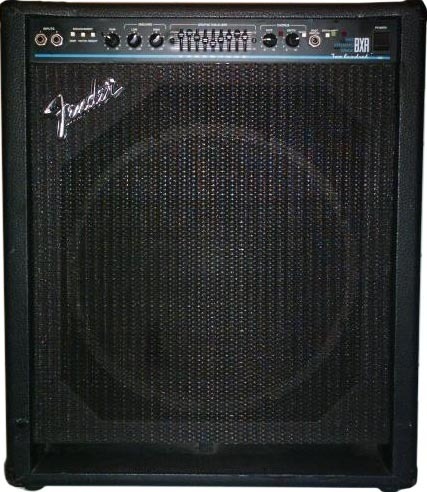
It didn’t take an advanced degree in the humanities for me to realize that punk rock is a crock of shit. Just a sprained ankle. It wasn’t sour grapes, either, but dedication that broke punk’s fuck-it spirit wide open for me. For years I carried a big Fender bass amp–my only amp at the time, my precious–up and down the stairs to my Dad’s apartment. Every Friday and Sunday in 9th grade when it was time to visit Dad or go back to Mom’s, I dragged the damn thing like an Acme contraption from a Looney Tunes cartoon up those fourteen steep concrete slabs, heaving and cursing the whole way. Later, when I lived in the apartment and played in bands regularly, I lugged that heavy bastard up and down the stairs every other day like a religious ritual. It never got easier, and sometimes it lugged me down instead. But it was a price I had to pay. Asking Dad for a ride, schlepping the giant heavy box, looking like a fool, tumbling down the last three steps and limping for days afterward: far from anarchy, this was work.

fender-bxr-200-175528

Then there were the hours upon hours I had to spend practicing–an even more exhausting worship ritual than the semi-daily ritual of labor. Play the song; try the technique, again and again; pray the muscle memory remains the next day but keep trying anyway; do it over and over.

All of that work is why I can relate to the gracefully aging punks in The Guardian’s recent where-are-they-now profile, “Never Mind the Bus Pass.” 55 year-old former Alien Kulture bassist Aussaf Abbas knew, for example, that punk rock couldn’t pay the bills, so he went to work as an investment banker and has since “met prime ministers and finance ministers and CEOs of major corporations.” “This was unbelievable for an immigrant kid,” he insists, “who grew up in Brixton in a single-parent family.” One-time Au Pairs singer and guitarist Lesley Woods took a similar path to affluence. “After the band folded,” she explains, “my brain was quite scrambled and I needed to get my mind back, so I thought I’d do something really difficult and started studying law.” While she still “mucks about” with music, her work as a barrister is so intense that she only has time for a few recordings and “the odd performance.” Others in the profile tell similar stories.

The standard punk posture insists, outraged: Abbas, Woods, and their peers are sellouts, shills for neoliberalism. But for most people, music offers work—vast, endless vistas of work—with little more than a token spiritual reward at the end of the day. Investment banking may not be the best solution to the problem, but neither is Higher Education, which attracts an army of refugees from dive bars and touring vans every year. Everyone must negotiate neoliberalism on its own terms, and what choice does anyone have? Only those privileged with money or parents with money, a great deal of luck, or generous friends really have a chance to earn anything more than a few dollars and a few Facebook followers at the end of night. Most need all of these simply to live as a musician. Punk’s outrage and anarchy relies on an ocean of privilege, then. For the innumerable devotees whose parents and friends can’t or won’t support years of work without reward, punk rock’s promise of DIY catharsis is merely palliative. The truth beneath the posture gleams like a shiny nickel reflecting the inverse of the American dream: work all you want, kid. It ain’t enough.

To make matters worse, the posture has only ever been clear in retrospect. In an extraordinary piece in The Baffler last winter, “Punk Crock,” Eugenia Williamson wonders: “As punk pushes into its fourth decade, its rules, aesthetic, and parameters are still murky at best. Does punk retain any meaning at all?” Despite the claims of passionate devotees–like the Noisey Facebook commenter she quotes who argues that “the complex ideology of punk goes way beyond the genre of music–it’s also about not giving a fuck and doing exactly what is authentic to you”–punk is hidebound by an inherent logic based on fictions of lost purity and dying scenes. Beneath the aesthetic, her article suggests, punk was never really there. Its earliest adherents lived like the coke-fueled arena rockers they despised; their descendants have “not only voted for Rand Paul but [are] raising children in a McMansion funded by festival dates.” So much for anarchy.

Screen Shot 2016-05-14 at 8.44.43 AM

My own decade-long encounter with cathartic do-it-yourself anarchy was far from revolutionary. I repeated the upstairs and downstairs rituals of labor and repetition later, for example, when I was still a dropout working at Walmart by day and playing the bass by night in a band that pretended it could barely bash out the chords to “Blitzkrieg Bop.” That had been the appeal of the band, actually, when I tried out: their unapologetic badness. They had posted a to-hell-with-it ad for a bassist on Craigslist citing their inability to play but their desire to try anyway. I replied. Everyone was better than they had claimed, of course. They had performed the rituals too. So within a week I was lugging another huge bass amp up three flights of stairs twice a week to the drummer’s apartment across the street from the University of Florida. We called ourselves “Surprise Blowjob”–SBJ for short–and played a few shows over the course of a weltering Gainesville summer before going our separate ways. We joked about “punx” with one breath and rented a practice space with the other; paid for recording with one hand (well, one of us did: Thank you, Ryan, if you read this) and burned our own CDs with the other. We booked shows when we weren’t practicing; drove to Jacksonville to play for 15 people. I designed stickers and merch; stayed up a few nights after work to design a website. And then it was over. A new semester, job hunts, and grad school were looming for the students in the band. They left. Other bands were calling me. Like the individual rituals of labor and repetition, the group ritual of band-building has to be repeated like a rosary. Friends and strangers come and go from the devotee’s life.

SBJ_sticker_page

I packed and unpacked, carried and setup my amplifiers, my gig bags, my cables and pedals in and out, up and down, through every change. I understand now that these rituals of individual dedication and group support were the only authenticity punk rock could offer. Everything else is just an argument about aesthetics.

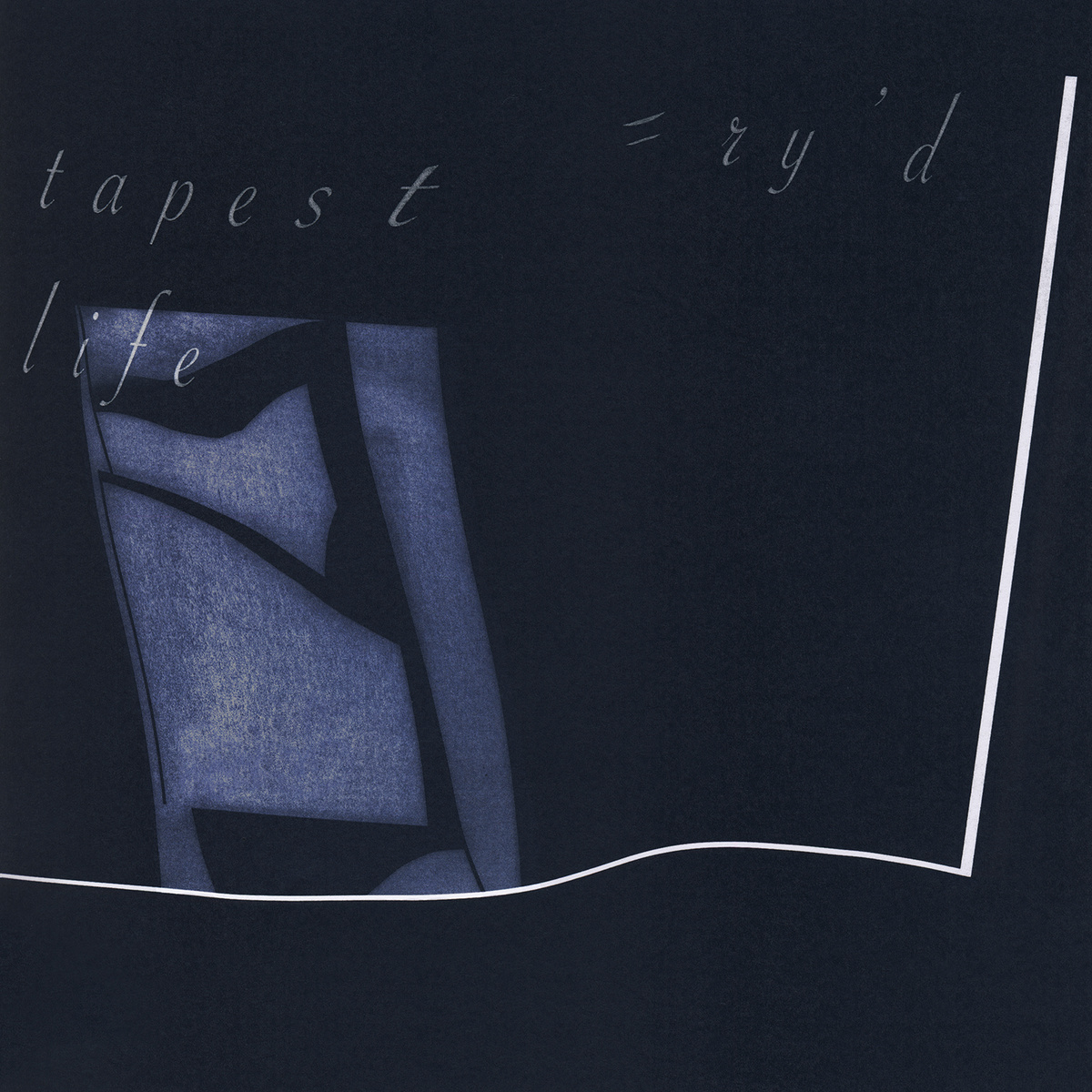
Pretend–Tapestry’d Life

a1517676658_10

At some point in your life, someone will try to tell you that noodling jam bands, wispy art rock, odd time signatures, and unstructured song-writing are more rewarding—in their intelligence, you see—than the more pedestrian pleasures for which most of us line up at the trough, week after week, to consume like barnyard animals. And sometimes they will be right.

I’ll give you an example. There is a moment in the middle of “Epitaph” on King Crimson’s In the Court of the Crimson King that is sublimely transcendent. Under the right circumstances, it can carry you away, making apparent all of the pain and promise of the sixties in one brief chord progression. I have been moved by “Epitaph” and inspired by the entire album since a too-young age, probably twenty years. But such moments are ephemeral. In the Court of the Crimson King marked the one moment when King Crimson was a coherent band, rich with ideas; 1969 was one of only a few moments when “art” rock could move into the “real” world, “Epitaph” one of only a few songs capable of translation in that world.

Pretend’s Tapestry’d Life is nothing like In the Court of the Crimson King, but it comes close at times. It offers no era-defining moments or spine-tingling chord progressions, to be sure. But it’s not bad, either. The opening track “Wrapped in Fantasy” is cerebral and interesting, firmly planted upon the ground–unlike most other songs of its kind. All of songs are similarly grounded, and all are rich with ideas. “Patternless Tide” is a wandering yet promising reflection, but it kicks off a long series of introspections during which the band points in countless interesting directions but seems to complete few ideas. “Doors” is a reward for the patient listener in the middle of this long experiment, but its rewards, too, are ephemeral and easily forgotten. Tapestry’d Life is heavy with promise but its rewards are sparse.

The problem lies in the genre itself. The boundaries of ideas are rarely so apparent in the pulpy paperback music most of us enjoy. In pointing to new ideas, Pretend–like most “post-” whatever bands–also point squarely at their own inability to realize them. The result sounds like a band straining against its own limitations as it attempts to deal with complexity—which does not make for a satisfying rock album, but is not without its rewards.

You can pick up the album here.