Books and the Geology of the Soul

I spent a series of cold, foggy mornings when I was a young man of about twenty-one working at a door shop in Jacksonville reading On The Road on my way to work. It was my second time reading the book, but the first time I really got what Kerouac was trying to do. I was haunted by the people and the time, haunted by the palpable vibrancy of Kerouac’s telling of that madcap journey in a way that colored my whole perception of my hometown and myself. Those sodium-lit winter mornings haunt me still. They remind me of what a book can do, how it can shape us. Let me explain.

Jacksonville is an old railroad town. You come across it sometimes in old novels when people are taking the train South with a Capital S. James Bond passes through town on the old Seaboard Silver Meteor in Live and Let Die, for instance, where he grabs breakfast in a greasy spoon around the corner from the station before climbing back aboard and moving on. These travelers never stick around, but it was a grand train station–which is still there, incidentally, only today they have gun and exotic bird shows in a convention space that used to shelter weary travelers and anxious lovers. An old steam locomotive sits behind a fence outside, holding out brute silent testimony to the grand past for anyone who will stop and listen. Hundreds of thousands of people drive by the locomotive everyday as they make their way in and out of town from the surrounding sprawl.

I was one of them when I worked about a mile away from the Convention Center. I had about an hour-long bus ride from my apartment way out on the southern fringe of the city to the steps of the Convention Center–look, I know this geography doesn’t mean much to you, but it pleases me to tell it–where I would jump off the bus and double back toward Stockton Street through a tunnel that ran up underneath the Interstate 95 overpass. I had an hour with the book, therefore, in the peculiarly calm atmosphere of a city bus rumbling across town in the dark of a cold winter morning. Putting the book away and climbing off of the bus was like sliding out of a warm blanket, gasping as the icy air blasting across the St. John’s River slapped me in the face. People don’t think Florida is cold. Those people have not walked a North Florida mile to work at Dark Thirty o’ clock on a January morning.

I wanted to be the kind of guy with a book hanging out of my back pocket, so there it was; and I remember, for some reason, taking it out of my pocket and reading as I walked. Now, to get to work from the Convention Center, I had to walk over about five railroad crossings that cut through the old half-assed industrial zone where our shop was located. And, without a doubt, there would be a train on one of those crossings. Probably parked. I could wait for the train to shudder to life and clear the tracks eventually, which would be smart, but forbearance is for the aged. So I put the book away and faced hard reality once again to climb up over the behemoth flatbed cars and continue the journey with the book slapping around in the back pocket of my hand-me-down blue work pants. My pants were spotted with caulk and dyed a dull white by fiberglass dust blowing out of door machines, and I knew I was climbing over the same rails and walking by the same warehouses that stood when Kerouac wrote and it was somehow profoundly meaningful for me one morning in particular, I remember, as the sun came up over the end of the road and rails.

Something about the trains; the morning night world; the bus and the tunnel; the alternating warmth and cold, dark and light; the variety of light, from harsh fluorescent to dim, orange sodium; the blue-gray dawn; the contrast between Sal Paradise’s free-wheeling life on the road and my routine working in a wood shop for eight dollars an hour; something about all of that came together like a fine recipe that somehow contributed to who I am today. I’m sure any reader could share a similar story of strange alchemy, of a worn paperback working with time and place to shape them into something else. It is a beautiful geology of the soul.
Punk Postures: Overlooking Punk’s Real Lessons

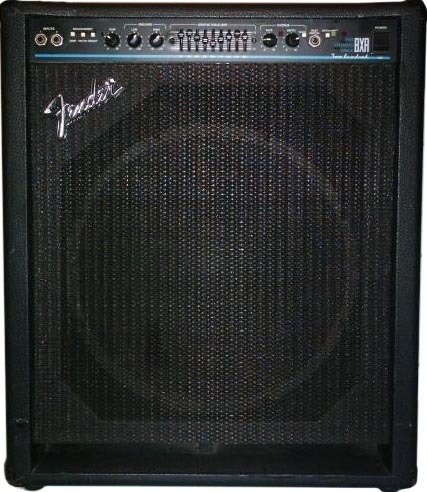
It didn’t take an advanced degree in the humanities for me to realize that punk rock is a crock of shit. Just a sprained ankle. It wasn’t sour grapes, either, but dedication that broke punk’s fuck-it spirit wide open for me. For years I carried a big Fender bass amp–my only amp at the time, my precious–up and down the stairs to my Dad’s apartment. Every Friday and Sunday in 9th grade when it was time to visit Dad or go back to Mom’s, I dragged the damn thing like an Acme contraption from a Looney Tunes cartoon up those fourteen steep concrete slabs, heaving and cursing the whole way. Later, when I lived in the apartment and played in bands regularly, I lugged that heavy bastard up and down the stairs every other day like a religious ritual. It never got easier, and sometimes it lugged me down instead. But it was a price I had to pay. Asking Dad for a ride, schlepping the giant heavy box, looking like a fool, tumbling down the last three steps and limping for days afterward: far from anarchy, this was work.

fender-bxr-200-175528

Then there were the hours upon hours I had to spend practicing–an even more exhausting worship ritual than the semi-daily ritual of labor. Play the song; try the technique, again and again; pray the muscle memory remains the next day but keep trying anyway; do it over and over.

All of that work is why I can relate to the gracefully aging punks in The Guardian’s recent where-are-they-now profile, “Never Mind the Bus Pass.” 55 year-old former Alien Kulture bassist Aussaf Abbas knew, for example, that punk rock couldn’t pay the bills, so he went to work as an investment banker and has since “met prime ministers and finance ministers and CEOs of major corporations.” “This was unbelievable for an immigrant kid,” he insists, “who grew up in Brixton in a single-parent family.” One-time Au Pairs singer and guitarist Lesley Woods took a similar path to affluence. “After the band folded,” she explains, “my brain was quite scrambled and I needed to get my mind back, so I thought I’d do something really difficult and started studying law.” While she still “mucks about” with music, her work as a barrister is so intense that she only has time for a few recordings and “the odd performance.” Others in the profile tell similar stories.

The standard punk posture insists, outraged: Abbas, Woods, and their peers are sellouts, shills for neoliberalism. But for most people, music offers work—vast, endless vistas of work—with little more than a token spiritual reward at the end of the day. Investment banking may not be the best solution to the problem, but neither is Higher Education, which attracts an army of refugees from dive bars and touring vans every year. Everyone must negotiate neoliberalism on its own terms, and what choice does anyone have? Only those privileged with money or parents with money, a great deal of luck, or generous friends really have a chance to earn anything more than a few dollars and a few Facebook followers at the end of night. Most need all of these simply to live as a musician. Punk’s outrage and anarchy relies on an ocean of privilege, then. For the innumerable devotees whose parents and friends can’t or won’t support years of work without reward, punk rock’s promise of DIY catharsis is merely palliative. The truth beneath the posture gleams like a shiny nickel reflecting the inverse of the American dream: work all you want, kid. It ain’t enough.

To make matters worse, the posture has only ever been clear in retrospect. In an extraordinary piece in The Baffler last winter, “Punk Crock,” Eugenia Williamson wonders: “As punk pushes into its fourth decade, its rules, aesthetic, and parameters are still murky at best. Does punk retain any meaning at all?” Despite the claims of passionate devotees–like the Noisey Facebook commenter she quotes who argues that “the complex ideology of punk goes way beyond the genre of music–it’s also about not giving a fuck and doing exactly what is authentic to you”–punk is hidebound by an inherent logic based on fictions of lost purity and dying scenes. Beneath the aesthetic, her article suggests, punk was never really there. Its earliest adherents lived like the coke-fueled arena rockers they despised; their descendants have “not only voted for Rand Paul but [are] raising children in a McMansion funded by festival dates.” So much for anarchy.

Screen Shot 2016-05-14 at 8.44.43 AM

My own decade-long encounter with cathartic do-it-yourself anarchy was far from revolutionary. I repeated the upstairs and downstairs rituals of labor and repetition later, for example, when I was still a dropout working at Walmart by day and playing the bass by night in a band that pretended it could barely bash out the chords to “Blitzkrieg Bop.” That had been the appeal of the band, actually, when I tried out: their unapologetic badness. They had posted a to-hell-with-it ad for a bassist on Craigslist citing their inability to play but their desire to try anyway. I replied. Everyone was better than they had claimed, of course. They had performed the rituals too. So within a week I was lugging another huge bass amp up three flights of stairs twice a week to the drummer’s apartment across the street from the University of Florida. We called ourselves “Surprise Blowjob”–SBJ for short–and played a few shows over the course of a weltering Gainesville summer before going our separate ways. We joked about “punx” with one breath and rented a practice space with the other; paid for recording with one hand (well, one of us did: Thank you, Ryan, if you read this) and burned our own CDs with the other. We booked shows when we weren’t practicing; drove to Jacksonville to play for 15 people. I designed stickers and merch; stayed up a few nights after work to design a website. And then it was over. A new semester, job hunts, and grad school were looming for the students in the band. They left. Other bands were calling me. Like the individual rituals of labor and repetition, the group ritual of band-building has to be repeated like a rosary. Friends and strangers come and go from the devotee’s life.

SBJ_sticker_page

I packed and unpacked, carried and setup my amplifiers, my gig bags, my cables and pedals in and out, up and down, through every change. I understand now that these rituals of individual dedication and group support were the only authenticity punk rock could offer. Everything else is just an argument about aesthetics.