If you watch The Secret Agent at an AMC theater or similar megaplex, the odds are good that you will be forced to sit through a few commercials before the film starts. For me, before the lights went down, there was a new ad from Coca-Cola–not the ubiquitous “movie magic” couple dancing, drag-racing, and kissing through the streets, but a new one valorizing the history of bottles as though these tubes of glass have some emotional valence–and then another one, from Amazon, about a young, single Asian woman who lives alone learning how to cook ramen for herself by ordering a range of bullshit cooking accessories from Prime.
You watch these ads and they are lonely. It’s just humans, humans who are meant to live, work, and think together, standing instead alone, powerless to resist a gleaming world of products. The Products dance around our solitary heads. They assault our senses with lens flare, booming audio, bright colors, and all the other cinematic sleights of hand needed to turn a bottle of soda pop or a new slotted spoon into a life-changing, identity-affirming, spiritual revelation. We need other people to do that, and we all know it, so this–this noisy insistence that consumer products and the consumer product-driven life are beautiful and meaningful–feels bad. It feels wrong.
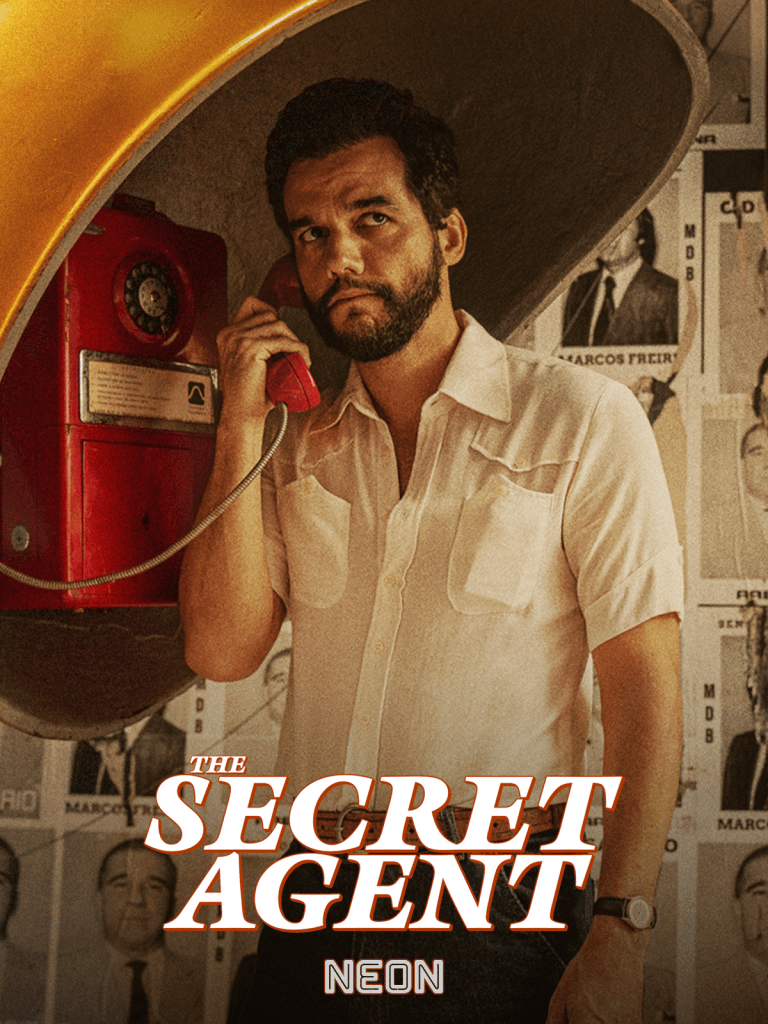
And then the movie starts. On the surface, it’s “about” Wagner Moura’s character fighting for his life against powerful forces that seek to silence him. Beneath that, it’s “about” the lawlessness of Brazil during the dictatorship and the vibrant resilience that percolated in the boiling kettle of that brutal state. Blah blah blah. Reflect on those Coca-Cola and Amazon ads and the film opens up a little more. This is a movie about what happens when the hand that performs the cute illusions in all of the commercials grows weary of your resistance, curls itself into a fist, and slams itself into your bleeding mouth.
Mendonça Filho wants us to think about Jaws. We come back to it again and again–in posters, drawings, a shark-tooth necklace wrapped around a villain’s throat. You may make of it what you will, but I think the shark here is the lurking danger–of death squads, brutally corrupt and murderous police, plotting executives, clutching politicians–constantly churning the water beneath our feet as we struggle to stay afloat. From the 1960s to the 1980s, the shark roared to the surface and pulled many thousands of Brazilians down into the depths, where they would never return. During that same period, the same shark terrorized the rest of Latin America, along with Southeast Asia, most of Africa, the Middle East, and other places in the world where people dared to challenge the beauty and justice of Products.
Walter Salles’ beautifully-executed I’m Still Here, from 2024,covers much of the same territory as this film, but Salles seems to think we live in a time of truth and reconciliation. Watch Bacurau, Mendonça Filho’s 2019 work (which is, I think, a better film than The Secret Agent), and you will see that the shark, the evil hunter, is still alive and well in Brazil.
It is with us, as well. That shark is the id of Coca-Cola and Amazon and all the others.

 C.B. Crenshaw