This is part of a series of posts exploring video games as spaces players inhabit. If you’re wondering what this is all about, I tried to explain myself here.
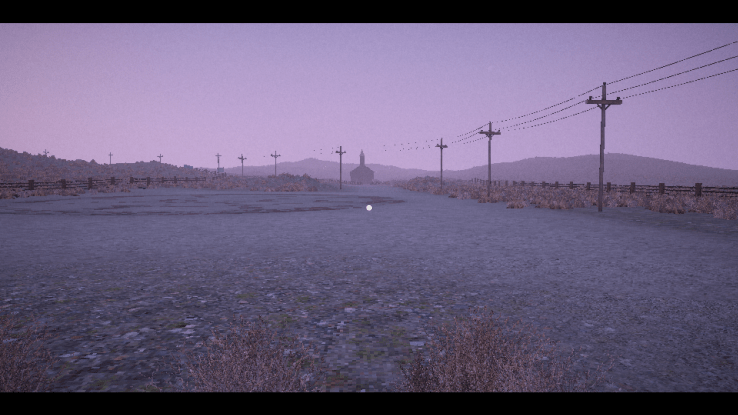
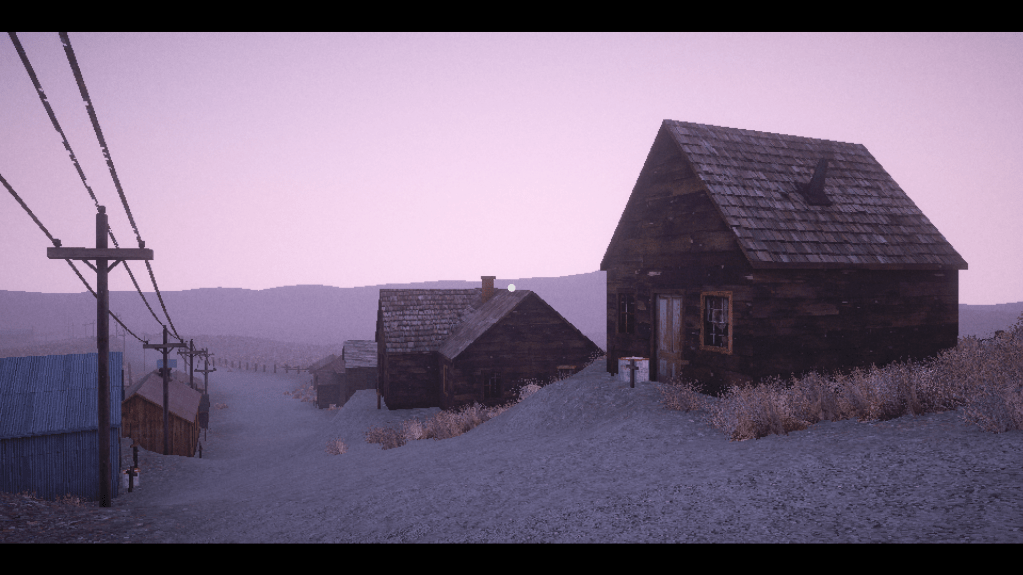
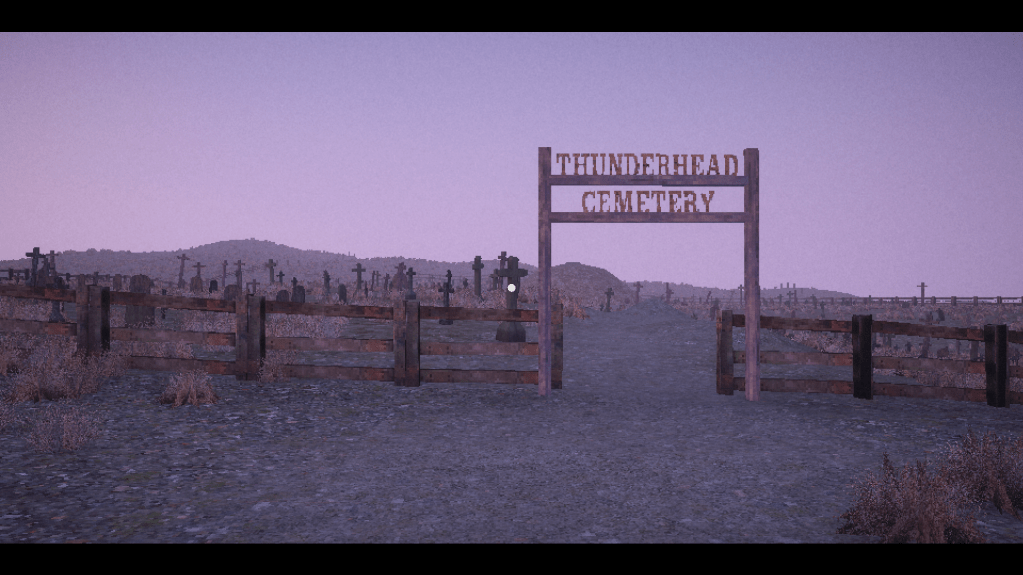
Here are some travel notes from a brief stay in Thunderhead.
People disappear; their commodities remain.
2. There is no stone here. All, save one brick building, is temporary.
3. Civilization passes away; nature, similar to commodities, endures.
4. Labor is spectral. It is silent, but always present.
This is part of a series of posts exploring video games as spaces players inhabit. If you’re wondering what this is all about, I try to explain myself here.
1: Bric-a-Brac
The house sprawls.
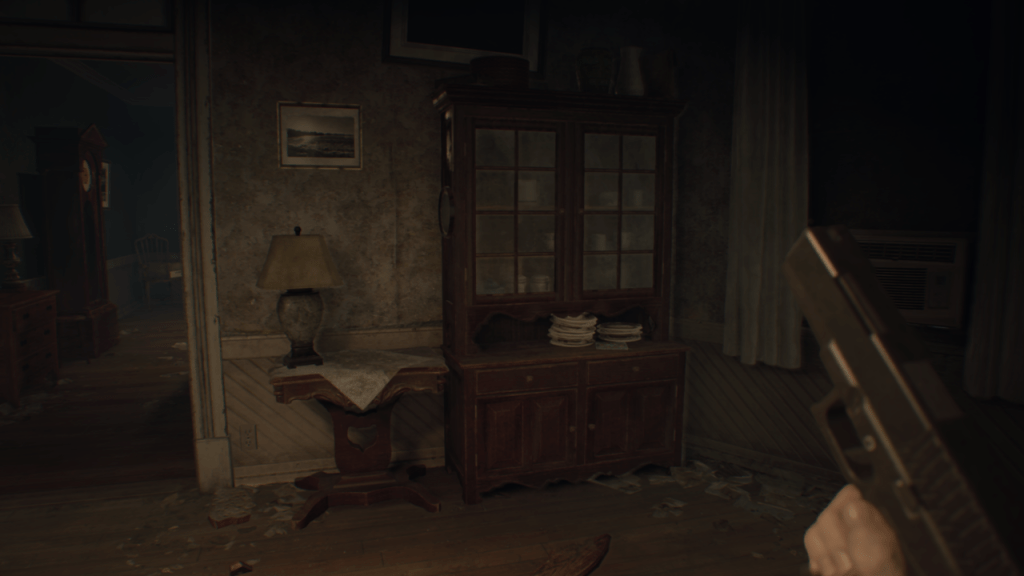
It is a labyrinth of jarring juxtapositions, a complex of rooms and ruins, corridors, bedrooms, workrooms, bathrooms, parlors, outbuildings. It is liberally decorated and lavishly electrified in decay. Its intact rooms remain gracefully furnished. Some of them might even be comfortable, perhaps, if you opened a window on a crisp spring morning. Some time ago this would have been a fine home, a stolid structure meant to house a family in comfort and grace.
There is a sort of disease spreading through the home, however, undermining its health and style. There are hundreds, thousands of objects inhabiting the space: books, papers, shelves, paintings, tools, plates, photographs, video cassettes, suitcases, more. It is a dizzying, terrifying mess that bestows upon the game a sort of misleading material cadence: calm in the ordered spaces shattered by violence, chaos in the ruins while the heart slows from conflict.
The disease haunting the house is the American disease, a malady of excess. The inhabitants of this house demand forever more: more house, sprawling through endless outbuildings and passages; more bric-a-brac on the tables and curios; more prints on the walls; more rotting meat in the refrigerator; more life on the bones. They are without regard of the cost, keen only to revel in the excess. “Heck of a thing, ain’t it?” the house’s first monster, Jack Baker, asks you when he appears again in some new corner of the vast residence. “Sure as shit beats the hell out of dying.”
Resident Evil: Biohazard wouldn’t be much of a game if the house did not sprawl, creeping across the miasmatic landscape like an invasive organism, but the player should ask: if architecture influences how we think and feel by shaping the ways that we experience space, what does the house do to us while we are here?
2: Postcards to the Soul
A house, Gaston Bachelard reminds us, is something we imagine into being. The walls, nails, doors, and windows exist in some configuration resembling a house for a little while, but in our imagination these objects take on a new configuration that surpasses the mere existence of the building. Intimate spaces, in particular, like bedrooms, attics, drawers, and so on, bring to mind images that we generate somewhere prior to thought. These images are postcards of the soul.
What postcards does this home send to the soul?
3: Eastman Johnson on the Walls
If we consider the fine art still hanging somehow on the walls of this sprawling charnel house, the postcards here have been inscribed by the sickly hand of a diseased presence, an even more insidious manifestation of America’s original sin than the piles of stuff everywhere. One of these, Eastman Johnson’s A Ride for Liberty, narrates the dark tale.
The painting confronts us again and again.
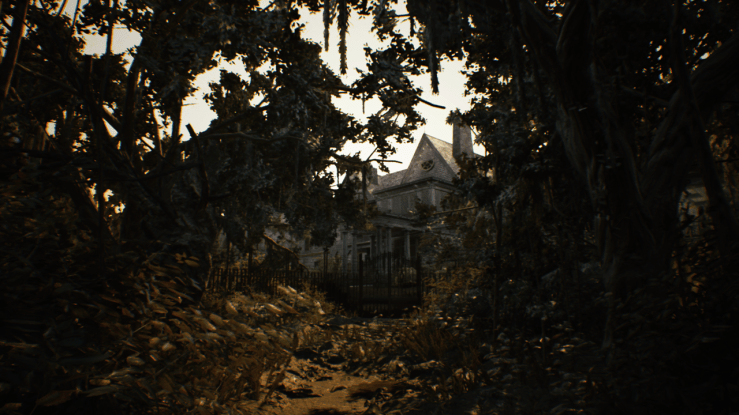
Consider this place in its surroundings. The Baker House is situated in fictional Dulvey Parish, Louisiana, a watery place on the coast separated from the rest of the state by a dark bayou. This is delta land; sugar country. The Baker House is a plantation home, glowering over what was once one of the most hellish landscapes in North America. The Baker House’s Resident Evil is the immutable ghost of slavery. It cannot be silenced, here. The chains rattle through the night.
In 1853, a northern transplant to the Louisiana sugar country described the typical plantation. “The stately residence rises” he wrote, “out from among groves” of citrus, magnolias, and live oaks. The walk leading to the home was shaded by “shrubbery of evergreen jessamines, and perpetually blooming flowers.” Behind the house, he continued, “in strange confusion, is a crowd of out-houses; useful as kitchens, store-rooms, baths, with a school-house, and perhaps a chapel.”1 Past as well as present, plantation homes lured visitors through a complicated mixture of fantasy and reality, of wealth real and imagined. They loom large still in the American imagination.
In the Baker House, the pretense of gentility that plantation homes package and sell to visitors—the live oaks and “evergreen jessamines,” the opulent antiques and mint julep porches—has been stripped and subverted. Instead of a wedding venue, the property is a tomb writhing with decay. Instead of a preservationist’s dream, the house is a crumbling wreck, more House of Usher than Tara. In this sense, the home’s dark, unspoken memory is cut closer to the joints of history than tourist plantations. It is difficult to imagine a more poignant monument to the unresolved legacy of enslavement in the United States. In another sense, however, the makers of this house in this game insist upon obscurity. They chose this setting for a reason. Rather than write a story about slavery, they evoke the dark stain through a painting which recurs throughout the house: Eastman Johnson’s A Ride for Liberty.
It is said that history rhymes, and that is true of ARide for Liberty hanging on the walls of the Baler House. The artwork, which Johnson claimed to have painted after witnessing an enslaved family in Virginia emancipate themselves from bondage as the Union army approached in 1863, is well-known today. Art historians class the painting in the top three or four most influential works by the painter. It graces the cover of American history textbooks, flashes on the screen of documentaries. You may be surprised to learn, therefore, that this apparent treasure of the nineteenth century never hung in a gallery. Johnson chose never to display it.
Johnson’s reasons for holding the painting back are unknown, but its departure from the refined brush work and chiaroscuro for which he was known suggests that hanging the work may have been somewhat off-brand in his time. Johnson was primarily a portrait painter. It may also be true that there was little appetite in the market after the Civil War for anything dealing with the subject of slavery. We will probably never know why Johnson kept the painting to himself, but we do know that he executed two copies of the work in addition to the original. Its significance for the artist may have been greater than its appeal to the marketplace. Over time, the painting in its quiet way has come to symbolize emancipation. Perhaps it symbolized the same for Johnson. Perhaps it thrilled him from time to time to recall that morning in 1863, the hope and joy of freedom.
A Ride for Liberty plays a subtle role in the Baker House as well, but its presence is jarring, rather than uplifting. Elevated to the iconographic heights of the American myth, the work has taken on an almost devotional significance. It reminds the player, on one hand, that salvation will not come riding over the hill. On the other hand, salvation from what? Objects made of code, rendered polygons, scripted sequences? A Ride for Liberty draws the player out of the game, out into the deepest horrors of history. The house is a museum, therefore. It challenges the player; jars them; instructs them.
This is the plantation tour turned upside down. The player is encouraged to fear monsters and scientific abominations, but the monstrous human past of the place they inhabit here towers over any antagonist the game’s developers could imagine. “Gothic tales dwell on fear of the past’s resurgence in the present,” Emily Alder writes in the foreword to a recent story collection. “Repressed memories,” Alder continues, “personal crimes, family secrets, and cultural anxieties take form as ghosts, monsters, or shadowy doubles.”2
Human bondage is the Resident Evil of the United States of America, and it is the wellspring from which this work of gothic horror flows.
4. The Republic of Nostalgia
Houses do not emerge from the minds of their builders already haunted. They are haunted by the weight of their pasts. The ghost of consumption haunts the Baker House. The screaming spirits of slavery haunt the landscape upon which it is situated. The moaning specter of nostalgia, finally, haunts its quiet places.
On a shelf upstairs there is a football helmet. On the shelf beside it there is simply a picture of a football, framed. The football, set against the crumbling household and the past and present evils within and without, is a synecdoche for innocence. Other nostalgic symbols abound. Old books and framed photographs clutter desktops and walls. Old-fashioned floral wallpaper reminds the player of their grandmother’s home. Tape recorders where players may save their game physically embody memory, transforming ethereal digital information to analog. The player may imagine dropping the tape in her pocket and carrying it from recorder to recorder
“The nostalgic,” Svetlana Boym writes, “desires to obliterate history and turn it into private or collective mythology, to revisit time like space, refusing to surrender to the irreversibility of time that plagues the human condition.” Like the historians plastering Eastman Johnson’s overlooked Civil War painting on the cover of the American history textbook to symbolize the march of freedom, nostalgia converts the inert stuff of history to the fabric of myth.
Nostalgia at the Baker House forms the crux of a dialectic. As an aesthetic it contrasts the dark present with the bright past, leisure with terror. As a narrative device, it compels the player to link the “good old days” these nostalgic objects recall with the history of bondage permeating the house and landscape.
5. Tourists
After wandering the corridors for hours rifling through the cabinets, running from the monsters, puzzling over old photographs, and playing haunted video tapes, it is little wonder that metaphors of travel, such as postcards and plantation tours, spring to mind so readily. We are tourists here. The mansion is an inverted attraction.
Read against the grain and you will find all the things here that tourists seek. First there is the allure of history. The old home, the fine oil paintings and sculptures, the endless curios: these make up a sort of museum, drawing players through a historical narrative told by objects on display. The narrative here, as in many museums, is about family. Like all families too, this one is wrapped protectively around its darkest places. Unlike the typical family narrative, however, this museum draws your eyes those dark places rather than away from them.
There is also the valorization of work. The well-appointed garage and the morgue-like laboratory in the basement offer players an idea of the work that is done here. Like the winery tour or blacksmith shop, we are fascinated by contact with work. We imagine the satisfaction of the worker twisting the wrench or hammering the boards which shaped the world around us. Inhabiting the world shaped by that work distances us from our own work. Here the work is strangely collaborative, though. The player works for hours on end to overcome the work of their antagonists. This is a different sort of distance from that established by the winery tour, but the effect is the same.
Tourism draws visitors with the promise of limitless consumption. Like the outlet malls and gift shops surrounding Disney World, overflowing with merchandise, consumption here is doubly encoded. It is evident, first, in the maximalist sprawl of rooms and bric-a-brac. These spread before the player/tourist like a promising vista of leisure: numerous doors to open, each full of treasures to behold. Consumption is also encoded in the endless confusion of stuff the player may acquire. Downloadable content promises greater success, a more interesting experience, the continuation of the story.
Tourism scholarship points to the ways tourists congregate at the scenes of trauma, gathering in throngs at Gettysburg, Buchenwald, Hiroshima. Like other gothic tales set in haunted houses, evil castles, and graveyards, Resident Evil: Biohazard draws strength from this fascination with the dead. The subtle invocation of human bondage at the game’s centerpiece setting offers players a form of veiledcommunion with the vicious past.
Slavery is the American Gothic. Resident Evil: Biohazard is one of its postmodern texts.













 C.B. Crenshaw